 flip
flipMomos, Tibetan Steamed Dumplings
Momos, Tibetan Steamed Dumplings
Why this dish? Alexandra stayed for years on the borders of Tibet, in Sikkim and in monasteries: momos, stuffed dumplings cooked by steaming, are the dish shared on feast days and when receiving a distinguished traveler like her.
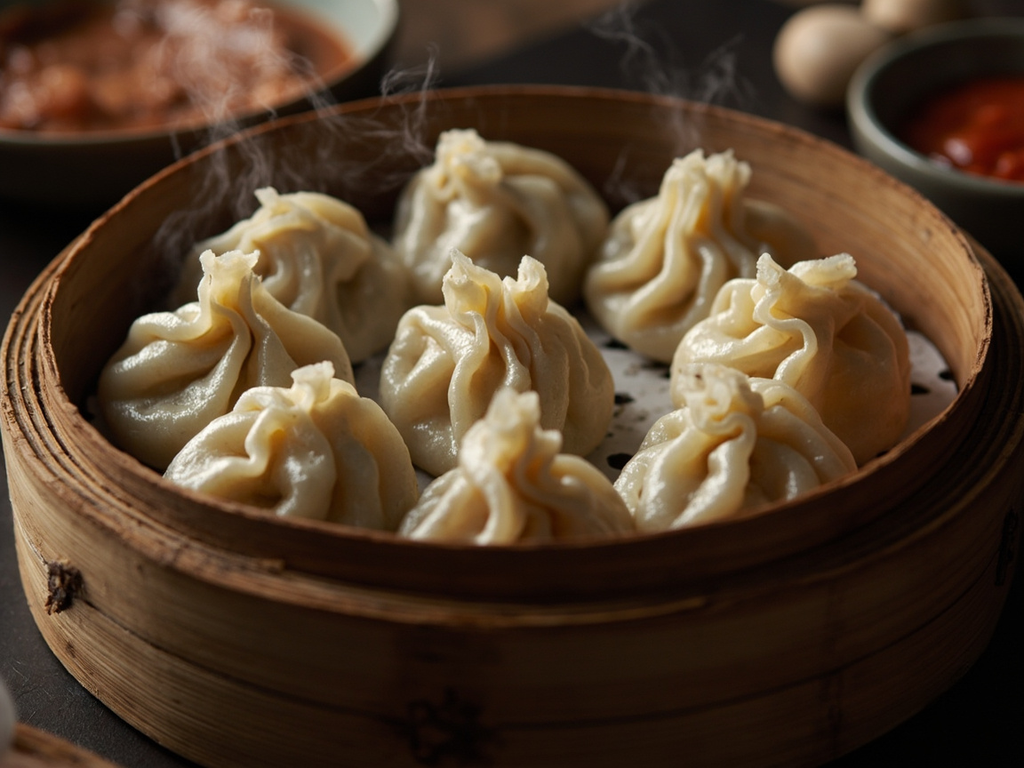
Small dumplings of unleavened dough, filled with minced meat seasoned with onion and ginger, hand-pleated and steamed. A quintessential sharing dish, they are made by the family before special occasions.
When a monastery did me the honor of hosting me, they would prepare these small dumplings the Tibetans call mög-mög. The whole household joined in, folding the dough around a meat filling seasoned with onion and ginger, then stacking them in a basket over boiling water. I was taught to pinch the dough into nice pleats to trap the juice — and it is that hot juice that makes all the delight. I keep the memory of warm evenings, crouched near the hearth, far from the formal dinners of Paris.
- •Barley or wheat flour — for the dough (wrapper)
- •Minced yak or mutton — a good portion (filling)
- •Onion — one, minced (aromatic)
- •Fresh ginger — a piece, grated (aromatic)
- •Melted yak butter — a little (moistness of filling)
- •Salt — to taste (seasoning)
Momos, Tibetan Steamed Dumplings
Small dumplings of unleavened dough, filled with minced meat seasoned with onion and ginger, hand-pleated and steamed. A quintessential sharing dish, they are made by the family before special occasions.
Why this dish? Alexandra stayed for years on the borders of Tibet, in Sikkim and in monasteries: momos, stuffed dumplings cooked by steaming, are the dish shared on feast days and when receiving a distinguished traveler like her.
When a monastery did me the honor of hosting me, they would prepare these small dumplings the Tibetans call mög-mög. The whole household joined in, folding the dough around a meat filling seasoned with onion and ginger, then stacking them in a basket over boiling water. I was taught to pinch the dough into nice pleats to trap the juice — and it is that hot juice that makes all the delight. I keep the memory of warm evenings, crouched near the hearth, far from the formal dinners of Paris.
Ingredients (period version)
- Barley or wheat flour — for the dough (wrapper)
- Minced yak or mutton — a good portion (filling)
- Onion — one, minced (aromatic)
- Fresh ginger — a piece, grated (aromatic)
- Melted yak butter — a little (moistness of filling)
- Salt — to taste (seasoning)
Ingredients
- Wheat flour — 300 g (dough)
- Warm water — about 150 ml (dough)
- Minced beef or lamb — 300 g (filling)
- Onion — 1 large, finely minced (aromatic)
- Fresh grated ginger — 2 tsp (aromatic)
- Garlic — 2 cloves (aromatic)
- Melted butter or oil — 1 tbsp (moistness)
- Salt and pepper — to taste (seasoning)
Method
- Knead flour and water into a smooth dough, cover, and let rest for 30 minutes.
- Mix the minced meat with onion, ginger, garlic, melted butter, salt, and pepper.
- Roll out the dough thinly, cut out 8 cm rounds, place a spoonful of filling in the center.
- Pleat the edges, gathering them at the top to form a well-sealed pouch.
- Steam for 12 to 15 minutes in an oiled basket, and serve piping hot.
How it was made : The momo, likely from Nepal and Himalayan trade routes, was cooked in bamboo or copper steamers placed over the hearth pot. The filling varied by altitude: meat in pastoral regions, cheese or vegetables elsewhere. It was made only for guests and festivities, as meat was precious.
The contemporary twist : Served with a spicy fermented chili sauce (sepen) in street-food style: momos are now the star snack from Kathmandu to New York.
Sources : Rinjing Dorje, Food in Tibetan Life, Prospect Books, 1985
Alexandra David-Néel · Charactorium