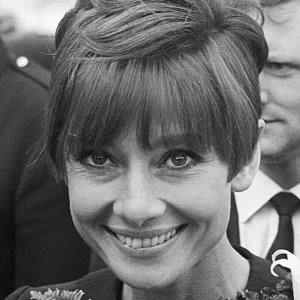

Audrey Hepburn (1929–1993) was a British actress and model of Belgian origin, an icon of Hollywood cinema in the 1950s and 1960s. She won the Academy Award for Roman Holiday (1953) and became synonymous with elegance and grace on screen. In her later years, she devoted herself to humanitarian work as a UNICEF Goodwill Ambassador.
Audrey Hepburn(1929 — 1993)
Audrey Hepburn
Royaume-Uni
8 min read
Frequently asked questions
Famous Quotes
« Nothing is impossible, the word itself says 'I'm possible'!»
« For beautiful lips, speak only words of kindness. For beautiful eyes, look for the good in other people.»
Key Facts
- 1929: born in Ixelles (Brussels), to a British father and a Dutch mother
- 1953: Academy Award for Best Actress for Roman Holiday, directed by William Wyler
- 1961: iconic role in Breakfast at Tiffany's, cementing her worldwide stardom
- 1988: appointed UNICEF Goodwill Ambassador, undertaking numerous missions in Africa and Latin America
- 1993: died in Tolochenaz (Switzerland) of colon cancer
Works & Achievements
Audrey Hepburn's breakthrough role, in which she plays a princess who escapes her royal duties for a day of adventure in Rome. The film earned her the Academy Award for Best Actress and introduced the world to an actress of unmatched charm and freshness.
A romantic comedy directed by Billy Wilder in which Audrey Hepburn plays a chauffeur's daughter who falls in love with her employer. The film cemented her status as a rising Hollywood star and deepened her collaboration with fashion designer Givenchy on the costumes.
An adaptation of Truman Capote's novel in which Audrey Hepburn plays Holly Golightly, a whimsical and elusive young woman in New York City. The song Moon River and the iconic black Givenchy dress made this film an enduring cultural touchstone of the twentieth century.
A musical adaptation of George Bernard Shaw's Pygmalion, in which Audrey Hepburn plays Eliza Doolittle, a flower girl transformed into a refined lady by Professor Higgins. The film won eight Academy Awards, though Audrey Hepburn herself was not nominated that year.
A thriller in which Audrey Hepburn plays a blind young woman stalked in her own home by drug traffickers. Her performance earned her an Academy Award nomination, proving her ability to inhabit intense dramatic roles far removed from her romantic repertoire.
As a UNICEF Goodwill Ambassador, Audrey Hepburn undertook dozens of field missions to countries in crisis: Ethiopia, Bangladesh, Ecuador, Venezuela, Honduras, El Salvador, Mexico, Guatemala, Somalia, and Vietnam. Her personal and public commitment helped raise worldwide awareness of the plight of children living in poverty.
Anecdotes
During World War II, Audrey Hepburn lived under Nazi occupation in Arnhem, Netherlands. She suffered severe malnutrition during the Hunger Winter of 1944–1945, an experience that deeply affected her health and shaped her humanitarian sensitivity for the rest of her life.
While preparing for her role in Roman Holiday (1953), Audrey Hepburn was spotted on set by the writer Colette, who insisted she be cast in the lead role of the Broadway play Gigi in 1951 — effectively launching her international career.
Audrey Hepburn is one of the rare performers to have won an Oscar, a Tony, an Emmy, and a Grammy — the four major American entertainment awards — known as the EGOT. She remains one of the most decorated figures in the history of show business.
The film Breakfast at Tiffany's (1961) brought her worldwide recognition, but Audrey Hepburn later admitted she regretted never being able to perform Moon River — the film's iconic song — in concert, even though she had personally fought to keep it in the film when producers wanted it cut.
In 1988, Audrey Hepburn became a UNICEF Goodwill Ambassador. She carried out humanitarian missions in some of the world's poorest countries — Ethiopia, Bangladesh, Vietnam, Somalia — remaining personally committed until just weeks before her death in January 1993.
Primary Sources
"I believe in the good in people. I have to believe in it, because I have seen too many terrible things to believe otherwise."
"The beauty of a woman is not in the clothes she wears nor the face she carries. It is seen in her eyes, because that is the doorway to her heart."
"We ate tulips — the bulbs — because there was nothing else. I will never forget what it means to be hungry."
"I fight for children who have no voice, because hands and a voice were extended to me when I needed them, after the war."
Key Places
The city where Audrey Hepburn lived with her mother during World War II, enduring the Nazi Occupation and the famine of 1944–1945. This traumatic experience shaped her humanitarian conscience and her deep empathy for children affected by conflict.
The setting for the film Roman Holiday (1953), which launched Audrey Hepburn's international career. The city is inseparable from her image: the Trevi Fountain, the Bocca della Verità, and Rome's winding streets are among the film's most iconic locations.
The heart of American cinema, where Audrey Hepburn made most of her major films during the 1950s and 1960s. She worked alongside the greatest directors and actors of Hollywood's golden age, while keeping a certain distance from the star system.
A village in the canton of Vaud where Audrey Hepburn settled from the 1960s onwards at her estate "La Paisible" (meaning "the peaceful one"). She found tranquility there, far from Hollywood, and spent the final years of her life before her death in 1993.
In 1988, Audrey Hepburn traveled to Ethiopia as part of her first official mission for UNICEF, in the aftermath of the great famine that had devastated the country. There she met malnourished children, evoking her own experience of hunger during the war.
Liens externes & ressources
Références
Œuvres
Wait Until Dark (Seule dans la nuit)
1967
Missions humanitaires pour l'UNICEF
1988–1992