 flip
flipPatriotic Corn and Beef Locro
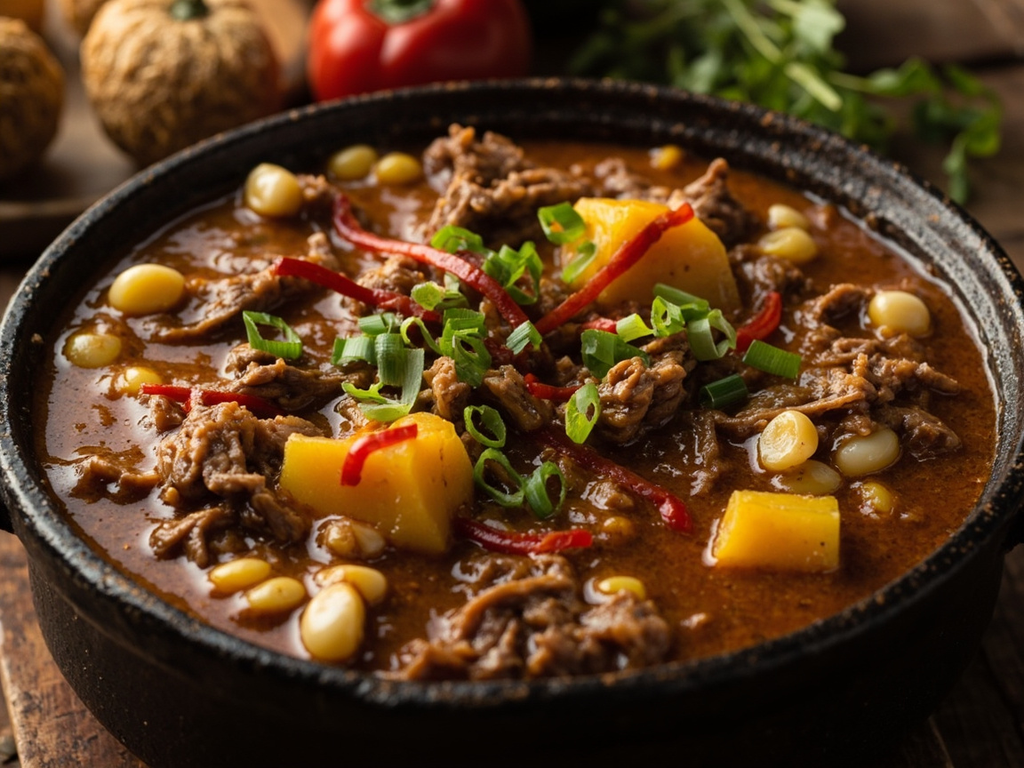
Patriotic Corn and Beef Locro
Why this dish? Dish of the great patriotic dates (May 25, July 9), locro brought all classes together around the same pot. The Eva Perón Foundation distributed these fortifying stews to poor families: a symbol dish of popular Argentina that Evita served even on the Plaza de Mayo during large gatherings.
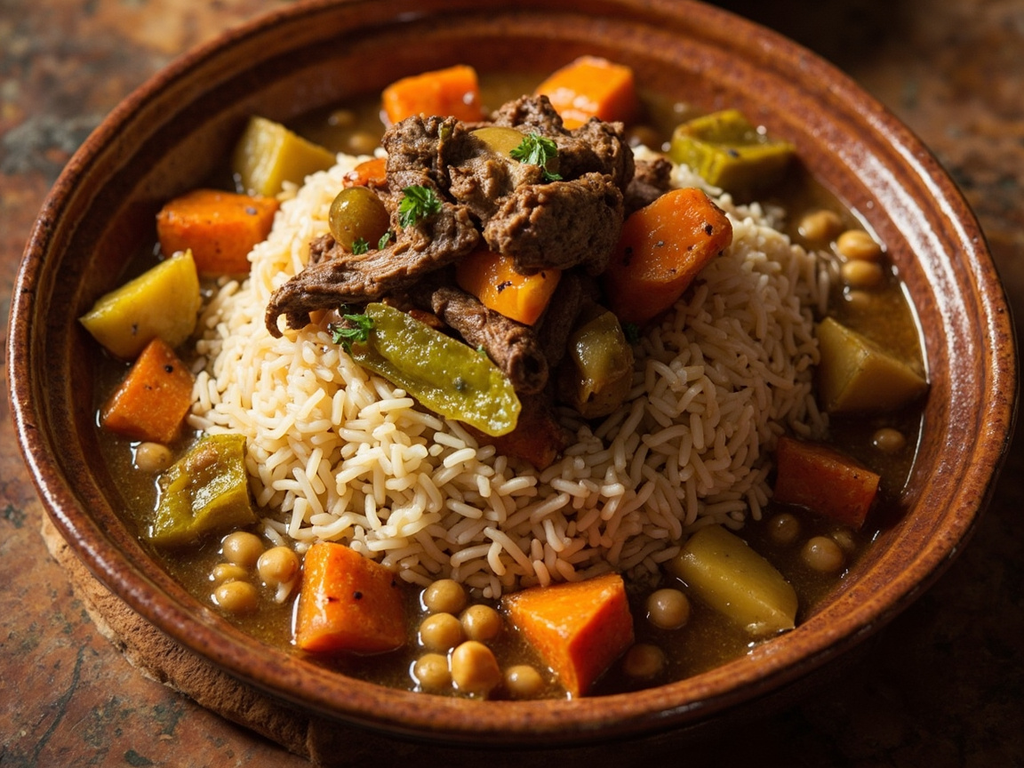
Thick, slow-cooked stew of cracked white corn, squash, beef and pork pieces, long-simmered and topped with a salsa de grasa of pimentón and green onions.
On the day of the fatherland, my descamisados, we leave no one with an empty stomach. Locro is put on the fire at dawn, in the biggest pot in the house, and we stir, stir for hours, because good locro cannot be rushed—like social justice, it demands patience and a lot of heart. At the Foundation, I saw children's eyes light up before that steaming bowl. A ladle of red salsa on top, and there, believe me, you hold all of Argentina in a single spoon.
- •Cracked white corn (maíz pisado) — large quantity (starchy base)
- •Squash (zapallo) — generous (creamy binder)
- •Beef and pork pieces — according to the pot (meats)
- •Beef fat, pimentón, green onions — for the salsa (signature topping)
Patriotic Corn and Beef Locro
Thick, slow-cooked stew of cracked white corn, squash, beef and pork pieces, long-simmered and topped with a salsa de grasa of pimentón and green onions.
Why this dish? Dish of the great patriotic dates (May 25, July 9), locro brought all classes together around the same pot. The Eva Perón Foundation distributed these fortifying stews to poor families: a symbol dish of popular Argentina that Evita served even on the Plaza de Mayo during large gatherings.
On the day of the fatherland, my descamisados, we leave no one with an empty stomach. Locro is put on the fire at dawn, in the biggest pot in the house, and we stir, stir for hours, because good locro cannot be rushed—like social justice, it demands patience and a lot of heart. At the Foundation, I saw children's eyes light up before that steaming bowl. A ladle of red salsa on top, and there, believe me, you hold all of Argentina in a single spoon.
Ingredients (period version)
- Cracked white corn (maíz pisado) — large quantity (starchy base)
- Squash (zapallo) — generous (creamy binder)
- Beef and pork pieces — according to the pot (meats)
- Beef fat, pimentón, green onions — for the salsa (signature topping)
Ingredients
- Cracked white corn (or hominy corn) — 400 g, soaked overnight (base)
- Butternut squash — 500 g (binder)
- Beef shank — 500 g (meat)
- Pork ribs or shoulder — 300 g (meat)
- Chorizo — 2 (smoky flavor)
- Onion, garlic — 1 + 2 cloves (aromatic base)
- Pimentón, cumin, oil, green onions — for the salsa (topping)
Method
- Soak the cracked corn overnight, then cook it for 1 hour at a simmer in a large volume of water.
- Add the meats, onion and garlic; let simmer covered for 1 hour 30 minutes.
- Add the cubed squash; continue for 45 minutes until it falls apart and thickens the stew.
- Prepare the salsa: heat oil (or fat), pimentón, cumin and green onions off the heat, then drizzle over each bowl when serving.
How it was made : Locro descends from pre-Columbian Andean cuisines; in Eva's time it was cooked for hours on a wood or charcoal stove, in cast-iron pots, often outdoors during neighborhood festivals. The fat salsa colored with pimentón replaced the garnish of wealthier families.
The contemporary twist : Serve in small individual bowls topped with a drizzle of criolla sauce and a little chopped green onion for a festive street-food version.
Eva Perón · Charactorium