 flip
flipMaza of Barley with Oil and Cheese
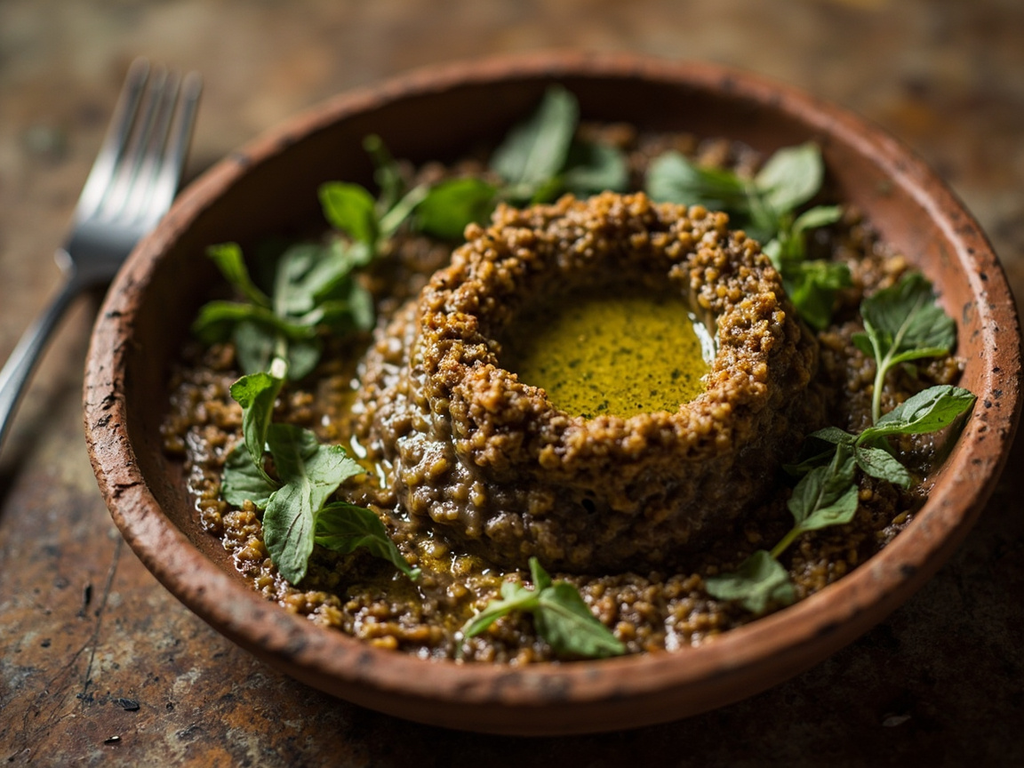
Maza of Barley with Oil and Cheese
Why this dish? In Sparta, where Helen was queen alongside Menelaus, maza is the staple food of everyone, from king to slave. This unleavened barley flatbread accompanies every meal: it is, more than the wheat bread reserved for feast days, the daily nourishment of her household.
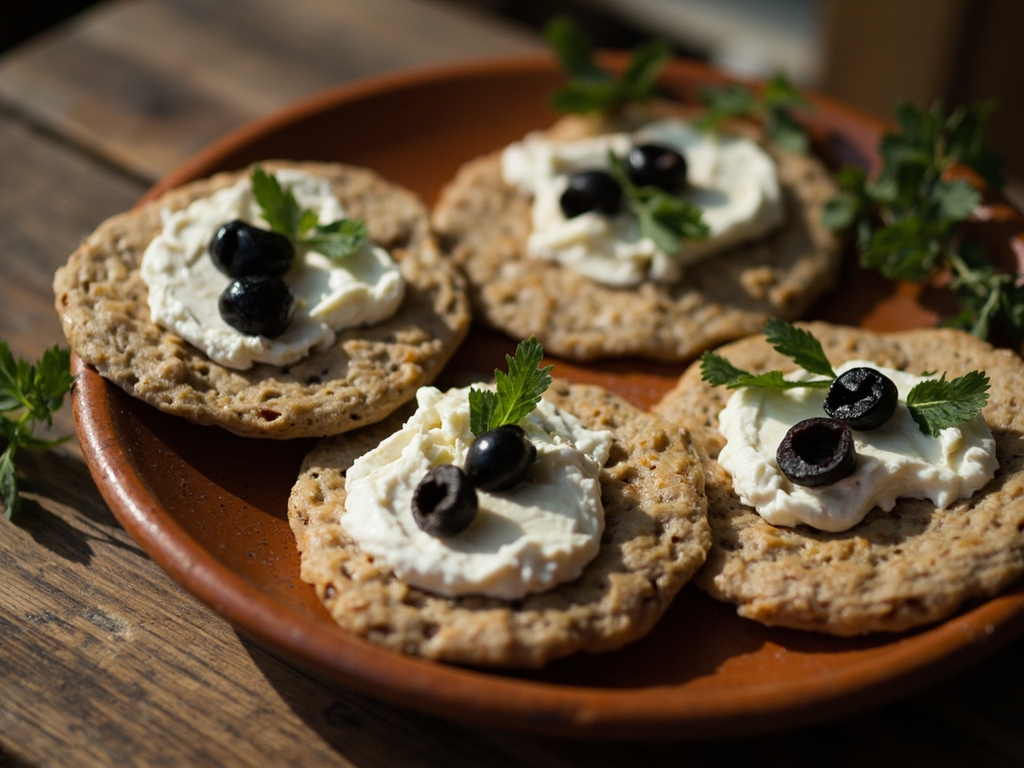
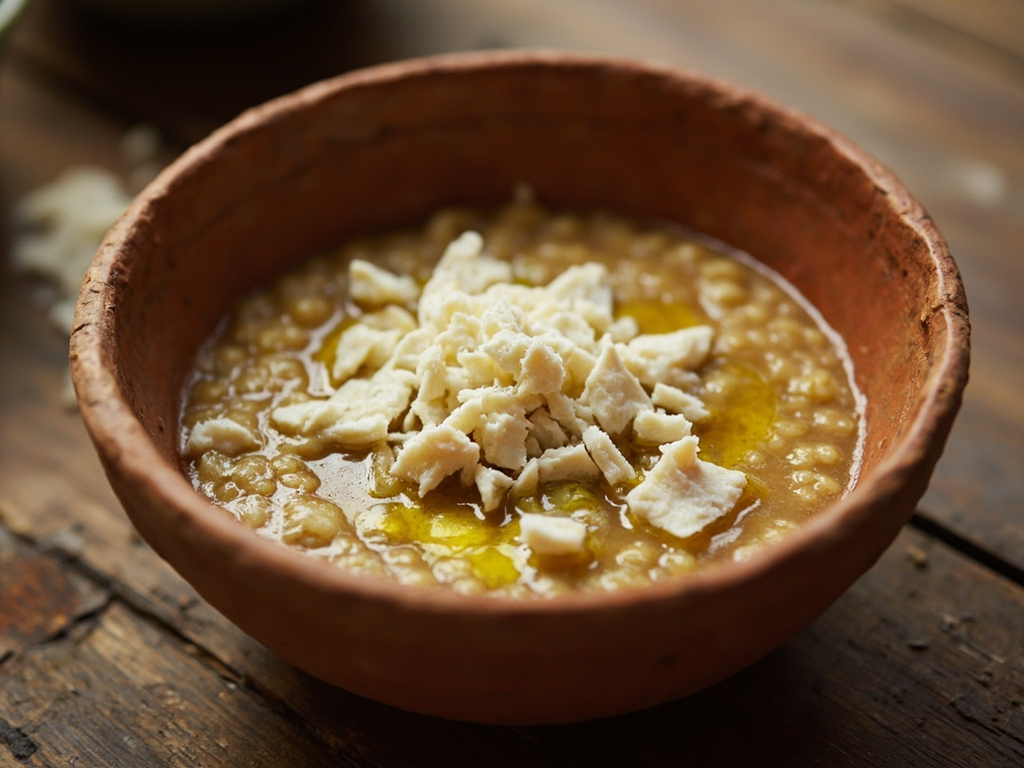
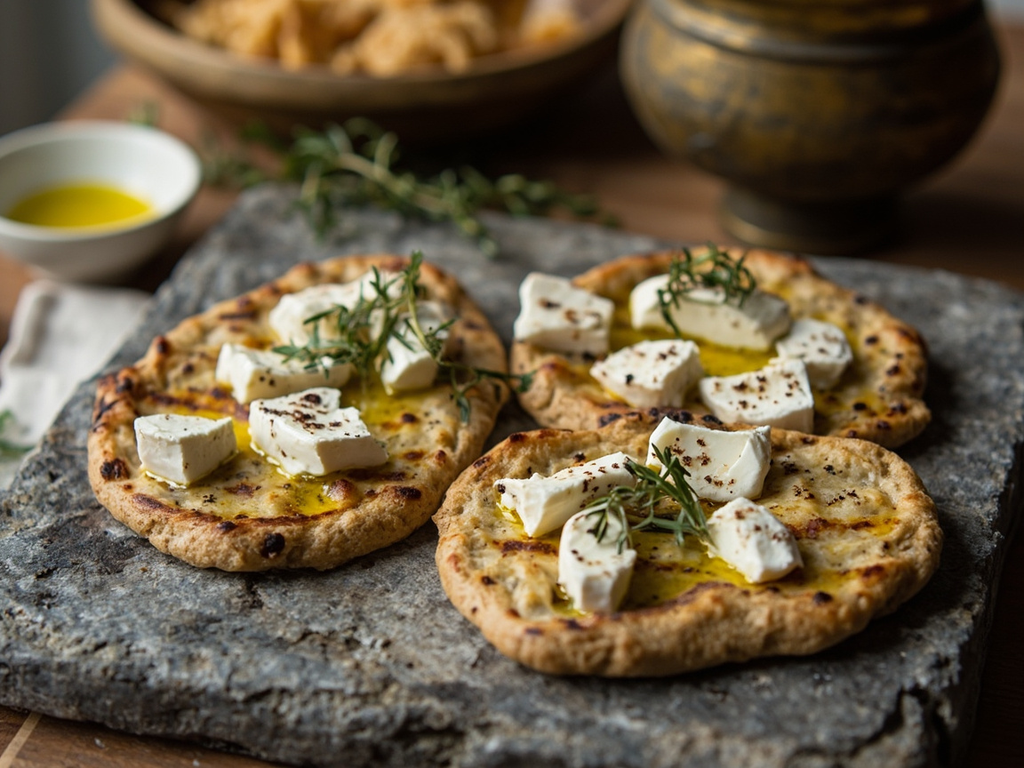
A dense flatbread of toasted and ground barley, kneaded with water and olive oil, topped with fresh goat cheese. It is the edible plate and everyday bread of the archaic Greek world.
Approach, stranger, and do not disdain this humble flatbread: it nourishes all of Lacedaemon, and a queen's hand is not ashamed to knead it. The barley is toasted on the hot stone, ground, and spring water binds it under my fingers; a drizzle of oil, a bit of cheese from my goats, and there is enough to keep a man on his feet. Keep the white wheat for weddings and feasts—this is the bread of every dawn, and it is better than one might think.
- •Toasted barley flour (alphita) — two generous handfuls (base of the flatbread)
- •Spring water — enough to bind (binder)
- •Olive oil — a good drizzle (softness and flavor)
- •Fresh goat cheese — a portion (topping)
- •Sea salt — a pinch (seasoning)
Maza of Barley with Oil and Cheese
A dense flatbread of toasted and ground barley, kneaded with water and olive oil, topped with fresh goat cheese. It is the edible plate and everyday bread of the archaic Greek world.
Why this dish? In Sparta, where Helen was queen alongside Menelaus, maza is the staple food of everyone, from king to slave. This unleavened barley flatbread accompanies every meal: it is, more than the wheat bread reserved for feast days, the daily nourishment of her household.
Approach, stranger, and do not disdain this humble flatbread: it nourishes all of Lacedaemon, and a queen's hand is not ashamed to knead it. The barley is toasted on the hot stone, ground, and spring water binds it under my fingers; a drizzle of oil, a bit of cheese from my goats, and there is enough to keep a man on his feet. Keep the white wheat for weddings and feasts—this is the bread of every dawn, and it is better than one might think.
Ingredients (period version)
- Toasted barley flour (alphita) — two generous handfuls (base of the flatbread)
- Spring water — enough to bind (binder)
- Olive oil — a good drizzle (softness and flavor)
- Fresh goat cheese — a portion (topping)
- Sea salt — a pinch (seasoning)
Ingredients
- Barley flour — 200 g (base)
- Warm water — about 120 ml (binder)
- Extra-virgin olive oil — 3 tbsp (softness)
- Fresh goat cheese (fromage frais or young log) — 100 g (topping)
- Salt — 1/2 tsp (seasoning)
- Dried oregano — 1 pinch (optional) (flavor)
Method
- If possible, lightly toast the barley flour dry in a pan for 2-3 minutes until fragrant: this toastiness is what defines maza.
- Mix the flour and salt, add the oil, then gradually add warm water while kneading until you get a soft but firm, non-sticky dough.
- Shape into flat rounds about 1 cm thick.
- Cook on a hot griddle or stone, over medium heat, 3-4 minutes per side, until lightly golden in spots.
- Serve warm, spread or topped with fresh cheese, a drizzle of oil, and a pinch of oregano.
How it was made : In the Homeric world and at Sparta, barley dominated wheat. The grains were toasted before grinding (hence the name alphita for barley flour), which improved preservation and gave the characteristic flavor. Maza could be eaten raw (simply kneaded dough) or cooked, and often served as a plate for the rest of the meal.
The contemporary twist : Serve the maza as an appetizer board in 'Spartan toast' style: warm flatbread, fresh goat cheese, thyme honey, and a few fresh figs—antiquity in brunch form.
Sources : Homer, The Odyssey (descriptions of meals) · Andrew Dalby, Siren Feasts: A History of Food and Gastronomy in Greece (1996)
Helen of Troy · Charactorium