 flip
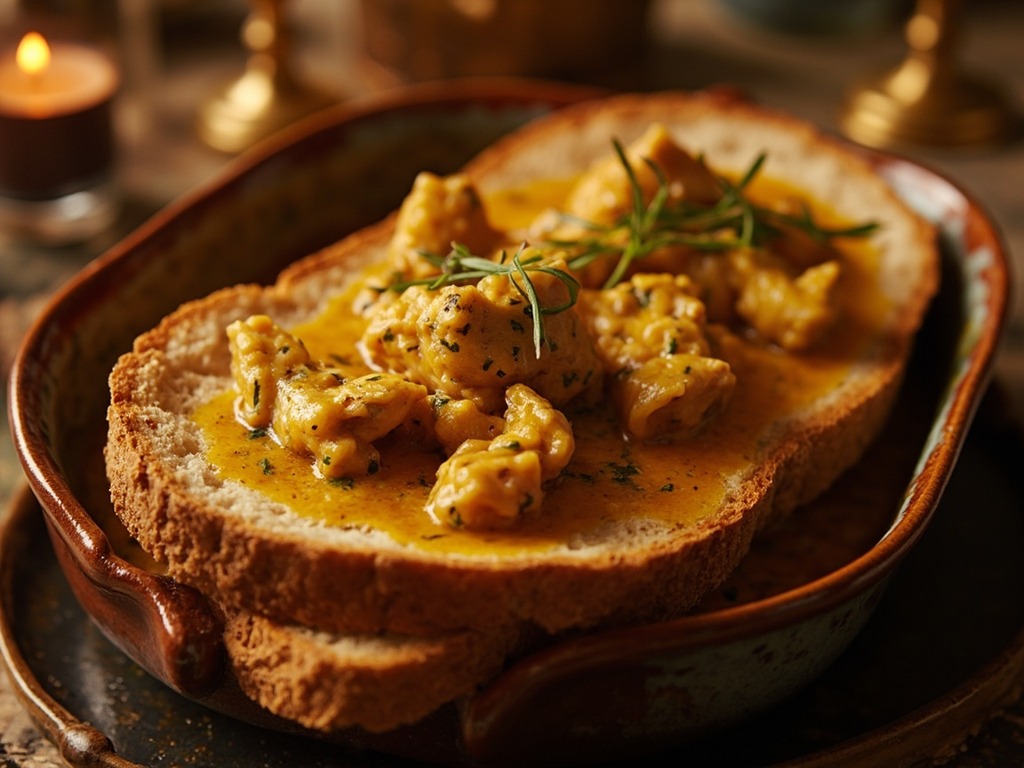
Brouet of Chicken with Verjus
Brouet of Chicken with Verjus
Why this dish? On July 17, 1429, Joan attended the coronation of Charles VII in Reims Cathedral, her standard in hand—the climax of her mission. Such a royal banquet would have served chicken stews seasoned with spices and verjus, the pinnacle of court cuisine that Joan encountered but never indulged in.
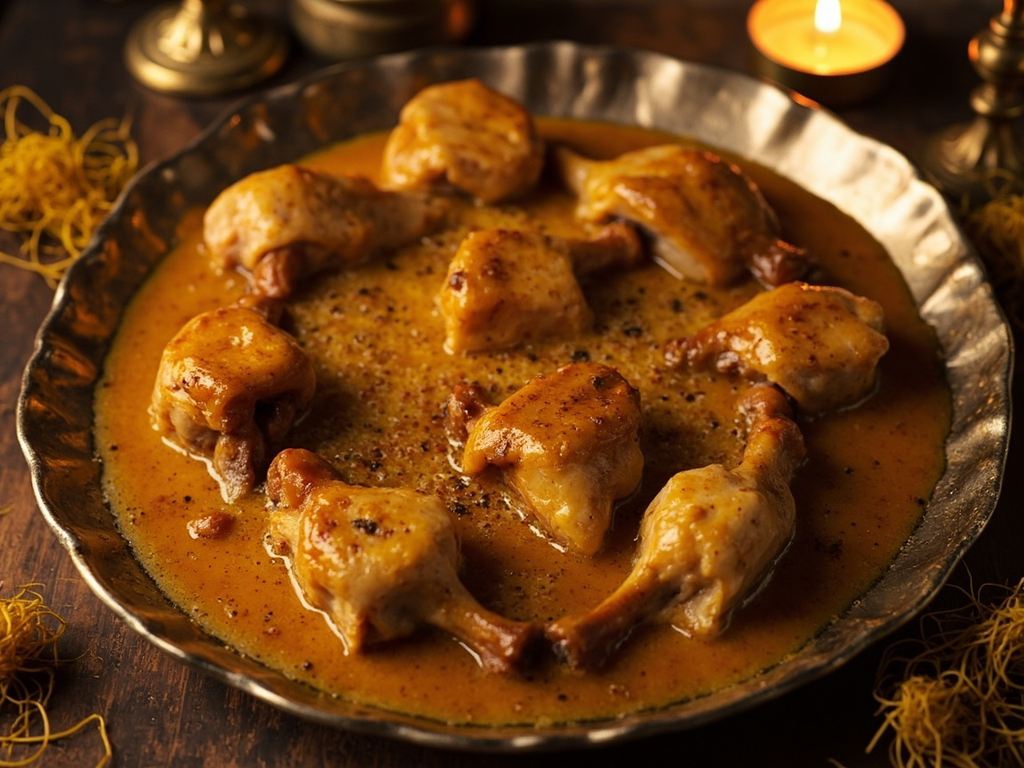
Chicken pieces simmered in a bread-thickened sauce, perfumed with ginger and cinnamon, sharpened with verjus. This is the great medieval French cuisine: sweet-spicy-sour, golden, as served at the tables of kings.
On that day, in the great church of Reims, I held my standard beside my gentle king at last crowned—he had been in the hardship, it was only right that he should be in the honor. At the feast, they served stews of chicken such as I had never seen at home: all golden with spices, pricked with that tart verjus that wakes the tongue. I barely tasted it, for my heart was too full of joy to think of eating. But you, let it simmer gently, and taste for me that day of glory.
- •Chicken (hen or capon) — one, in pieces (noble meat)
- •Verjus — a good dash (signature acidity)
- •Ginger, cinnamon, grains of paradise — a pinch of each (court spices)
- •Bread crumbs — a handful (sauce thickener)
- •Saffron — a few threads (golden color)
- •Broth — as needed (cooking liquid)
Brouet of Chicken with Verjus
Chicken pieces simmered in a bread-thickened sauce, perfumed with ginger and cinnamon, sharpened with verjus. This is the great medieval French cuisine: sweet-spicy-sour, golden, as served at the tables of kings.
Why this dish? On July 17, 1429, Joan attended the coronation of Charles VII in Reims Cathedral, her standard in hand—the climax of her mission. Such a royal banquet would have served chicken stews seasoned with spices and verjus, the pinnacle of court cuisine that Joan encountered but never indulged in.
On that day, in the great church of Reims, I held my standard beside my gentle king at last crowned—he had been in the hardship, it was only right that he should be in the honor. At the feast, they served stews of chicken such as I had never seen at home: all golden with spices, pricked with that tart verjus that wakes the tongue. I barely tasted it, for my heart was too full of joy to think of eating. But you, let it simmer gently, and taste for me that day of glory.
Ingredients (period version)
- Chicken (hen or capon) — one, in pieces (noble meat)
- Verjus — a good dash (signature acidity)
- Ginger, cinnamon, grains of paradise — a pinch of each (court spices)
- Bread crumbs — a handful (sauce thickener)
- Saffron — a few threads (golden color)
- Broth — as needed (cooking liquid)
Ingredients
- Chicken thighs — 6 (meat)
- Verjus (or 50/50 white grape juice + lemon juice) — 8 cl (acidity)
- Ground ginger — 1/2 tsp (spice)
- Cinnamon — 1/4 tsp (spice)
- Stale bread crumbs — 30 g (thickener)
- Saffron — 1 pinch (color)
- Chicken broth — 40 cl (cooking liquid)
- Salt — to taste (seasoning)
Method
- Brown the chicken pieces in a little fat, then set aside.
- Deglaze with the broth, add saffron, ginger, and cinnamon.
- Return the chicken, cover, and simmer for 30 to 35 minutes.
- Blend or mash the bread crumbs with a little sauce, then stir back in to thicken (the sauce thickens without flour).
- Off the heat, add the verjus, salt, and let infuse for 2 minutes: the sauce should be golden, tangy, and fragrant. Serve on bread or roast slices.
How it was made : Medieval stews and sauces, described by Taillevent in *Le Viandier*, were thickened with bread (never with butter and flour, which came later), colored with saffron, and balanced by the acidity of verjus. The abundance of costly spices—ginger, grains of paradise—signaled rank: a king's dish, a radical opposite to Joan's soupe au vin.
The contemporary twist : Serve on a slice of golden 'savory French toast' sprinkled with a dusting of saffron, and name it 'Brouet du Sacre'.
Sources : Guillaume Tirel dit Taillevent, Le Viandier, XIVe siècle · Le Ménagier de Paris, c. 1393
Joan of Arc · Charactorium