 flip
flipMinestra of Herbs and Chickpeas
Minestra of Herbs and Chickpeas
Why this dish? Leonardo was a vegetarian by conviction, refusing to kill animals. His daily fare, attested by his contemporaries and his own shopping lists, relied on legumes, herbs, bread, and oil — exactly this humble soup that a workshop man ate between sketches.
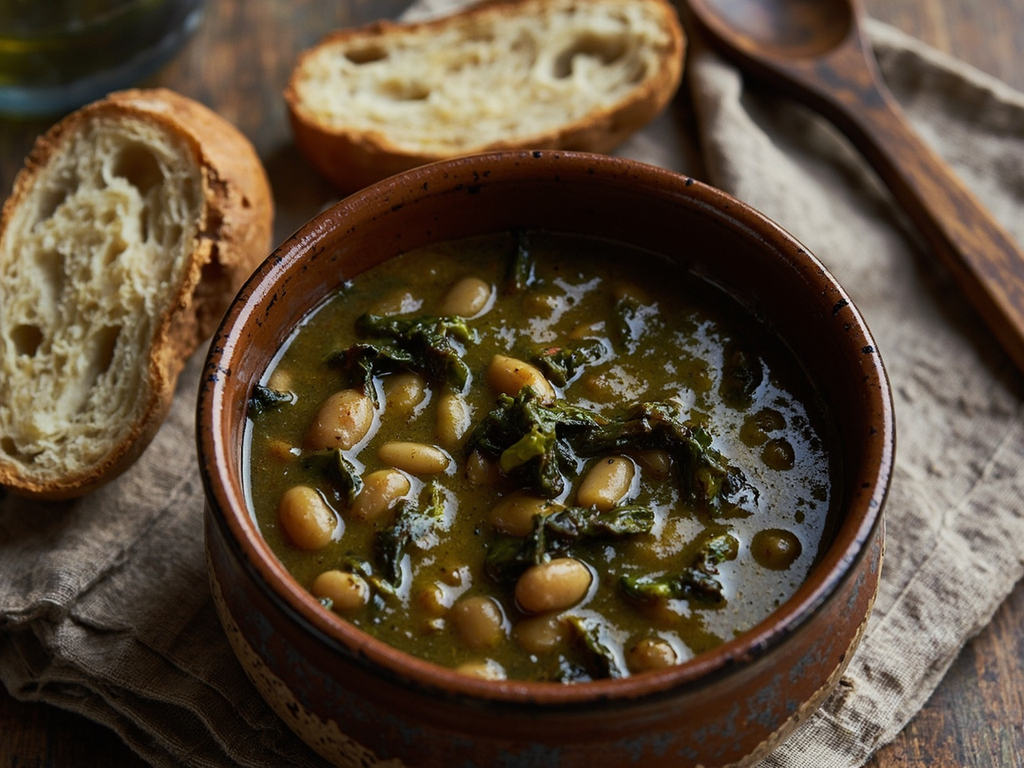
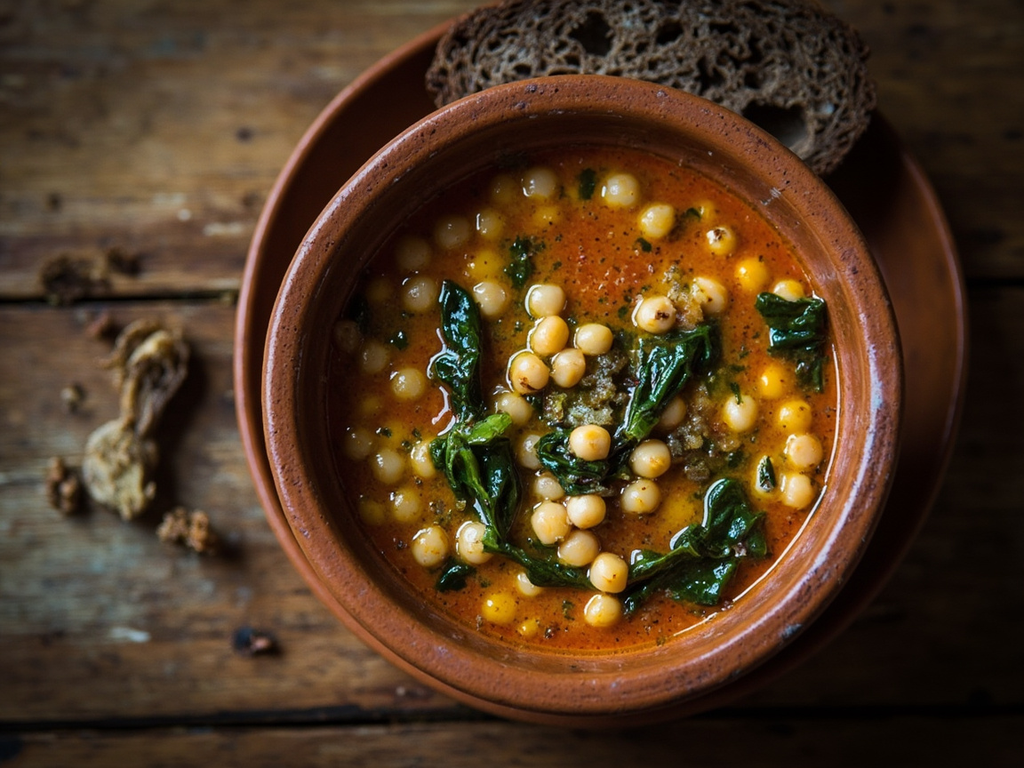
A thick pottage of chickpeas and chard or beet greens, perfumed with garden herbs, thickened with stale bread, and brightened with a dash of verjuice. Nourishing, simple, perfectly seasonal.
Come closer to my bowl, friend. You will find no flesh here, for I consider it a vile thing to make my body the tomb of other animals. See how these chickpeas, long soaked then cooked over a gentle fire, yield a creamy broth; I throw in garden herbs, a little crumb to thicken, and at the last moment this green grape juice that wakes everything up. Eat it hot, with dark bread: this is what keeps a man at work from morning to night.
- •Dried chickpeas — a good handful per person, soaked the night before (nourishing base)
- •Chard or beet greens from the garden — one bunch (greens)
- •Fresh herbs (parsley, mint, wild fennel) — one bouquet (flavor)
- •Stale bread — a few slices (thickener)
- •Tuscan olive oil — a generous drizzle (fat)
- •Agresto (verjuice) — a dash (final acidity)
Minestra of Herbs and Chickpeas
A thick pottage of chickpeas and chard or beet greens, perfumed with garden herbs, thickened with stale bread, and brightened with a dash of verjuice. Nourishing, simple, perfectly seasonal.
Why this dish? Leonardo was a vegetarian by conviction, refusing to kill animals. His daily fare, attested by his contemporaries and his own shopping lists, relied on legumes, herbs, bread, and oil — exactly this humble soup that a workshop man ate between sketches.
Come closer to my bowl, friend. You will find no flesh here, for I consider it a vile thing to make my body the tomb of other animals. See how these chickpeas, long soaked then cooked over a gentle fire, yield a creamy broth; I throw in garden herbs, a little crumb to thicken, and at the last moment this green grape juice that wakes everything up. Eat it hot, with dark bread: this is what keeps a man at work from morning to night.
Ingredients (period version)
- Dried chickpeas — a good handful per person, soaked the night before (nourishing base)
- Chard or beet greens from the garden — one bunch (greens)
- Fresh herbs (parsley, mint, wild fennel) — one bouquet (flavor)
- Stale bread — a few slices (thickener)
- Tuscan olive oil — a generous drizzle (fat)
- Agresto (verjuice) — a dash (final acidity)
Ingredients
- Dried chickpeas — 250 g (soaked 12 h) or 2 drained cans (base)
- Chard — 400 g (greens)
- Parsley + mint + fennel seeds — 1 bunch + 1 tsp (flavor)
- Stale country bread — 2 slices (thickener)
- Extra virgin olive oil — 4 tbsp (fat)
- Verjuice (or green grape juice / failing that, lemon) — 1 to 2 tbsp (acidity)
- Salt — to taste (seasoning)
Method
- Cook the soaked chickpeas in a large pot of unsalted water for 1 to 1.5 hours, until tender (or use canned chickpeas).
- Wash the chard, separate stems from leaves, slice both, and add to the chickpeas 15 minutes before the end.
- Crumble the bread into the soup to thicken it, add the chopped herbs and fennel.
- Salt, drizzle with olive oil, coarsely blend a ladleful if you want a thicker texture.
- Off the heat, brighten with a dash of verjuice. Serve hot with dark bread.
How it was made : This kind of minestra was cooked in a single earthenware pot hung over the fire, without precise measurements: whatever the garden and pantry offered was thrown in. Legumes (chickpeas, fava beans, lentils) were the protein mainstay for both common people and frugal minds. Verjuice, ubiquitous, played the role that lemon does today.
The contemporary twist : Serve in a glass with a veil of new olive oil and a golden oven-baked bread chip — a nod to sfumato: a gradient from the green of herbs to the gold of bread.
Sources : Maestro Martino, Libro de arte coquinaria, 15th century · Platina (Bartolomeo Sacchi), De honesta voluptate et valetudine, 1474
Leonardo da Vinci · Charactorium