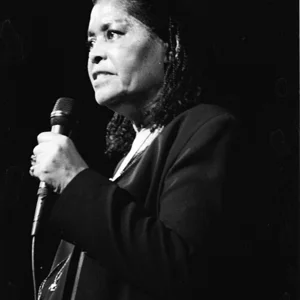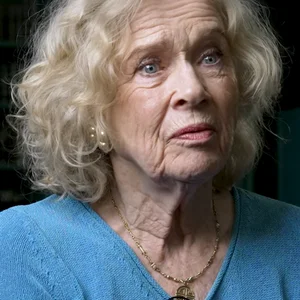

Liv Ullmann is a Norwegian actress, director, and screenwriter born in 1938. The muse of filmmaker Ingmar Bergman, she established herself as one of the greatest actresses in European cinema of the 20th century. She also advocates for children's rights as a UNICEF ambassador.
Liv Ullmann(1938 — ?)
Liv Ullmann
Norvège, Suède
9 min read
Frequently asked questions
Key Facts
- Born on December 16, 1938, in Tokyo to Norwegian parents
- Major artistic collaboration with Ingmar Bergman beginning in 1966 (Persona)
- Nominated twice for Golden Globes and honored with numerous international awards
- Appointed UNICEF Goodwill Ambassador in 1980
- Directed her first film Sofie in 1992, followed by Faithless (2000), based on a screenplay by Bergman
Works & Achievements
Ingmar Bergman's masterpiece in which Liv Ullmann plays an actress who stops speaking, opposite a nurse. A landmark of European art cinema, the film revealed Ullmann's expressive genius to the world.
A Bergmanian drama about death and female suffering, nominated for the Academy Award for Best Picture. Ullmann's performance earned her international recognition and a Golden Globe nomination.
A Swedish television series later adapted for cinema, offering a devastating portrait of a couple falling apart. The work is said to have caused a dramatic spike in divorce rates across Scandinavia, so authentic did it feel.
Liv Ullmann's first memoir, translated into twenty languages and a worldwide bestseller. In it, she explores her life as a woman, an actress, and a mother with a candor that stands as a milestone in women's autobiographical writing.
Ingmar Bergman's final epic, winner of the Academy Award for Best Foreign Language Film. Ullmann plays a mother whose children experience a childhood both magical and traumatic in early twentieth-century Sweden.
Liv Ullmann's feature directorial debut, a portrait of a Danish Jewish woman spanning several decades. The film showcases her talents as a director, shaped by the formal rigor she learned at Bergman's side.
A film directed by Ullmann from an original autobiographical screenplay by Bergman, exploring guilt and betrayal within a couple. Acclaimed as one of the finest works to emerge from their collaboration in its later phase.
Anecdotes
Liv Ullmann met Ingmar Bergman in 1965 during the filming of Persona. The Swedish director was so struck by her face that he completely rewrote the screenplay for her. This encounter marked the beginning of an artistic collaboration and a romantic relationship that would last several years, and led to the birth of their daughter Linn in 1966.
In 1973, Liv Ullmann became the first non-American actress to appear on the cover of Time magazine, under the headline 'The New Ingrid Bergman'. This international recognition illustrated how her talent had transcended Scandinavian borders to reach audiences worldwide.
At the Golden Globes ceremony following her nomination for Cries and Whispers in 1974, Liv Ullmann delivered a widely noted speech denouncing the underrepresentation of women behind the camera in Hollywood. Her feminist stance — rare at the time in the film industry — earned her as much admiration as criticism.
Appointed UNICEF Goodwill Ambassador in 1980, Liv Ullmann visited crisis zones in Ethiopia, Bangladesh, and Southeast Asia. She testified before the United States Congress on the living conditions of refugee children, directly contributing to the securing of emergency funding. Her humanitarian commitment earned her numerous international honors.
In 2000, Liv Ullmann directed Faithless, based on an original screenplay by Ingmar Bergman, forty years after their first collaboration. Bergman, too old to direct it himself, entrusted her with this autobiographical work on guilt and betrayal. The film was praised by critics as one of the most accomplished works in the Bergman canon.
Primary Sources
I am not a liberated woman. I am a woman who is trying to liberate herself. Every role I play is a way of understanding who I am, of finding myself through others.
The beauty of age is that you are no longer afraid to tell the truth. I spent my youth smiling when I wanted to cry. Now I cry when I want to cry, and I smile when I am happy.
I have seen children die not from fate, but from indifference. Every dollar you refuse to allocate to these programs has a face, a name, an age. These children cannot vote, they cannot advocate for themselves. We must do it for them.
Bergman did not direct actors the way other filmmakers did. He created a space of silence and absolute trust. He would watch us and wait. That gaze was a permission to be entirely oneself, without armor.
Key Places
This remote island in the Baltic Sea was Ingmar Bergman's retreat, where Liv Ullmann lived by his side for several years. It was here that some of their most personal films were conceived, in an isolation that fostered creativity.
A major cultural institution where Liv Ullmann built her theatrical career and to which she regularly returns to perform Ibsen and Strindberg. This venue embodies her deep connection to the Scandinavian theatrical tradition.
These Swedish studios are the birthplace of the Ullmann-Bergman collaboration. It was on these soundstages that Persona, Cries and Whispers, and Scenes from a Marriage were filmed — landmarks of world cinema.
Liv Ullmann achieved great success on Broadway during the 1970s and 1980s, particularly in productions of Ibsen directed by American directors. The city became her second artistic home.
The city where Liv Ullmann spent her childhood and teenage years, settling there after her family's return from the Far East. It was here that she discovered amateur theatre and first recognized her calling as a performer.
Typical Objects

An iconic prop of the film set, it embodies the collaboration between Liv Ullmann and Ingmar Bergman. Each clap marked the start of a take in which Ullmann surrendered herself entirely to the filmmaker's gaze.

Liv Ullmann has kept personal diaries since her early days in theatre, which became the raw material for her two autobiographies. These notebooks reflect her practice of introspection as an artistic working method.

A symbol of her humanitarian commitment, this document gave her access to crisis zones throughout the 1980s. It represents her role as ambassador and advocate for children in emergency situations.

A lightweight camera used by Bergman's crews for certain location shoots. Its maneuverability allowed for intimate long takes and close-ups of Ullmann's face — the visual signature of their films together.

Ibsen's plays, a cornerstone of Norwegian culture, lie at the foundation of Liv Ullmann's theatrical training. Throughout her career she would embody Ibsen's great heroines, including Nora in A Doll's House.

Bergman rejected heavy makeup in film: Liv Ullmann's bare face, captured in close-up, became a dramatic instrument in its own right. This aesthetic choice defined her visual identity on screen.
School Curriculum
Vocabulary & Tags
Key Vocabulary
Daily Life
Morning
During filming with Bergman on the island of Fårö, Liv Ullmann rises early in the filmmaker's secluded house. She has a frugal breakfast — dark bread, fresh cheese, strong coffee — before reviewing her notes on the day's role. The silence of the island, broken only by Baltic winds, is an integral part of her preparation.
Afternoon
Filming afternoons are intense and focused: Bergman works in absolute quiet, with no music or distractions. Ullmann runs through take after take, trying to empty her mind of all technical calculation in order to reach raw emotion. Between scenes, she reads — Ibsen, Strindberg, or Norwegian poets — to stay in a state of emotional openness.
Evening
Evenings on Fårö are simple and intimate: a shared meal with the small crew, philosophical discussions about the meaning of the film in progress, sometimes a glass of Swedish white wine. Ullmann writes in her personal journal, a habit she developed in adolescence that would feed into her autobiographical books.
Food
Liv Ullmann follows a traditional Scandinavian diet: smoked fish, pickled herring, rye, dairy products, and root vegetables. She eats little during shoots, out of concentration, and cooks for herself when she is home in Norway. She avoids excessive alcohol, well aware of the physical and emotional demands of her craft.
Clothing
In everyday life, Liv Ullmann dresses with a sober, functional elegance that is typically Scandinavian: thick woolen sweaters, dark wool coats, sturdy boots suited to Nordic winters. On stage or at public events, she wears simple outfits in neutral colors that draw attention to her face rather than to fashion.
Housing
During the Bergman years, Liv Ullmann lives between the island of Fårö (a wooden house facing the Baltic Sea) and an apartment in Stockholm. Her personal home in Norway, near Oslo, is her sanctuary: a warm interior filled with books and photographs, without ostentation, reflecting the values of restraint she inherited from Scandinavian Lutheran culture.
Historical Timeline
Period Vocabulary
Visual Style
Esthétique du cinéma d'auteur scandinave en noir et blanc : lumière nordique froide, gros plans intenses sur le visage nu, interieurs minimalistes et grain du 35mm.
Sound Ambience
Ambiance feutrée d'un plateau de cinéma nordique des années 1960-70, entre silence créatif et murmures de la nature scandinave.
Liens externes & ressources
Références
Œuvres
Changing (autobiographie)
1976