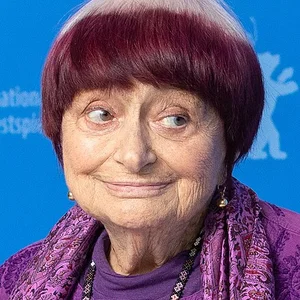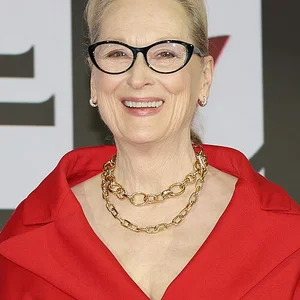

Meryl Streep is an American actress born in 1949, considered one of the greatest performers in the history of cinema. The recipient of three Academy Awards, she has distinguished herself in roles of exceptional diversity, from historical drama to musical comedy.
Meryl Streep(1949 — ?)
Meryl Streep
États-Unis
10 min read
Frequently asked questions
Famous Quotes
« The great gift of human beings is that we have the power of empathy.»
« I no longer have patience for certain things, not because I've become arrogant, but simply because I reached a point in my life where I do not want to waste more time with what displeases me or hurts me.»
Key Facts
- Born June 22, 1949 in Summit, New Jersey, United States
- First Academy Award for Kramer vs. Kramer in 1980
- Academy Award for Sophie's Choice in 1983, a role requiring a Polish accent
- Third Academy Award for The Iron Lady (Margaret Thatcher) in 2012
- 21 Oscar nominations, an all-time record in the history of the ceremony
Works & Achievements
Robert Benton's film about a divorcing couple fighting for custody of their son. Streep portrays Joanna Kramer with striking subtlety and wins her first Academy Award for Best Supporting Actress.
An adaptation of William Styron's novel about a survivor of the Nazi concentration camps. Streep learned Polish and German for this devastating role, earning her second Oscar and international recognition.
Mike Nichols's film based on the true story of Karen Silkwood, a union activist who exposed the safety conditions at a nuclear plant before dying under mysterious circumstances. Streep's performance affirms her commitment to social causes.
A colonial epic drawn from the memoirs of writer Karen Blixen about her life in Kenya during the 1910s–1930s. Streep plays an independent woman against the backdrop of colonial Africa and earns another Oscar nomination.
A satirical comedy set in the world of high fashion in which Streep plays Miranda Priestly, the tyrannical editor of a prestigious New York fashion magazine. Her cold, precise, and magnetic performance has become a worldwide cultural touchstone.
A musical comedy built around the songs of Swedish pop group ABBA, in which Streep showcases her talents as a singer and comic actress in a register radically different from her usual dramatic work.
A biopic about the life of Margaret Thatcher, directed by Phyllida Lloyd. Streep's physical and vocal transformation to embody the British Prime Minister is universally praised and earns her a third Academy Award.
Anecdotes
With 21 Oscar nominations, Meryl Streep holds an all-time record in the history of world cinema that no other actor or actress has ever come close to. This extraordinary figure has earned her the nickname “The Greatest” among her Hollywood peers, and each new nomination is now treated as a news event in its own right by the entertainment press.
To portray Sophie in “Sophie’s Choice” (1982), Meryl Streep learned to speak Polish and German with authentic accents in just a few months. This intensive linguistic work, which has since become her trademark, even impressed native speakers when the film was released and earned her her second Oscar.
To prepare for her role as Margaret Thatcher in “The Iron Lady” (2011), Streep spent months studying hundreds of hours of video recordings of the British Prime Minister, meticulously reproducing her distinctive deep, nasal voice, rigid posture, and characteristic gestures. People close to Thatcher reportedly said they were unsettled by the striking resemblance.
During the filming of “Kramer vs. Kramer” (1979), Meryl Streep asked to rewrite some of her lines, which she felt were too unfavorable to her female character. This concern for fair representation of women in cinema marked the beginning of an openly feminist commitment that continues to this day.
Although best known for her intense dramas, Meryl Streep revealed an unexpected comedic side in “The Devil Wears Prada” (2006) and the musical “Mamma Mia!” (2008), proving she could excel in every genre. She sings herself in the latter film, having learned the ABBA songs for the occasion.
Primary Sources
Upon accepting her Oscar for *Kramer vs. Kramer*, Streep thanks her scene partners and reflects on the importance of telling human stories that speak to transformations in family life and the unspoken distances between couples.
Upon accepting her Oscar for *Sophie's Choice*, Streep underscores the responsibility of artists to carry the memory of History's victims: “These voices must continue to be heard.”
Streep encourages graduates to nurture their imagination: “Take care of what nourishes you inwardly — reading, music, travel, sometimes solitude. That is where everything you will give to the world comes from.”
“When the powerful mock the weak from a podium, and everyone laughs, that is the decline of democracy.” Streep defends freedom of the press and the role of the arts as a bulwark against authoritarianism.
Key Places
Birthplace of Meryl Streep, born on June 22, 1949. This affluent suburban town on the East Coast shaped her upbringing and her earliest artistic passions, including classical singing, which she began practicing as a teenager.
One of the most prestigious drama schools in the world, where Streep earned her Master of Fine Arts in 1975. It was here that she honed her rigorous acting technique and met her first professional partners and mentors.
The heart of American theater, where Meryl Streep launched her professional career in 1977 in Shakespeare productions and contemporary works, immediately establishing herself as a revelation of the New York stage.
The iconic venue that has hosted the Academy Awards ceremony since 2002. Meryl Streep has received standing ovations and awards here, and the theater symbolizes the pinnacle of an American film career.
Meryl Streep's primary home since the start of her career, where she raised her four children. New York represents for her the artistic freedom, cultural diversity, and creative energy that fuel her work.
Typical Objects

Before every role, Meryl Streep fills her script with handwritten notes covering the character's psychology, historical research, and intended tonal variations. These annotations reveal an intellectual and methodical approach to acting that her co-stars consistently describe as impressive.

To master foreign accents — Polish, aristocratic British, Australian, New Zealand, depending on the role — Streep records native speakers and listens back to them tirelessly. For her, the voice is the primary tool for embodying a character.

Meryl Streep holds three golden statuettes, symbols of the highest honor in American cinema awarded by the Academy of Motion Picture Arts and Sciences. This figurine depicting a knight holding a sword has become the ultimate icon of cinematic excellence.

Every role involves costumes custom-designed by major names in fashion and film. For Streep, putting on a character's costume is a founding act of the physical and psychological transformation required to bring that character to life.

For any historical or biographical role, Streep assembles a personal library of primary and secondary sources: biographies, press archives, period recordings. She arrives on set with her own fully documented convictions about the character.

Streep has played piano since childhood, and this musical practice feeds her sense of rhythm and breath in dramatic performance. She has also trained in singing for several musical films, working with professional vocal coaches.
School Curriculum
Vocabulary & Tags
Key Vocabulary
Tags
Daily Life
Morning
During filming periods, Meryl Streep rises early to join the hair, makeup, and costume teams. She uses this time of physical transformation — sometimes several hours — to gradually inhabit her character, believing that outward appearance is inseparable from an actor's inner work.
Afternoon
Filming afternoons alternate between takes, rehearsals, and discussions with the director about the intentions behind each scene. Outside of productions, Streep devotes her afternoons to reading scripts, conducting in-depth research for upcoming roles, and working sessions with her co-stars.
Evening
The mother of four children, Meryl Streep places fundamental importance on family life and has always strived to protect her private space. Evenings are reserved for family, playing the piano, and reading — far from the spotlight of a Hollywood world she inhabits without ever being consumed by it.
Food
Streep is known for her pragmatism: she follows no particular diet but pays attention to eating healthily and in a balanced way. During physically demanding preparations, she works with nutritionists and fitness coaches to tailor her energy levels to the demands of the role.
Clothing
In everyday life, Meryl Streep favors a understated, elegant style that is far removed from Hollywood glamour. She prioritizes comfort and practicality for her research work and travels, reserving ceremonial outfits by leading designers for professional events.
Housing
Streep divides her life between New York City, where she lives primarily with her family in a residential neighborhood, and Los Angeles during California shoots. She also owns a country property where she retreats to work on her roles in tranquility and recharge away from the media frenzy.
Historical Timeline
Period Vocabulary
Liens externes & ressources
Références
Œuvres
Le Choix de Sophie (Sophie's Choice)
1982
Out of Africa
1985
Le Diable s'habille en Prada (The Devil Wears Prada)
2006
Mamma Mia !
2008
La Dame de fer (The Iron Lady)
2011