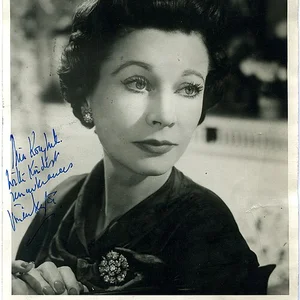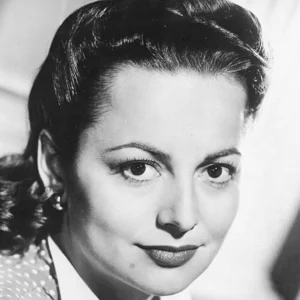

A British actress born in 1916 in Tokyo, Olivia de Havilland was one of Hollywood's greatest stars of the 1930s and 1940s. She won two Academy Awards for Best Actress and successfully fought against the Hollywood studio system, paving the way for actors' contractual freedom.
Olivia de Havilland(1916 — 2020)
Olivia de Havilland
États-Unis, France, Royaume-Uni
7 min read
Frequently asked questions
Famous Quotes
« I did not want to be a slave to the studio. I wanted to be a free artist.»
Key Facts
- 1916: Born in Tokyo to British parents
- 1939: Role of Melanie Wilkes in Gone with the Wind
- 1943: Legal victory against Warner Bros. (California law limiting exclusive contracts to 7 years)
- 1946 and 1949: Two Academy Awards for Best Actress (To Each His Own, The Heiress)
- 2020: Died in Paris at the age of 104
Works & Achievements
An adaptation of Shakespeare's masterpiece, this film marks Olivia de Havilland's true Hollywood debut. She plays Hermia alongside a prestigious cast.
An epic saga set against the American Civil War, this film remains one of the greatest box-office successes in cinema history. Olivia de Havilland plays Melanie Hamilton, a figure of gentleness and courage, and was nominated for the Academy Award for Best Supporting Actress.
A sentimental drama in which she plays a woman forced to give up her son. The role earned her her first Academy Award for Best Actress.
A socially conscious film about conditions in American psychiatric hospitals. Her intense and nuanced performance raised public awareness and contributed to reforms in several states.
An adaptation of Henry James's novel, in which she plays a naive woman manipulated by a charming suitor. The role earned her her second Academy Award for Best Actress.
Olivia de Havilland's landmark legal victory against her studio permanently transformed contractual relations in Hollywood and freed actors from perpetual contracts.
Anecdotes
In 1943, Olivia de Havilland sued Warner Bros., which was attempting to extend her seven-year contract by an additional six months to compensate for her suspensions. She won the case in 1944: the ruling, known as the 'de Havilland Law,' prohibited studios from adding suspension penalties to the length of contracts, thereby freeing thousands of actors from the studio system.
On the set of Gone with the Wind (1939), Olivia de Havilland had to fight to secure the role of Melanie Hamilton against Warner Bros.'s wishes. She convinced David O. Selznick directly to loan her out for the film. The movie won ten Academy Awards and remains one of the greatest box office successes in cinema history.
Olivia de Havilland and her sister Joan Fontaine, also a celebrated actress, maintained a legendary rivalry throughout their lives. In 1942, at the Academy Awards ceremony, Joan won the Best Actress award while Olivia was nominated; according to witnesses, Olivia refused to shake her hand when Joan tried to congratulate her. Their feud lasted for decades.
When France awarded her the Légion d'honneur in 2010, Olivia de Havilland, who had been living in Paris since 1955, declared that France had become her true homeland. She lived in the French capital until her death in 2020, at the age of 104, making her one of the last surviving stars of Hollywood's Golden Age.
Primary Sources
I had been in Paris long enough to know that every Frenchman has one — one idea, one conviction, one passion which he holds above all others and to which he remains faithful throughout his life.
The court held that the seven-year limitation on personal service contracts under California Labor Code section 2855 did not permit extensions beyond the seven-year period for suspensions or other time not worked.
I was determined that actors should have the right to choose their own roles and not be treated as property. The studios owned us body and soul, and that had to change.
Hollywood gave me everything — opportunity, recognition, a life I could not have imagined. But it also tried to take away something essential: the freedom to choose who I would become as an artist.
Key Places
Birthplace of Olivia de Havilland in 1916. Her British parents were living there for professional reasons; she left Japan as a child to settle in California.
The Hollywood studio where Olivia de Havilland was under contract from 1935 to 1943. It was here that she made her greatest films and waged her legal battle against the studio contract system.
Producer David O. Selznick's studio where Gone with the Wind was filmed in 1939. Olivia de Havilland secured the role of Melanie Hamilton there through sheer determination.
The court where the landmark 1944 ruling De Havilland v. Warner Bros. was handed down, putting an end to the abusive extension of actors' contracts by Hollywood studios.
The city where Olivia de Havilland settled in 1955 and lived until her death in 2020. She led a quiet life there, far from Hollywood, and was honored by the French Republic.
Typical Objects
A seven-year document binding an actor to a Hollywood studio, preventing them from refusing roles. This is the contract Olivia de Havilland challenged in court, forever changing the rules of the studio system.
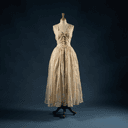
A costume typical of the film Gone with the Wind (1939), worn by actresses to portray the grand ladies of the antebellum American South. Olivia de Havilland wore many of these for her role as Melanie Hamilton.

The trophy presented by the Academy of Motion Picture Arts and Sciences to the finest Hollywood artists. Olivia de Havilland won two, in 1946 and 1949, cementing her status as the greatest actress of her generation.

The standard camera on Hollywood sets from the 1930s to the 1950s, used on every major production of the golden age. Olivia de Havilland worked alongside it throughout her career at Warner Bros. and later at independent studios.
Actresses of the era received printed scripts and filled them with notes to prepare their performances. Olivia de Havilland was known for her meticulous work on her scripts, taking a personal role in choosing and shaping her characters.
Large-format Technicolor posters adorned American and European cinemas to promote golden age films. Olivia de Havilland's face appeared on dozens of iconic posters between 1935 and 1960.
School Curriculum
Vocabulary & Tags
Key Vocabulary
Tags
Daily Life
Morning
During her Hollywood heyday (1935–1949), Olivia de Havilland rose early to make her way to the Warner Bros. studios in Burbank. She spent several hours in hair and makeup before shooting began — typically at 8 a.m. under the blazing lights of the soundstages.
Afternoon
Afternoons were devoted to filming, often grueling work: multiple takes of every scene, frequent costume changes, and long waits between setups. She used breaks to review her lines or discuss her performance with the director, and she consistently pushed back against roles in which she had no creative say.
Evening
Evenings meant obligatory glamour — industry dinners, film premieres, evening gowns, and camera flashes. After settling in Paris in 1955, her nights became quieter: intimate dinners with French intellectuals and artists in the fashionable neighborhoods of the Right Bank.
Food
Like most stars of the era, Olivia de Havilland followed a studio-monitored diet designed to keep her figure camera-ready. Once in Paris, she embraced French cuisine, enjoying meals at brasseries and shopping at neighborhood markets.
Clothing
On set, she wore elaborate period costumes — hoop skirts and crinolines for the Deep South of Gone with the Wind, tailored 1940s suits for her contemporary roles. Off screen, she dressed with the polished restraint typical of Hollywood stars: fitted suits, gloves, hats, and designer coats.
Housing
In Hollywood, de Havilland lived in a grand villa in the Los Angeles hills, in keeping with the image expected of major stars. After 1955, she moved into an elegant apartment in Paris's 16th arrondissement, which she kept for the rest of her life — a refined setting where she received journalists and public figures alike.
Historical Timeline
Period Vocabulary
Visual Style
L'esthétique glamour du Hollywood classique : lumières dramatiques de studio, costumes d'époque somptueux et portraits iconiques en noir et blanc ou en Technicolor vibrant.
Sound Ambience
L'ambiance sonore des plateaux hollywoodiens des années 1930-1950 : caméras qui ronronnent, costumes qui bruissent et orchestres enregistrant en coulisse, mêlés à l'effervescence d'une grande première.
Liens externes & ressources
Références
Œuvres
À chacun son destin (To Each His Own)
1946
L'Héritière (The Heiress)
1949
De Havilland v. Warner Bros. Pictures (procès)
1944