 flip
flipCarp with verjuice and caper sauce
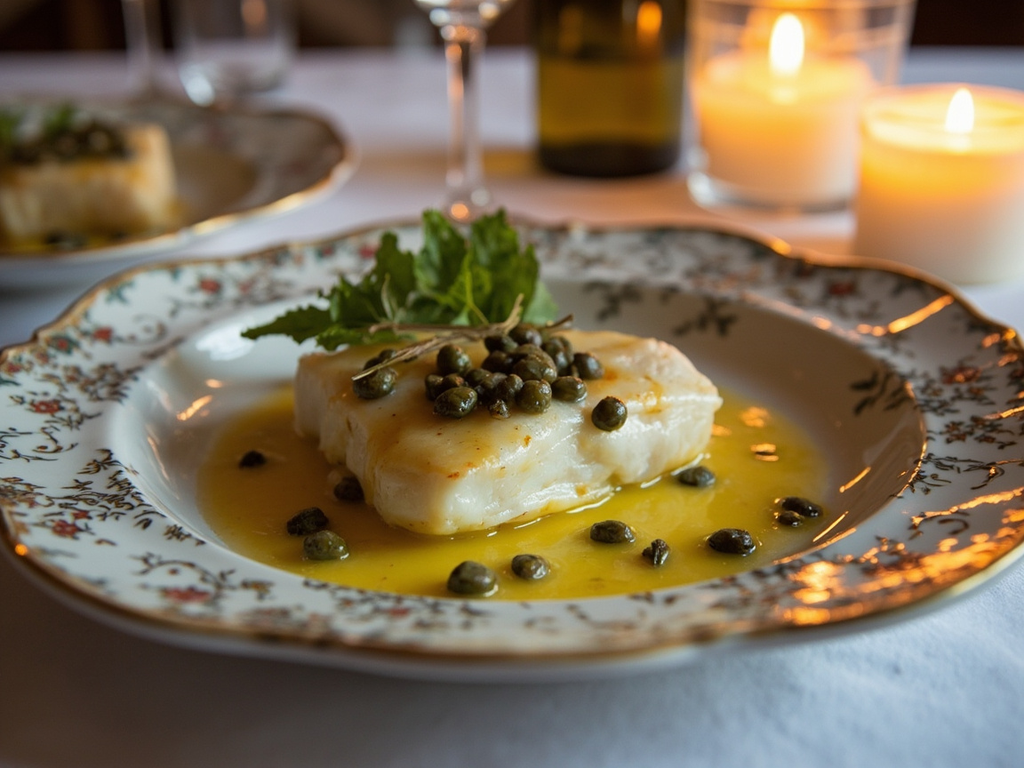
Carp with verjuice and caper sauce
Why this dish? Carp is THE fish of abbey ponds and the great dish of quality lean meals in the 18th century. When Prévost entertained or dined in company on a day of abstinence, a fine carp napped with a verjuice sauce took the role of centerpiece, in place of the meat roast.
A braised carp in white wine, served under a lively sauce of butter, verjuice, and capers. The festive dish of lean days: elegant, tangy, worthy of an abbot's table who knows how to receive.
When company gathered at my table on a vigil day, I did not wish them to lament the absence of meat: a carp from our ponds, freshly caught, is worth any roast. One poached it gently in white wine, with a bouquet of herbs, then dressed on top a sauce where verjuice married its sharpness to that of capers. Trust my experience, Sir: the sauce must not boil after the butter is added, else it breaks and loses all its luster.
- •Pond carp — a fine specimen (centerpiece)
- •White wine — a glass or two (braising liquid)
- •Verjuice — a dash (signature acidity)
- •Capers — a spoonful (piquant accent)
- •Fresh butter — a good knob (sauce binder)
- •Bouquet of herbs (parsley, thyme, bay) — 1 (aromatics)
- •Shallots — a few (aromatic base)
Carp with verjuice and caper sauce
A braised carp in white wine, served under a lively sauce of butter, verjuice, and capers. The festive dish of lean days: elegant, tangy, worthy of an abbot's table who knows how to receive.
Why this dish? Carp is THE fish of abbey ponds and the great dish of quality lean meals in the 18th century. When Prévost entertained or dined in company on a day of abstinence, a fine carp napped with a verjuice sauce took the role of centerpiece, in place of the meat roast.
When company gathered at my table on a vigil day, I did not wish them to lament the absence of meat: a carp from our ponds, freshly caught, is worth any roast. One poached it gently in white wine, with a bouquet of herbs, then dressed on top a sauce where verjuice married its sharpness to that of capers. Trust my experience, Sir: the sauce must not boil after the butter is added, else it breaks and loses all its luster.
Ingredients (period version)
- Pond carp — a fine specimen (centerpiece)
- White wine — a glass or two (braising liquid)
- Verjuice — a dash (signature acidity)
- Capers — a spoonful (piquant accent)
- Fresh butter — a good knob (sauce binder)
- Bouquet of herbs (parsley, thyme, bay) — 1 (aromatics)
- Shallots — a few (aromatic base)
Ingredients
- Carp (or carp/trout fillets) — 1 fish of 1.2 kg or 4 fillets (centerpiece)
- Dry white wine — 25 cl (court-bouillon)
- Verjuice — 3 tbsp (or substitute green grape juice or lemon juice diluted with water) (signature acidity)
- Capers — 2 tbsp (piquant accent)
- Cold butter — 100 g, diced (sauce binder)
- Shallots — 2, minced (aromatic base)
- Bouquet garni — 1 (aromatics)
- Salt, pepper — to taste (seasoning)
Method
- Poach the carp (or fillets) for 10 to 15 minutes in white wine mixed with water, shallots, and bouquet garni, at a gentle simmer.
- Keep the fish warm; strain the court-bouillon and reduce it by half over high heat.
- Lower the heat, add the verjuice, then mount the sauce by whisking in the cold diced butter, never letting it boil.
- Add the capers, adjust salt and pepper.
- Nap the carp with the sauce and serve immediately, very hot.
How it was made : Abbeys had their own fishponds and tanks, guaranteeing fresh fish for lean days. Verjuice, pressed from preserved green grapes, was the standard acidulant for white sauces before lemon became widespread. Butter-mounted sauces foreshadow the great 18th-century cuisine described in treatises like Menon's.
The contemporary twist : Plate the fillet on a slate tile with a few breaded fried capers and a drizzle of reduced verjuice pearls.
Abbé Prévost · Charactorium