 flip
flipLamb with Honey, Almonds, and Saffron (ancestor of mrouzia)
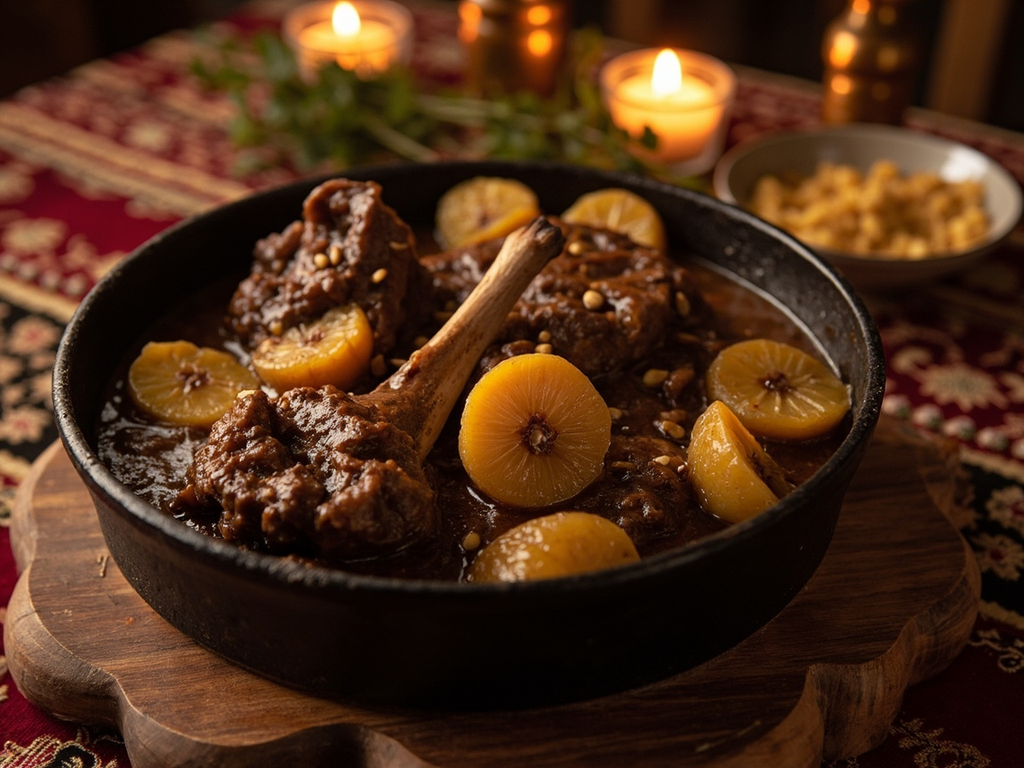
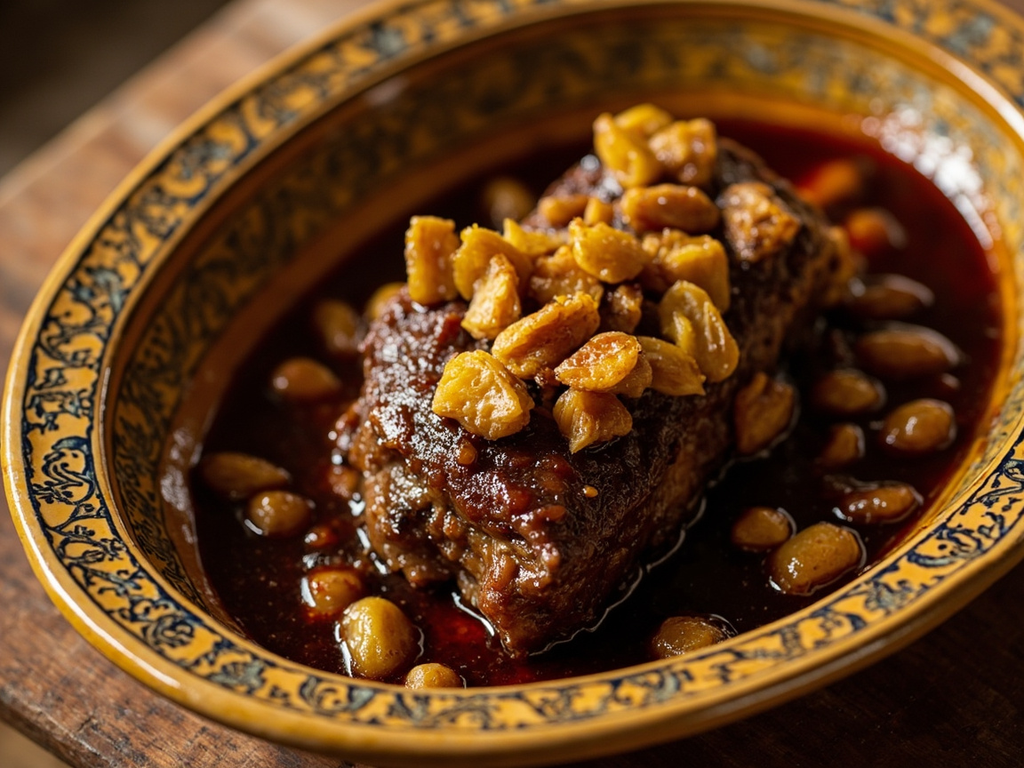
Lamb with Honey, Almonds, and Saffron (ancestor of mrouzia)
Why this dish? At the great banquets of Seville, where the caliph received poets and scholars like Ibn Tufayl and Averroes, meats long confited with honey and dried fruits were served — sweet-and-spicy being the hallmark of Andalusi refinement.
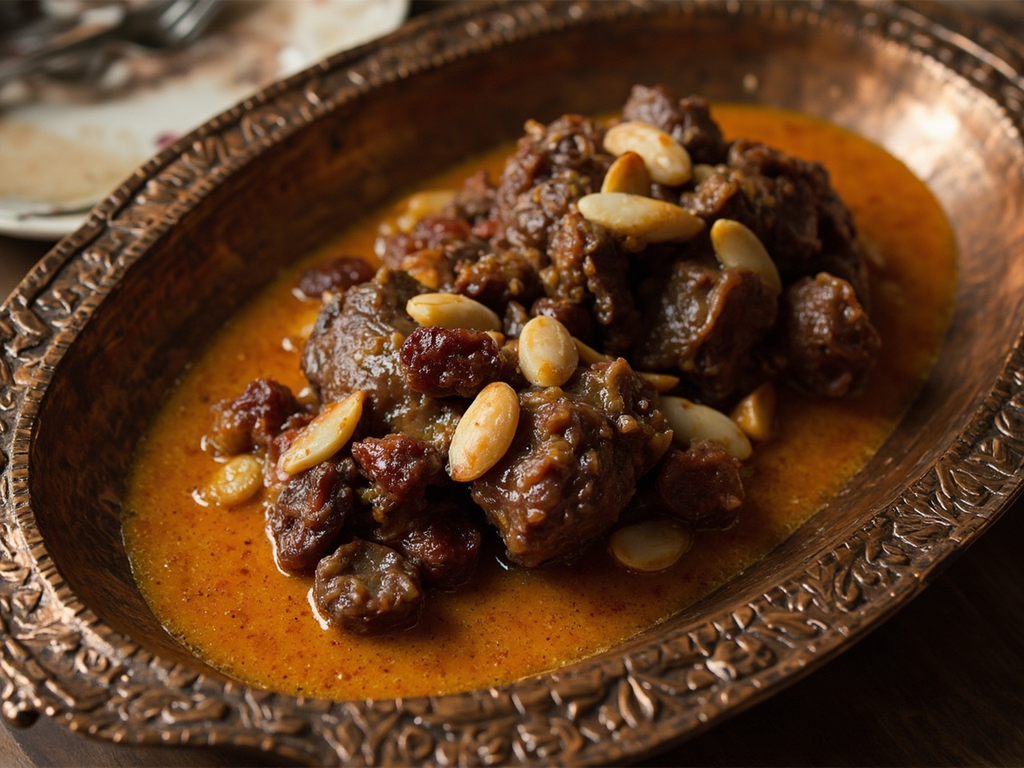
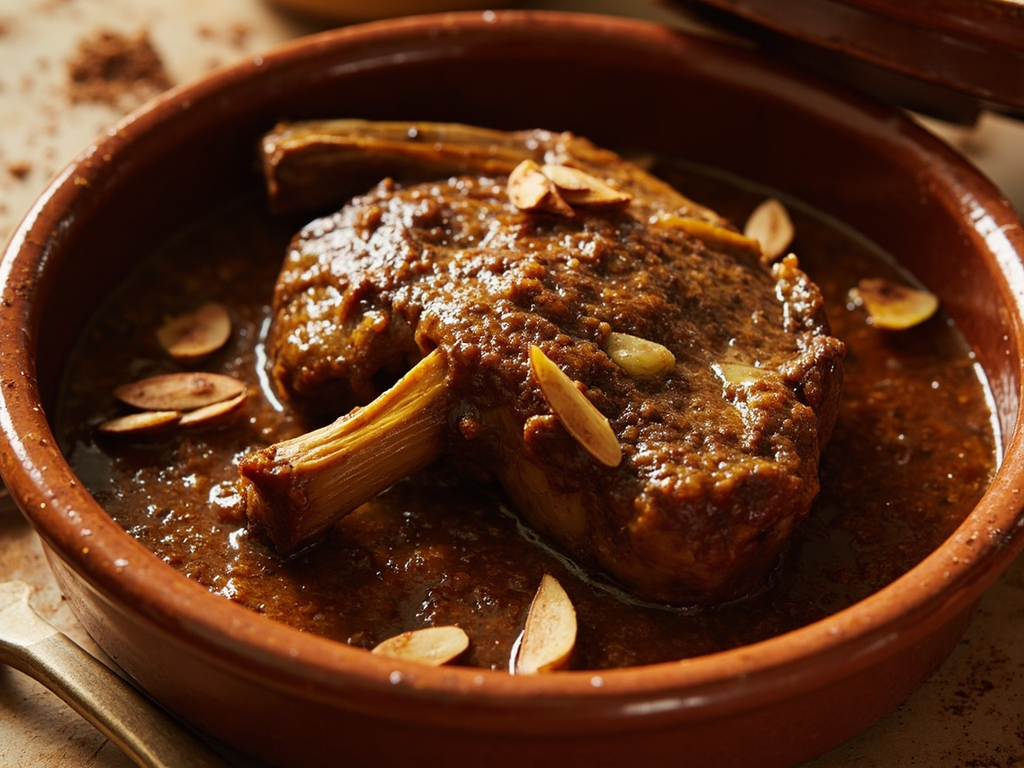
A melting lamb slow-cooked in honey, saffron, cinnamon, and ginger, sprinkled with golden almonds and raisins. The balance of sweet and salty, signature of the great tables of al-Andalus.
When I invited to Seville the men of knowledge — he who wrote *The Living Son of the Vigilant*, and the sage Ibn Rushd whom I loved to hear comment on the Stagirite — my table had to speak as loudly as their words. So we melted the lamb in honey and saffron until the flesh yielded under the finger, and we crowned the dish with almonds gilded in butter. See, the sweet and the salty must marry without one dominating the other — that is the whole art, and perhaps all philosophy. Eat slowly: such a dish does not like haste.
- •Leg or shoulder of lamb — a large piece (master meat)
- •Honey — generous (sweetness and binder)
- •Almonds — a good handful (garnish, crunch)
- •Raisins — a handful (fruity sweetness)
- •Saffron, cinnamon, ginger — to taste (noble spices)
- •Rose water — a dash (final perfume)
- •Clarified butter (samn) — a knob (fat)
Lamb with Honey, Almonds, and Saffron (ancestor of mrouzia)
A melting lamb slow-cooked in honey, saffron, cinnamon, and ginger, sprinkled with golden almonds and raisins. The balance of sweet and salty, signature of the great tables of al-Andalus.
Why this dish? At the great banquets of Seville, where the caliph received poets and scholars like Ibn Tufayl and Averroes, meats long confited with honey and dried fruits were served — sweet-and-spicy being the hallmark of Andalusi refinement.
When I invited to Seville the men of knowledge — he who wrote *The Living Son of the Vigilant*, and the sage Ibn Rushd whom I loved to hear comment on the Stagirite — my table had to speak as loudly as their words. So we melted the lamb in honey and saffron until the flesh yielded under the finger, and we crowned the dish with almonds gilded in butter. See, the sweet and the salty must marry without one dominating the other — that is the whole art, and perhaps all philosophy. Eat slowly: such a dish does not like haste.
Ingredients (period version)
- Leg or shoulder of lamb — a large piece (master meat)
- Honey — generous (sweetness and binder)
- Almonds — a good handful (garnish, crunch)
- Raisins — a handful (fruity sweetness)
- Saffron, cinnamon, ginger — to taste (noble spices)
- Rose water — a dash (final perfume)
- Clarified butter (samn) — a knob (fat)
Ingredients
- Lamb shoulder in pieces — 1 kg (master meat)
- Honey — 4 tablespoons (sweetness and binder)
- Blanched almonds — 100 g (garnish)
- Raisins — 80 g (fruity sweetness)
- Saffron — 1 pinch (spice)
- Cinnamon — 1 teaspoon (spice)
- Ground ginger — 1 teaspoon (spice)
- Rose water — 1 teaspoon (final perfume)
- Clarified butter (ghee/samn) — 2 tablespoons (fat)
- Onion — 2 (base)
Method
- Sear the lamb in clarified butter with sliced onions.
- Add saffron, cinnamon, ginger, and a little water; cover and simmer for 1.5 to 2 hours until the meat is tender.
- Stir in the honey and raisins, reduce the sauce uncovered, glazing the meat.
- Toast the almonds in a little butter until golden.
- Arrange the meat with sauce, sprinkle with almonds and a dash of rose water just before serving.
How it was made : Meat dishes with honey and dried fruits are abundantly described in Arabo-Andalusi cuisine; Moroccan mrouzia is its direct heir. Honey also served as a preservative, allowing meat to be kept during long festivities.
The contemporary twist : Presented in an individual casserole with a touch of edible gold leaf on the almonds — to recall caliphal splendor without overdoing it.
Sources : Ibn Razīn al-Tujībī, Fiḍālat al-khiwān fī ṭayyibāt al-ṭaʿām wa-l-alwān (XIIIe s.) · Lucie Bolens, La cuisine andalouse, un art de vivre, Albin Michel, 1990
Abu Yaqub Yusuf · Charactorium