 flip
flipRoasted Phasian Pheasant with Honey and Herbs
Roasted Phasian Pheasant with Honey and Herbs
Why this dish? The most famous bird of Colchis bears the very name of Aeëtes' river: the pheasant (*phasianus*) takes its name from the Phasis, the river that flows through his kingdom. Tradition holds that the Argonauts discovered it on its banks. What more royal dish, for the table of Aia, than the emblematic game of the king's land, gilded with honey to dazzle guests?
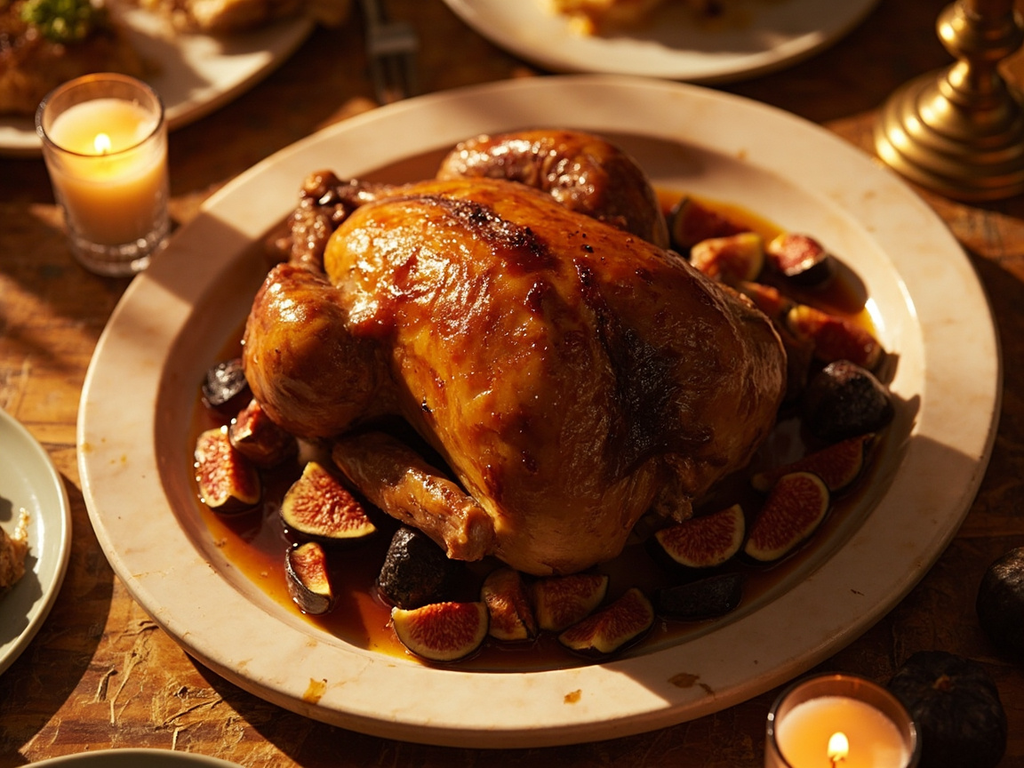
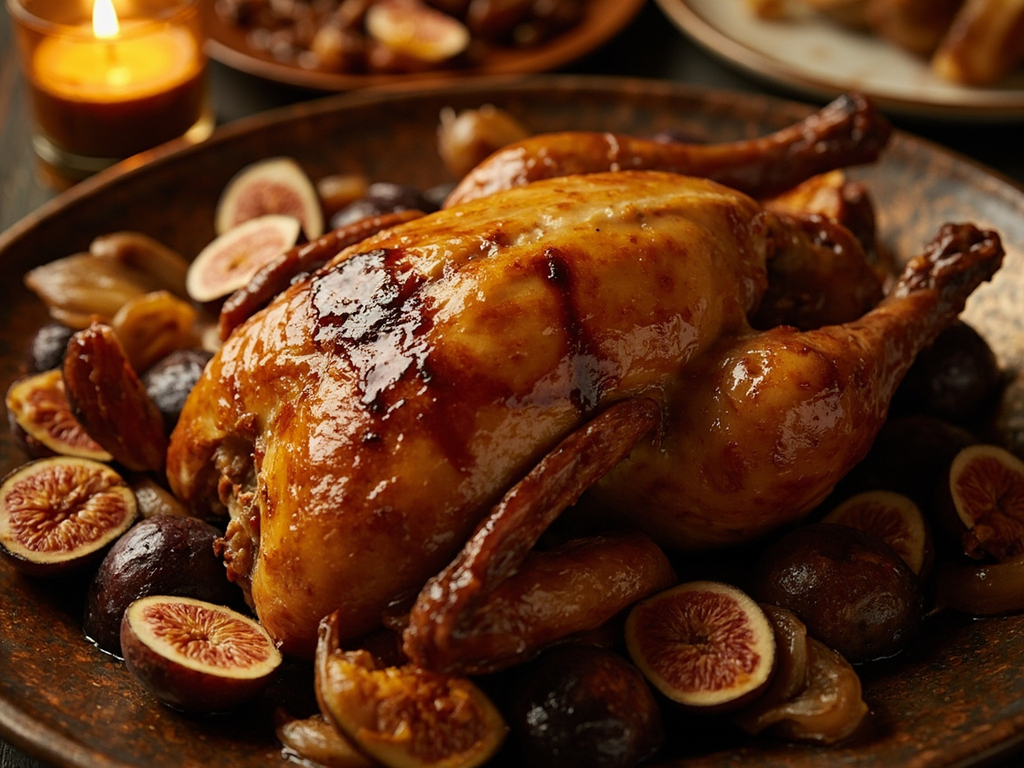
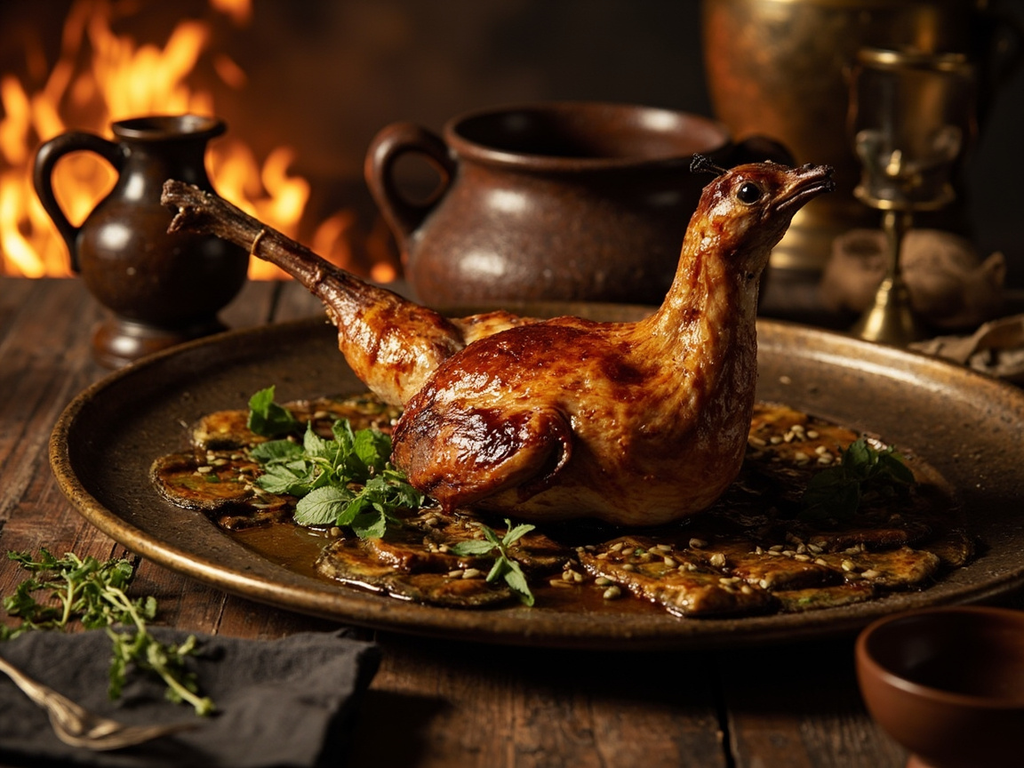
A whole pheasant roasted on the spit, the skin lacquered with honey and grape must, perfumed with coriander and savory. The flesh remains firm and flavorful, the exterior caramelizes into an amber crust. A showpiece dish served on the great table when the king receives or wishes to impress.
Approach, stranger, and look upon the bird of my river. The Phasis gave it its name, and none serves it more beautifully than at my table in Aia. My servants turn it over the embers until the skin takes on the gold of my father Helios, and they baste it with honey and must while it sings in the fire. Know this: whoever eats at the table of Aeëtes never forgets the taste of this kingdom—no more than he leaves without having proven his worth to me.
- •Whole pheasant, plucked and gutted — one fine bird (centerpiece)
- •Mountain honey — two spoonfuls (lacquer)
- •Grape must (reduced grape juice) — a splash (tangy lacquer)
- •Coriander seeds — a pinch, crushed (perfume)
- •Fresh savory and mint — a few sprigs (herbs)
- •Rock salt — to hand (seasoning)
Roasted Phasian Pheasant with Honey and Herbs
A whole pheasant roasted on the spit, the skin lacquered with honey and grape must, perfumed with coriander and savory. The flesh remains firm and flavorful, the exterior caramelizes into an amber crust. A showpiece dish served on the great table when the king receives or wishes to impress.
Why this dish? The most famous bird of Colchis bears the very name of Aeëtes' river: the pheasant (*phasianus*) takes its name from the Phasis, the river that flows through his kingdom. Tradition holds that the Argonauts discovered it on its banks. What more royal dish, for the table of Aia, than the emblematic game of the king's land, gilded with honey to dazzle guests?
Approach, stranger, and look upon the bird of my river. The Phasis gave it its name, and none serves it more beautifully than at my table in Aia. My servants turn it over the embers until the skin takes on the gold of my father Helios, and they baste it with honey and must while it sings in the fire. Know this: whoever eats at the table of Aeëtes never forgets the taste of this kingdom—no more than he leaves without having proven his worth to me.
Ingredients (period version)
- Whole pheasant, plucked and gutted — one fine bird (centerpiece)
- Mountain honey — two spoonfuls (lacquer)
- Grape must (reduced grape juice) — a splash (tangy lacquer)
- Coriander seeds — a pinch, crushed (perfume)
- Fresh savory and mint — a few sprigs (herbs)
- Rock salt — to hand (seasoning)
Ingredients
- Whole pheasant (or guinea fowl as substitute) — 1 bird (1.2 kg) (centerpiece)
- Liquid honey — 3 tbsp (lacquer)
- Grape juice reduced by half — 100 ml (tangy lacquer)
- Ground coriander seeds — 1 tsp (perfume)
- Dried savory + fresh mint — 1 tsp + a few leaves (herbs)
- Salt and a drizzle of olive oil — to taste (seasoning)
Method
- Rub the pheasant with salt, ground coriander, and savory, inside and out. Tuck a few mint leaves into the cavity.
- Reduce the grape juice by half in a small saucepan, then mix with honey to obtain a smooth lacquer.
- Preheat the oven to 180°C. Place the bird on a rack over a dish, drizzled with a little oil.
- Roast for about 1 hour, basting with lacquer every 15 minutes to build a shiny amber crust.
- Let rest 10 minutes before carving, and drizzle with the caramelized juices collected in the dish.
How it was made : In heroic times, game was roasted whole on a spit over embers, basted with honey and must—the sugar of honey was not reserved for sweets; it was mainly used to lacquer and preserve showpiece meats. The pheasant, linked to the Colchian Phasis since antiquity (Pliny the Elder calls it *avis phasiana*), became a prestige dish throughout the Greco-Roman world.
The contemporary twist : Serve the pheasant on a bed of grilled vine leaves and scatter pomegranate seeds: the red gleam evokes the Golden Fleece guarded in the grove of Ares.
Sources : Apollonios de Rhodes, Argonautiques (chant II-III, royaume de Colchide) · Pline l'Ancien, Histoire naturelle, livre X (avis phasiana, l'oiseau du Phasis)
Aeëtes · Charactorium