 flip
flipMadira (Meat in Soured Milk)
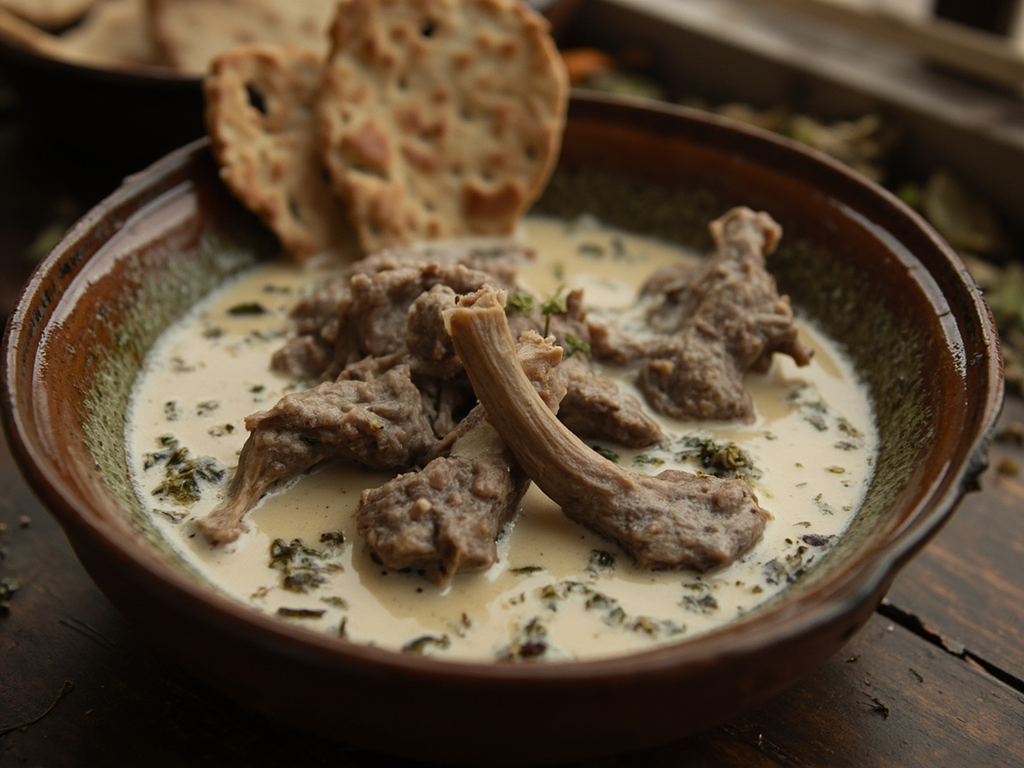
Madira (Meat in Soured Milk)
Why this dish? Madira was a Baghdad table classic, esteemed enough that a literary character of the era praised it at length. An everyday but careful dish, it suits the table of a studious caliph who, it is said, preferred moderation to banquet waste.
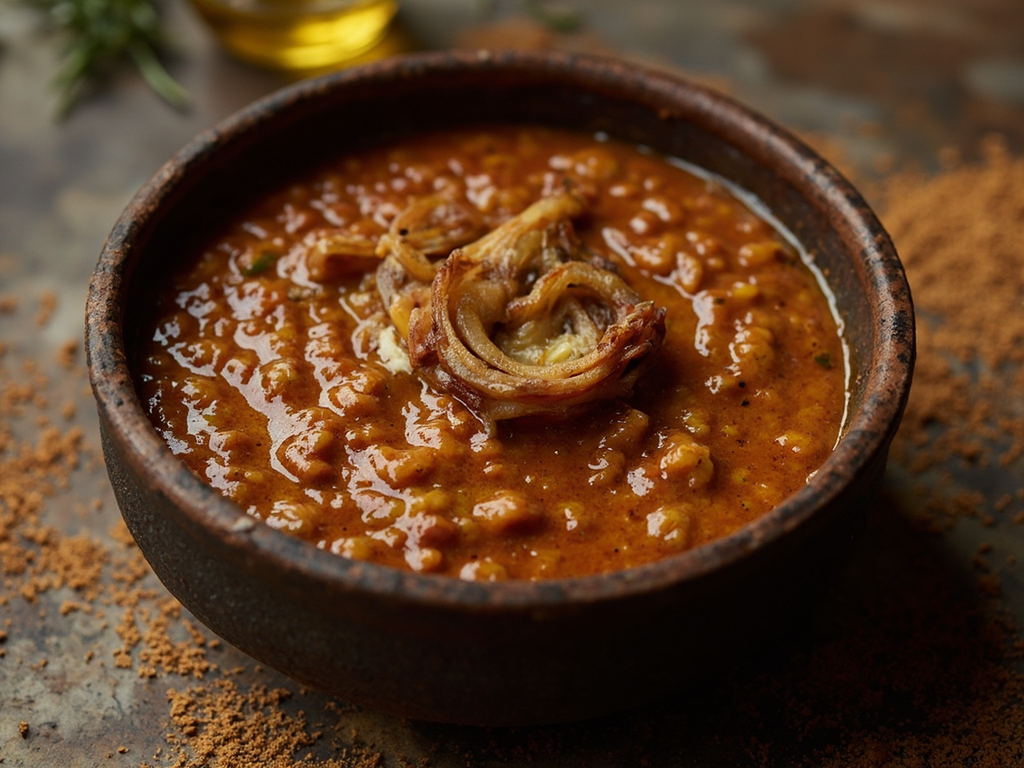
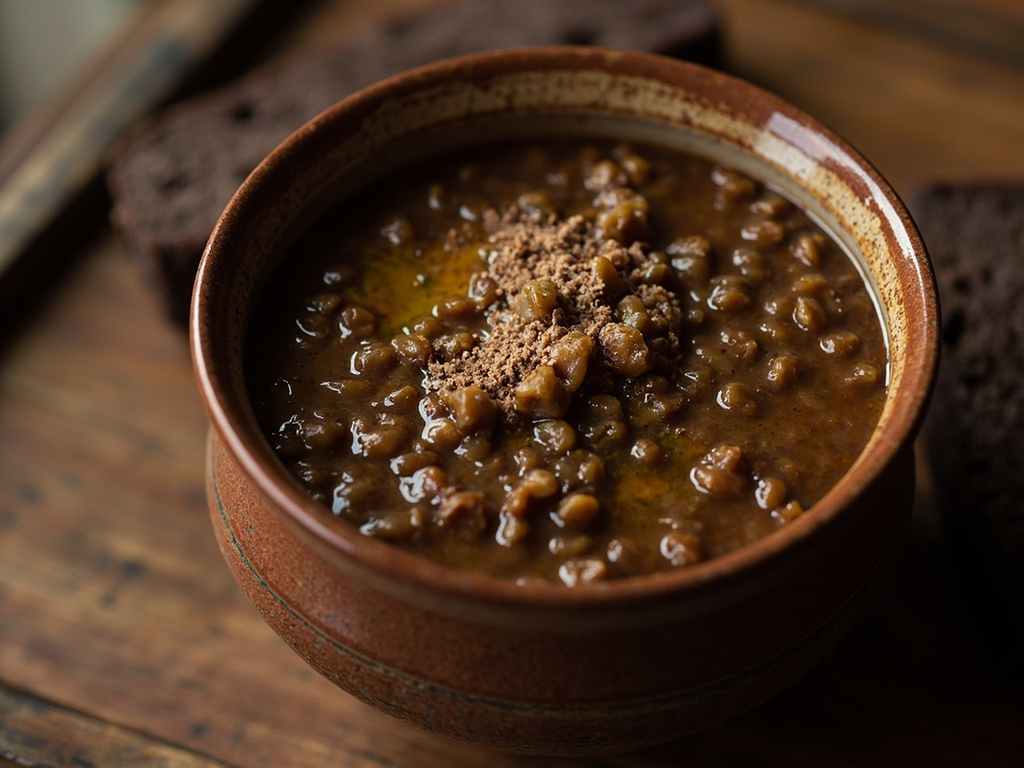
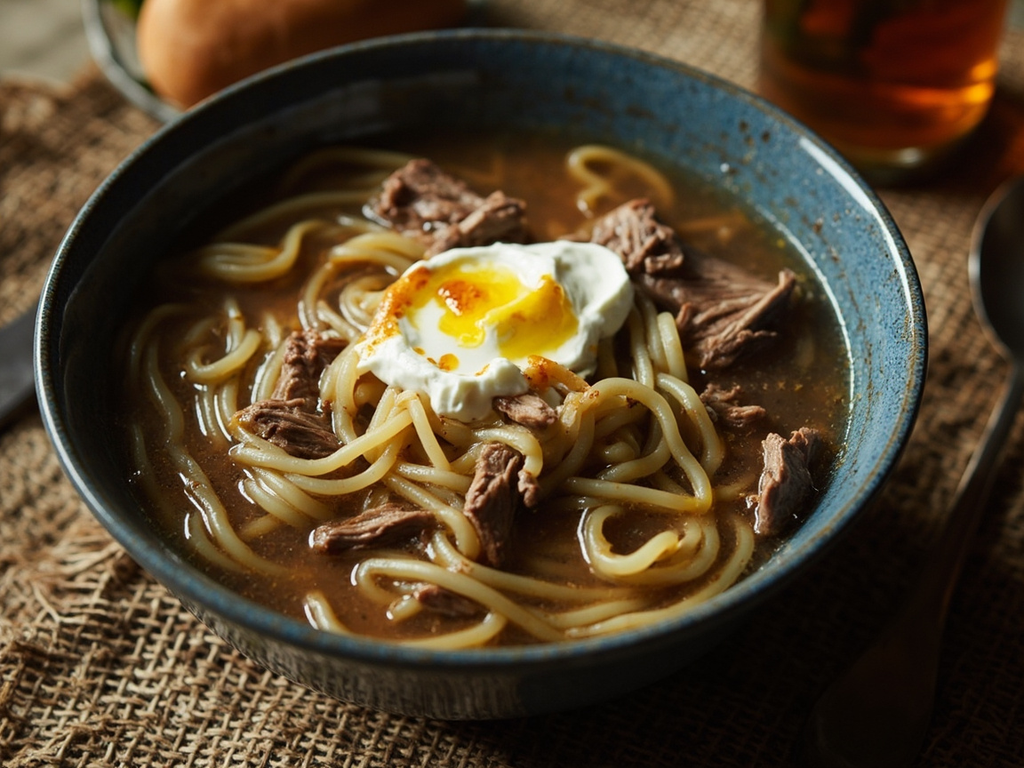
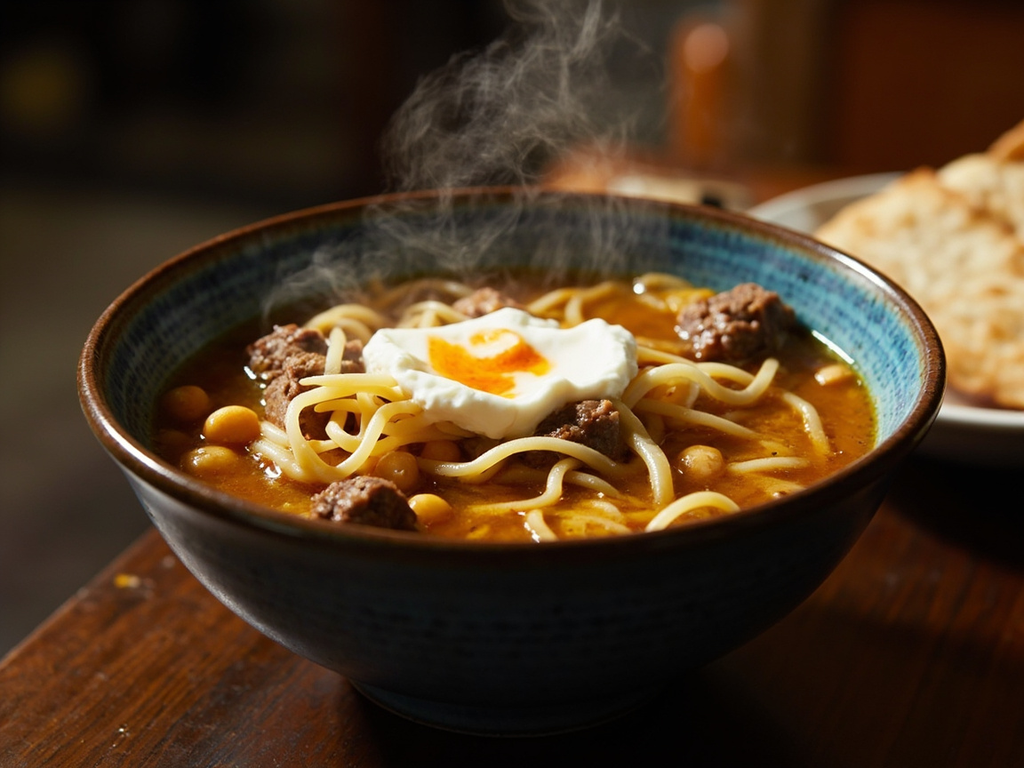
Meat pieces simmered then bound with reduced soured milk (leben), perfumed with onion, garlic, dried mint, and spices. Creamy and slightly tangy, it is the comfort food of Baghdad tables.
Here is a dish for every day, and yet I am not ashamed to serve it to my guests. Take milk left to sour, let it reduce gently over the fire without turning — patience, always, like that of the translators bent over the books of the Greeks in my House of Wisdom. Rub the pot with garlic and dried mint, and let the meat tenderize before pouring in the milk. They say a man of letters sang its praises so long he was driven from a meal: I content myself with eating it, and thanking God.
- •Mutton pieces — a piece (base)
- •Soured milk (leben) — a large bowl (tangy binder)
- •Onion and garlic — a handful (aromatics)
- •Dried mint — a generous pinch (fragrance)
- •Murri and salt — to taste (seasoning)
- •Coriander, cumin, pepper — a pinch (spices)
Madira (Meat in Soured Milk)
Meat pieces simmered then bound with reduced soured milk (leben), perfumed with onion, garlic, dried mint, and spices. Creamy and slightly tangy, it is the comfort food of Baghdad tables.
Why this dish? Madira was a Baghdad table classic, esteemed enough that a literary character of the era praised it at length. An everyday but careful dish, it suits the table of a studious caliph who, it is said, preferred moderation to banquet waste.
Here is a dish for every day, and yet I am not ashamed to serve it to my guests. Take milk left to sour, let it reduce gently over the fire without turning — patience, always, like that of the translators bent over the books of the Greeks in my House of Wisdom. Rub the pot with garlic and dried mint, and let the meat tenderize before pouring in the milk. They say a man of letters sang its praises so long he was driven from a meal: I content myself with eating it, and thanking God.
Ingredients (period version)
- Mutton pieces — a piece (base)
- Soured milk (leben) — a large bowl (tangy binder)
- Onion and garlic — a handful (aromatics)
- Dried mint — a generous pinch (fragrance)
- Murri and salt — to taste (seasoning)
- Coriander, cumin, pepper — a pinch (spices)
Ingredients
- Mutton or lamb shoulder — 700 g, cubed (base)
- Full-fat plain yogurt — 500 g (tangy binder)
- Egg yolk or 1 tsp flour — 1 (anti-curdle stabilizer)
- Onion — 1 large, sliced (aromatic)
- Garlic — 3 cloves (aromatic)
- Dried mint — 1 tbsp (fragrance)
- Cumin + ground coriander — 1/2 tsp each (spices)
- Salt (and a dash of umami sauce) — to taste (seasoning)
Method
- Sear the meat, add onion and garlic, cover with water and simmer 1 hour 15 minutes until tender; season with salt.
- Whisk the yogurt with the egg yolk (to prevent curdling) and a little water.
- Pour the yogurt over low heat, stirring in one direction, without boiling, until slightly thickened.
- Add cumin, coriander, and half the mint; let barely simmer for 10 minutes.
- Off the heat, sprinkle with the remaining dried mint rubbed between your palms.
- Serve with flat wheat bread for sopping up the sauce.
How it was made : Madira (from madir, 'sour') appears in Abbasid culinary collections and in 10th-century adab literature. Naturally soured milk was used; the secret, already known, was to stir always in the same direction and never let the milk boil lest it curdle.
The contemporary twist : A spoonful of brown butter with mint poured sizzling at serving, 'tarka' style: the crackling perfumes the whole table.
Sources : Ibn Sayyār al-Warrāq, Kitāb al-Ṭabīkh (10th century) · Nawal Nasrallah, Annals of the Caliphs' Kitchens (2007)
Al-Ma'mun · Charactorium