 flip
flipTraveler's Teishoku: Grilled Mackerel, Rice, and Miso Soup
Traveler's Teishoku: Grilled Mackerel, Rice, and Miso Soup
Why this dish? Kay often travels to Japan for conferences; he willingly adapts to local cuisine. Teishoku, the tray meal served everywhere in Japanese cities, is the researcher's lunch on the go: balanced, quick, comforting after a flight — exactly what an engineer far from his Palo Alto cafeteria needs.
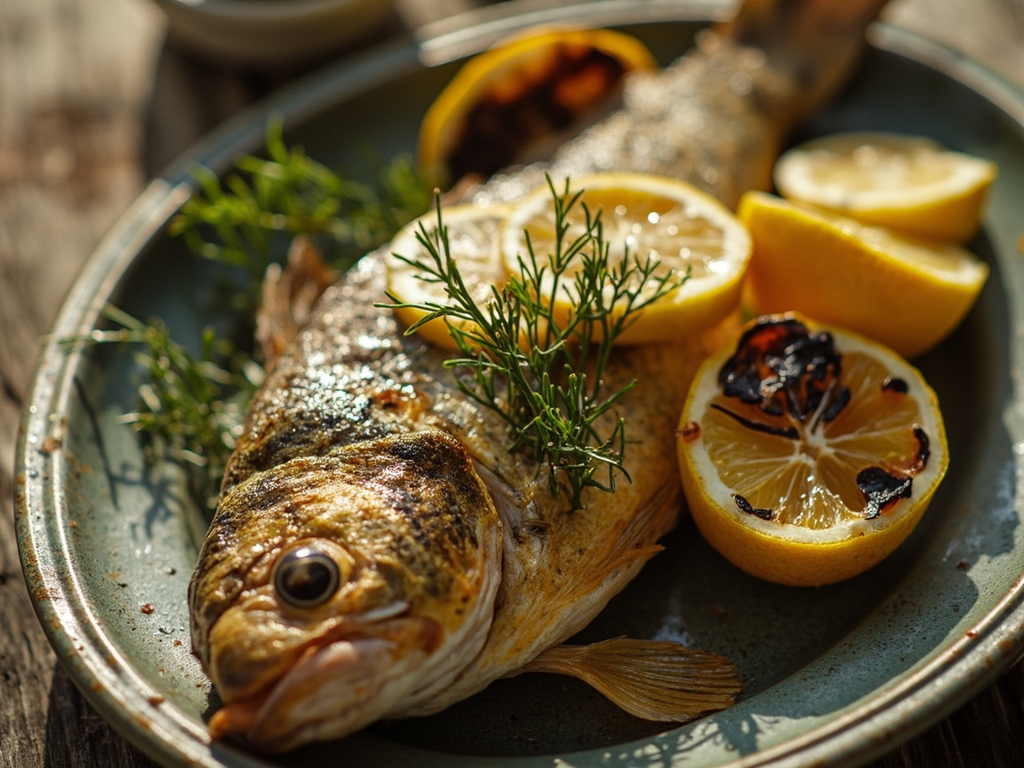
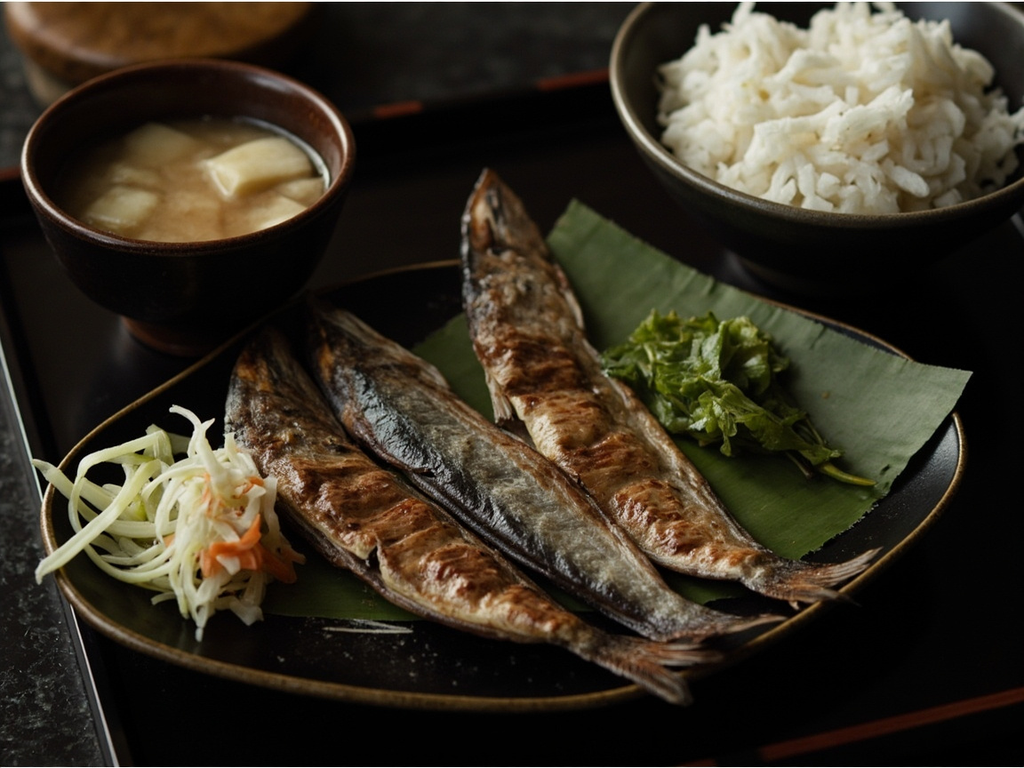
A tray consisting of salt-grilled mackerel with crispy skin, a bowl of white rice, a steaming bowl of miso soup, and a small pickled vegetable. The classic Japanese balance between salty grilled fish, neutral rice, and the fermented umami of miso.
In Japan, I learned a design lesson I never recovered from: this tray. Each bowl does one thing, perfectly — the rice is bare, the soup is hot, the fish is salty and grilled — and the whole holds together because the parts are simple and well separated. It's object-oriented served on a lacquered tray. I'd eat this between two conferences in Tokyo, and I'd think: now that's an architecture that doesn't lie. Taste the miso soup first, it wakes up the palate.
- •Fresh mackerel (saba) — one, filleted (main dish)
- •Salt — generously (fish seasoning)
- •Japanese rice — two bowls (neutral base)
- •Miso paste — two spoonfuls (fermented umami (signature))
- •Dashi broth (kombu + bonito) — one bowl per person (soup base)
- •Tofu and wakame seaweed — a few cubes / a pinch (soup garnish)
- •Pickled vegetables (tsukemono) — a few slices (tangy side)
Traveler's Teishoku: Grilled Mackerel, Rice, and Miso Soup
A tray consisting of salt-grilled mackerel with crispy skin, a bowl of white rice, a steaming bowl of miso soup, and a small pickled vegetable. The classic Japanese balance between salty grilled fish, neutral rice, and the fermented umami of miso.
Why this dish? Kay often travels to Japan for conferences; he willingly adapts to local cuisine. Teishoku, the tray meal served everywhere in Japanese cities, is the researcher's lunch on the go: balanced, quick, comforting after a flight — exactly what an engineer far from his Palo Alto cafeteria needs.
In Japan, I learned a design lesson I never recovered from: this tray. Each bowl does one thing, perfectly — the rice is bare, the soup is hot, the fish is salty and grilled — and the whole holds together because the parts are simple and well separated. It's object-oriented served on a lacquered tray. I'd eat this between two conferences in Tokyo, and I'd think: now that's an architecture that doesn't lie. Taste the miso soup first, it wakes up the palate.
Ingredients (period version)
- Fresh mackerel (saba) — one, filleted (main dish)
- Salt — generously (fish seasoning)
- Japanese rice — two bowls (neutral base)
- Miso paste — two spoonfuls (fermented umami (signature))
- Dashi broth (kombu + bonito) — one bowl per person (soup base)
- Tofu and wakame seaweed — a few cubes / a pinch (soup garnish)
- Pickled vegetables (tsukemono) — a few slices (tangy side)
Ingredients
- Mackerel fillets — 2 (main dish)
- Fine salt — 2 tsp (seasoning)
- Sushi rice (Japanese short-grain) — 200 g (uncooked) (neutral base)
- Miso paste — 2 tbsp (fermented umami (signature))
- Dashi (instant or kombu + bonito) — 600 ml (soup base)
- Silken tofu — 150 g, diced (soup garnish)
- Dried wakame — 1 tsp (rehydrated) (soup garnish)
- Green onion — 1, sliced (finishing)
- Pickled cucumber or daikon radish — a few slices (tangy side)
- Lemon wedge (or sudachi) — 1 (serving acidity)
Method
- Rinse the rice until water runs clear, then cook (rice cooker or covered pot, 12 min + 10 min rest).
- Generously salt the mackerel fillets on both sides and let rest 15 min; pat dry.
- Grill the mackerel skin-side down under the broiler or in a pan, 4–5 min per side, until skin is golden and crispy.
- Heat the dashi without boiling; dissolve the miso in a ladle of broth then return to the pot (never boil miso).
- Add tofu and wakame to the soup, sprinkle with green onion.
- Arrange on a tray: bowl of rice, bowl of miso soup, fish with a lemon wedge, and pickled vegetables on the side.
How it was made : Saba shioyaki (salt-grilled mackerel) is one of the humblest and oldest dishes in Japanese cuisine: fish was salted to preserve it and concentrate flavor before grilling over charcoal. Teishoku codifies 'ichijū-sansai' (one soup, three dishes), a nutritional balance principle inherited from Buddhist cuisine.
The contemporary twist : Presented on a compartmentalized tray like an 'office bento' — each compartment a module, a nod to the encapsulation Kay cherished.
Alan Kay · Charactorium