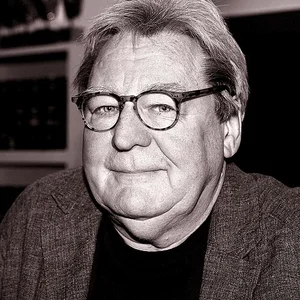

British director born in 1944, Alan Parker is the filmmaker behind landmark works such as Midnight Express, Fame, and Pink Floyd – The Wall. A major figure in British cinema, he also worked in advertising before establishing himself in Hollywood.
Alan Parker(1944 — 2020)
Alan Parker
Royaume-Uni
10 min read
Frequently asked questions
Key Facts
- Born on 14 February 1944 in Islington, London
- Directed Midnight Express in 1978, which won two Academy Awards
- Directed Fame in 1980, a worldwide hit about the world of performing arts
- Adapted Pink Floyd's album The Wall for the screen in 1982
- Died on 31 July 2020 in London
Works & Achievements
Parker's debut feature, a gangster musical performed entirely by children. A groundbreaking film in its form, acclaimed at Cannes, it launched Parker's international career.
A drama about an American imprisoned in Turkey for drug smuggling. Two Oscars (Adapted Screenplay, Original Score by Giorgio Moroder) and international controversy over its portrayal of Turkish justice.
A musical filmed at New York's real performing arts school. A worldwide hit that inspired the creation of performing arts schools across Europe, its title song remains a pop standard of the 1980s.
A film adaptation of Pink Floyd's concept album, blending live-action footage with Gerald Scarfe's animations. A cult classic of rock culture and Parker's most experimental film.
A crime thriller following the FBI investigation into the murder of civil rights workers in Mississippi in 1964. A powerful statement on American racial segregation, nominated for seven Academy Awards.
Adapted from Roddy Doyle's novel, the film follows the birth of a soul band in Dublin's working-class neighbourhoods. Winner of the BAFTA for Best Film, it is a critical and popular success widely regarded as one of the greatest films about music.
Adapted from Andrew Lloyd Webber's musical, starring Madonna as Eva Perón. A monumental production filmed in Argentina, Hungary, and Great Britain, it won the Golden Globe for Best Original Song for “You Must Love Me.”
An adaptation of Frank McCourt's memoir about his impoverished childhood in Limerick in the 1930s and 40s. A film that reflects Parker's enduring commitment to stories of working-class resilience.
Anecdotes
For his film Bugsy Malone (1976), Alan Parker made the audacious decision to cast no adults whatsoever: every role — gangsters, cabaret singers, the lot — was played by children aged 7 to 16. The giant water guns that fired whipped cream instead of bullets — the "splurge guns" — were invented specifically for the shoot, and Parker had to teach every kid how to drive the pedal cars.
The making of Midnight Express (1978) nearly triggered a diplomatic incident between Britain and Turkey. The Turkish government protested vigorously against the portrayal of its citizens, and Parker himself later acknowledged that Oliver Stone's screenplay had amplified certain elements for dramatic effect. Despite the controversy, the film won two Academy Awards, including Best Adapted Screenplay.
The collaboration between Alan Parker and Pink Floyd on the adaptation of The Wall (1982) was both epic and stormy. Roger Waters, the mastermind behind the album, wanted a wholly abstract film with almost no narrative. Parker, for his part, was determined to keep a dramatic thread running through it. Their constant disagreements nearly sank the project: at times the two men refused to speak to each other directly, communicating only through their assistants — even on set.
Before becoming a filmmaker, Alan Parker directed more than 500 television commercials during the 1960s and 1970s. Far from being embarrassed by it, he viewed advertising as the best film school in the world: “Learning to tell a story in thirty seconds,” he would say, “is the most demanding training there is.” It was also on advertising sets that he met Ridley Scott and Adrian Lyne, both of whom would go on to become major directors in their own right.
To make Fame (1980), Parker shot extensively in the real corridors and streets around New York’s High School of Performing Arts. He chose to mix young professional actors with actual students from the school, which gave the dance and music sequences a raw, authentic energy that a purely studio-bound shoot could never have achieved. The title song became a worldwide anthem and earned Parker international recognition.
Primary Sources
"I come from Islington, a working-class area of north London. Cinema wasn't something people like me were supposed to do. We were supposed to watch films, not make them."
"British cinema has always suffered from an inferiority complex towards Hollywood. Our role is to show that we can tell our own stories in our own voice, without copying the Americans."
"Advertising taught me never to bore the audience. Every shot has to earn its place. That's a discipline many directors trained at film school simply don't have."
"This film is not anti-Turkish. It is pro-freedom. It is about a young man crushed by a judicial system beyond his control."
"Without public support, independent British cinema will die. And with it will disappear the only cultural industry capable of carrying our national identity across the world."
Key Places
A working-class district in north London where Alan Parker was born on 14 February 1944. His humble origins deeply shaped his eye for ordinary people's stories and his distrust of the British cultural establishment.
The heart of London's advertising and creative industry in the 1960s and 70s, where Parker honed his craft directing hundreds of TV commercials. It was here that he met other future directing giants such as Ridley Scott.
The real performing arts school in Manhattan where Parker filmed much of *Fame* (1980). Blending actual students with professional actors in the school's hallways gave the film its legendary sense of authenticity.
Parker was one of the rare British directors to establish a lasting presence in Hollywood while fiercely maintaining his creative independence. He refused to sign exclusive contracts with the major studios.
Parker made two films in Ireland: *The Commitments* (1991), shot in the working-class northside neighbourhoods of Dublin, and *Angela's Ashes* (1999), filmed in Limerick. He was fascinated by Irish popular culture and its oral storytelling tradition.
The Argentine capital where Parker filmed much of *Evita* (1996), recreating the massive crowd scenes of the Peronist era of the 1940s and 50s. The production enlisted thousands of local extras on the Plaza de Mayo.
Typical Objects

The professional standard of Hollywood filmmaking in the 1970s–90s, Parker used it to achieve the depth of field and visual texture characteristic of his big-screen productions such as Fame and Evita.

The iconic tool of any film set, used to synchronize picture and sound during editing. Parker, who moved through takes at a brisk pace, would snap the clapper to keep the crew's energy high.

Trained in the visual discipline of advertising, Parker mapped out his scenes as hand-drawn shot-by-shot panels before the cameras rolled. This meticulous preparation allowed him to manage complex productions involving large numbers of extras.

A flatbed film-editing machine used by professional editors before the digital age. Parker would spend entire nights in the cutting room searching for the exact rhythm of each sequence.

Parker placed enormous importance on music: the soundtracks to his films — Giorgio Moroder's score for Midnight Express, the songs from Fame — were often commercial hits in their own right, entirely apart from the films themselves.

Parker covered his scripts with handwritten notes, sketches, and revisions, working closely with his screenwriters to adapt the text to the practical demands of the shoot as it unfolded.

On large open-air sets — such as the filming of Evita in Buenos Aires with thousands of extras — Parker relied on a megaphone to coordinate crowd movements and direct his actors.
School Curriculum
Vocabulary & Tags
Key Vocabulary
Tags
Daily Life
Morning
Parker arrived on set at dawn, often before the technical crew. Trained in the rigour of advertising, where every minute cost a fortune, he prepared the shooting day by going over his storyboards and checking the lighting with his director of photography. He drank strong English-style tea, faithful to his working-class roots — never coffee.
Afternoon
Afternoons were devoted to the most complex shots: crowd scenes, choreography, or technically demanding setups. Parker was known for his patience with non-professional actors, whom he took time to put at ease, but also for his impatience with logistical or technical problems he considered avoidable.
Evening
In the evenings, after filming, Parker would routinely attend the rushes — the footage shot during the day — to evaluate what was usable and adjust the following day's plan. These rushes screenings, often tense and full of commentary, were for him the moment of truth in filmmaking. He went home late and would read scripts or novels that might become his next projects.
Food
Parker ate little and simply during shoots, preferring to stay focused on the work. His favourite meal on British sets was the traditional “bacon sandwich” — white bread with grilled bacon and HP sauce, an emblem of English working-class cuisine.
Clothing
On set, Parker wore practical, comfortable clothes: jeans, a cotton shirt, and a light jacket. He had little time for directors who dressed up as “artists”. For official ceremonies such as the BAFTAs or the Oscars, he wore a classic dark suit, without ostentation.
Housing
Throughout his life, Parker kept a home in London, in a residential neighbourhood close to his Islington roots. Unlike many directors of his stature who settled permanently in Los Angeles, he insisted on returning to England regularly, refusing to sever his British ties despite his American success.
Historical Timeline
Period Vocabulary
Liens externes & ressources
Références
Œuvres
Midnight Express
1978