 flip
flipMoretum from the Roman Camp
Moretum from the Roman Camp
Why this dish? Before and after the sack of 410, Alaric negotiated many times with the Romans: at Ravenna, before besieged Rome. At those tables, the Gothic chief discovered the enemy's cuisine — including this moretum, a paste of garlic, cheese, and herbs that the Romans spread on bread. A taste of the Empire tasted by the one who would bring it down.
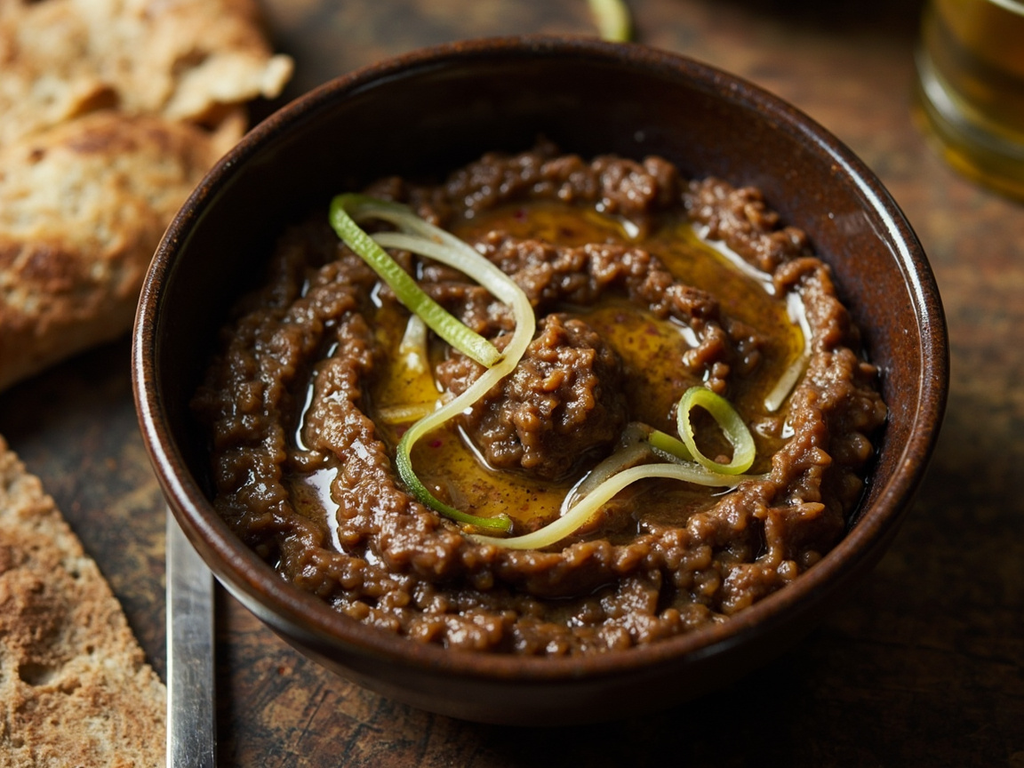
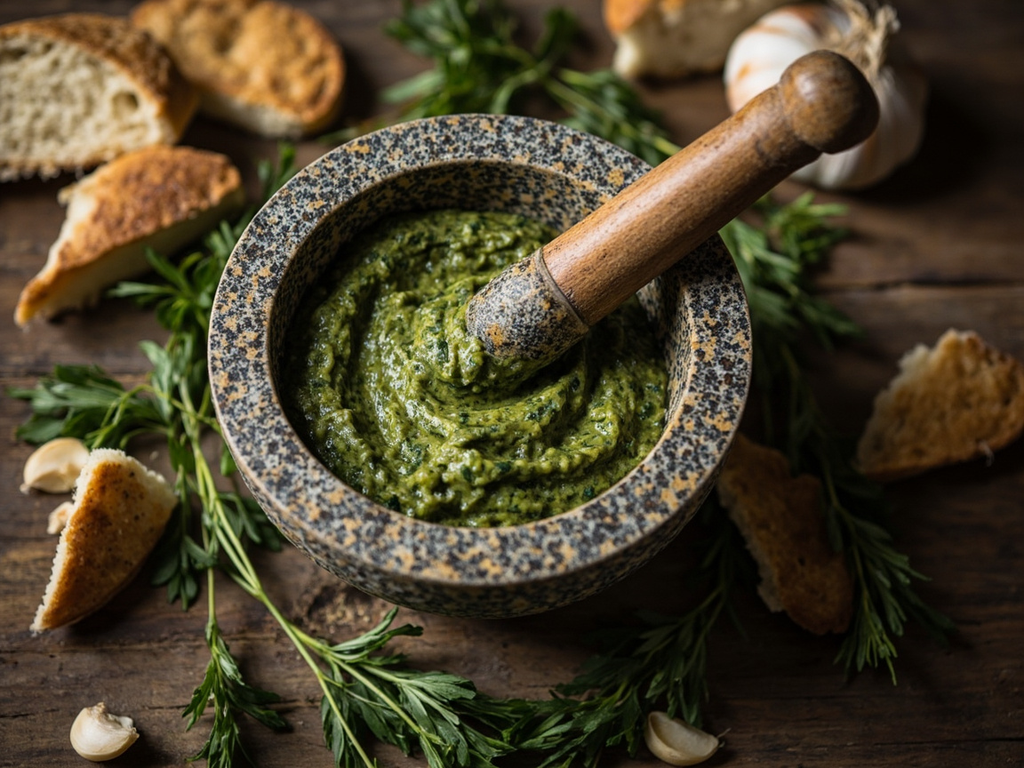
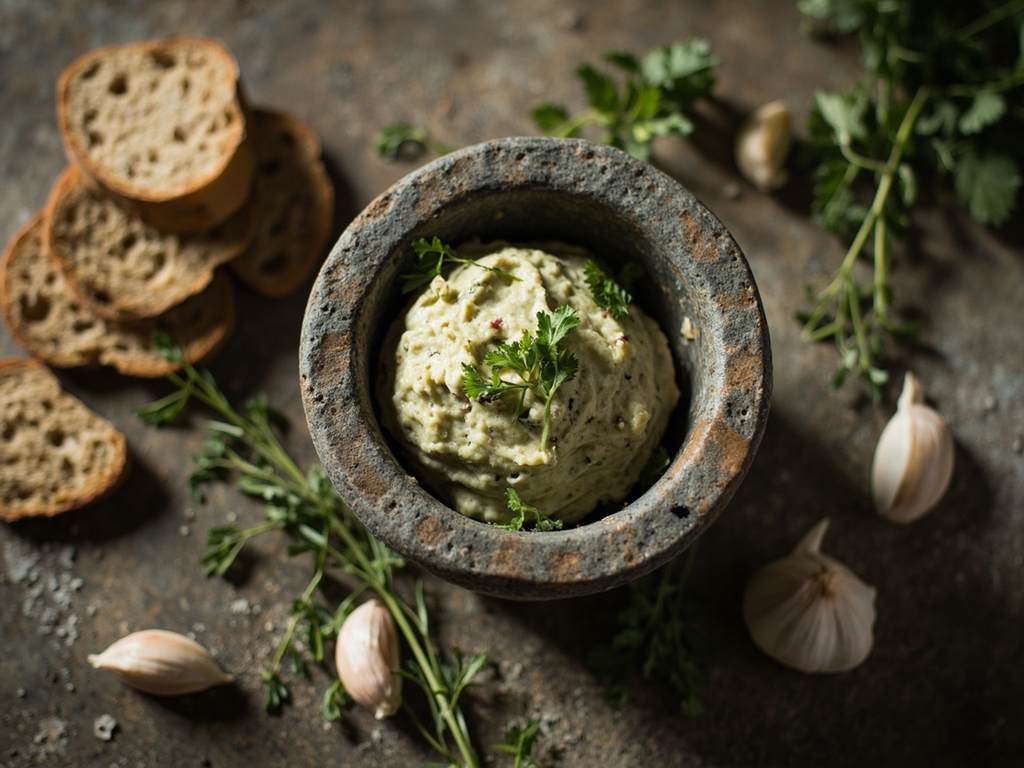
A lively, fragrant paste of pounded garlic, fresh cheese, herbs (celery, coriander, rue), seasoned with salt, vinegar, and oil. It is crushed in a mortar and spread on bread: pungent, tangy, salty — all the savory simplicity of daily Roman life.
They think me only a man of war, but I have eaten at the table of Ravenna before breaking its walls. It was there they handed me this green paste that the Romans pound in their mortar: garlic by the full clove, cheese, herbs from their gardens, vinegar that bites, and oil from their olive trees — things that do not grow in my forests. Spread it on bread. The Empire I came to take knew, I admit, how to make something out of almost nothing.
- •Garlic — a few cloves (pungent base)
- •Fresh cheese (ewe's milk) — a good piece (body of the paste)
- •Celery, coriander, rue — a handful of herbs (green perfume)
- •Vinegar — a dash (acidity)
- •Olive oil — a dash (fat binder)
- •Salt — a pinch (seasoning)
Moretum from the Roman Camp
A lively, fragrant paste of pounded garlic, fresh cheese, herbs (celery, coriander, rue), seasoned with salt, vinegar, and oil. It is crushed in a mortar and spread on bread: pungent, tangy, salty — all the savory simplicity of daily Roman life.
Why this dish? Before and after the sack of 410, Alaric negotiated many times with the Romans: at Ravenna, before besieged Rome. At those tables, the Gothic chief discovered the enemy's cuisine — including this moretum, a paste of garlic, cheese, and herbs that the Romans spread on bread. A taste of the Empire tasted by the one who would bring it down.
They think me only a man of war, but I have eaten at the table of Ravenna before breaking its walls. It was there they handed me this green paste that the Romans pound in their mortar: garlic by the full clove, cheese, herbs from their gardens, vinegar that bites, and oil from their olive trees — things that do not grow in my forests. Spread it on bread. The Empire I came to take knew, I admit, how to make something out of almost nothing.
Ingredients (period version)
- Garlic — a few cloves (pungent base)
- Fresh cheese (ewe's milk) — a good piece (body of the paste)
- Celery, coriander, rue — a handful of herbs (green perfume)
- Vinegar — a dash (acidity)
- Olive oil — a dash (fat binder)
- Salt — a pinch (seasoning)
Ingredients
- Garlic — 3 cloves (pungent base)
- Fresh ewe's milk cheese (or fresh pecorino) — 200 g (body of the paste)
- Celery stalk and fresh coriander — 1 small handful (omit rue, unsafe) (green perfume)
- Wine vinegar — 1 tsp (acidity)
- Olive oil — 2 tbsp (fat binder)
- Salt — 1 pinch (seasoning)
- Rustic bread — for serving (support)
Method
- Pound the garlic with salt in a mortar until a paste forms (or crush it finely).
- Add the fresh cheese and chopped herbs, continue pounding to mix.
- Incorporate the vinegar, then the oil in a stream until a smooth, supple paste forms.
- Taste and adjust salt and acidity; the paste should be sharp and pungent.
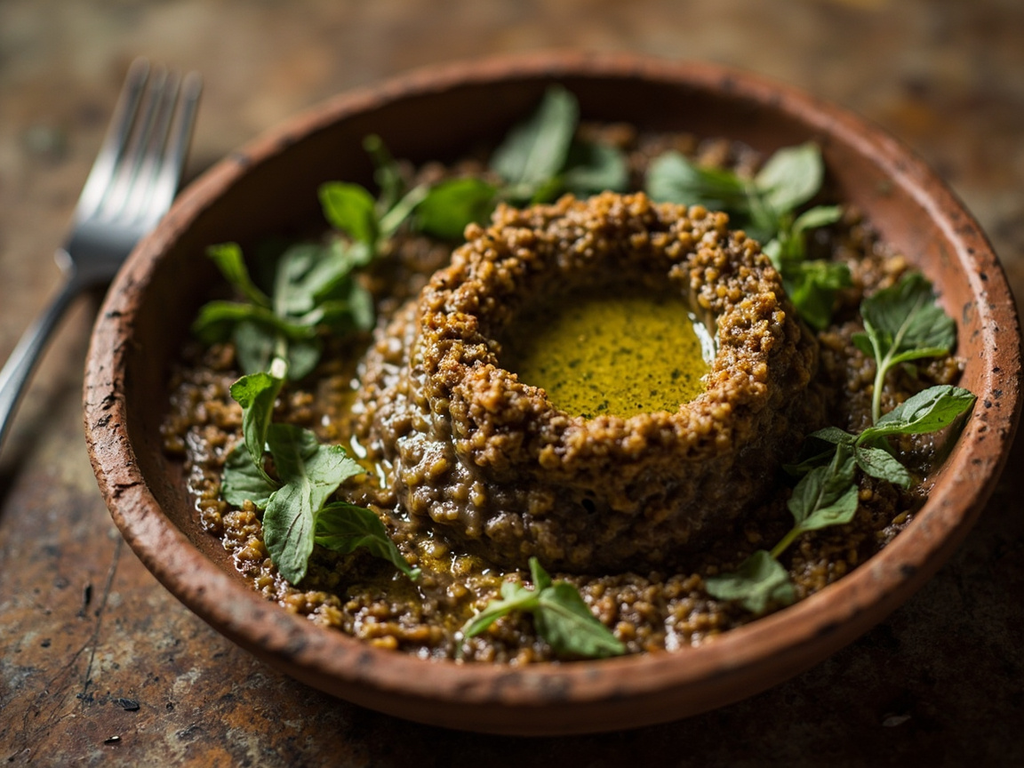
- Shape into a ball (moretum was served rolled into a ball) and spread on rustic bread.
How it was made : The moretum is one of the rare ancient recipes described step by step: a Latin poem of the same name (transmitted in the *Appendix Vergiliana*) tells of a peasant preparing it in a mortar at dawn. It was a humble food, made of garlic, cheese, and garden herbs, crushed together — the everyday Roman cuisine that Gothic chiefs encountered during contacts with the Empire.
The contemporary twist : Rolled into small balls coated in chopped herbs, served as an 'antique' appetizer with toasted bread.
Sources : Poem 'Moretum' (Appendix Vergiliana)
Alaric I · Charactorium