 flip
flipPink Champagne Biscuits for Dipping
Pink Champagne Biscuits for Dipping
Why this dish? The pink biscuit, the sweet glory of Champagne, is designed to last and travel: dry, it keeps for weeks and slips into a pocket or trunk. For Boucher, the man who left for Rome with the Grand Prix and then roamed Paris and England, it is exactly the kind of sweet from home that you take far away.
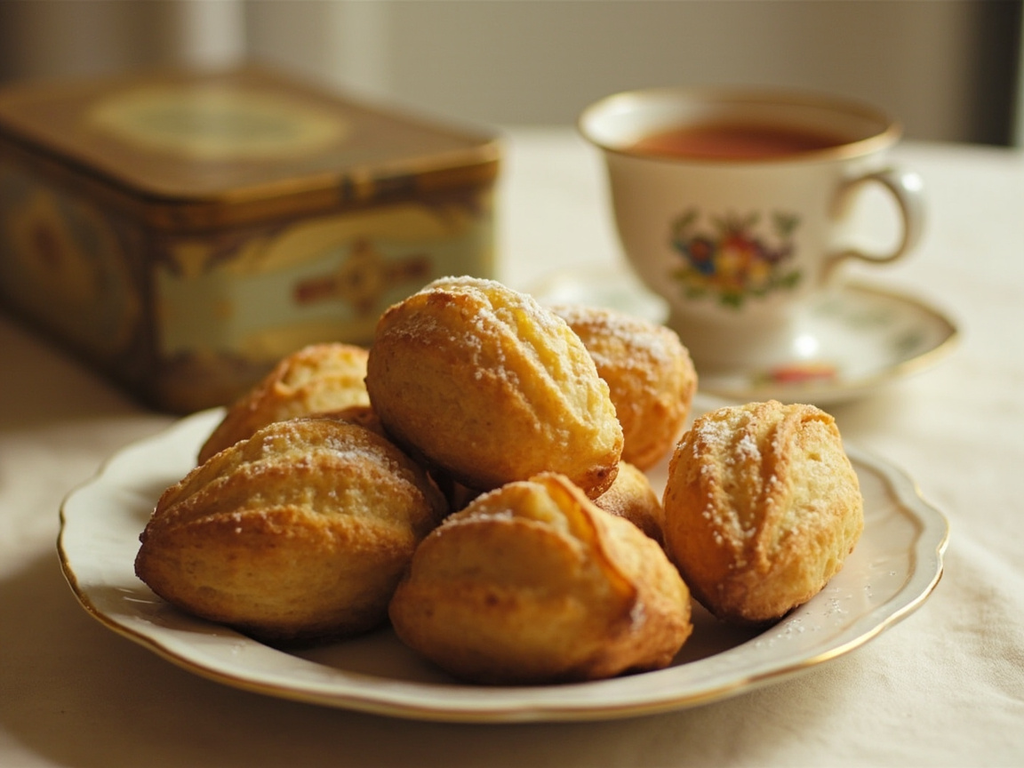
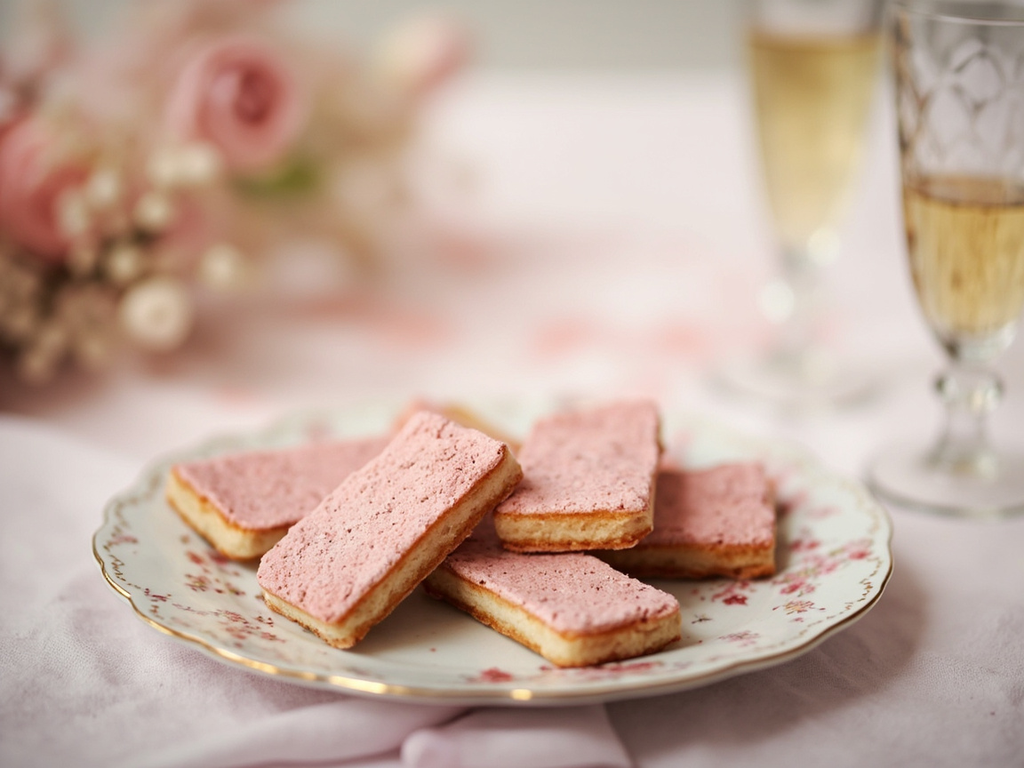
A light and airy biscuit, tinted pink, crunchy at heart, made to be dipped in a glass of champagne (or coffee). Invented to use the residual heat of ovens, it keeps for a very long time without going stale.
When I left for Rome as a young man, I had my box of pink biscuits in my luggage — a taste of Champagne to take to the ends of the earth! The trick, here it is: you bake them twice, gently, so they dry without burning, and you only open the oven door reluctantly. Above all, don't crunch them dry, you wretch! Dip them a moment in our local wine: they drink just enough and melt on the tongue. That's my little pocket Champagne.
- •Eggs — a few (structure)
- •Sugar — as much as flour (sweetness)
- •Wheat flour — as much as sugar (structure)
- •Carmine (pink tint) — a pinch (color)
- •Powdered sugar — for dusting (crust)
Pink Champagne Biscuits for Dipping
A light and airy biscuit, tinted pink, crunchy at heart, made to be dipped in a glass of champagne (or coffee). Invented to use the residual heat of ovens, it keeps for a very long time without going stale.
Why this dish? The pink biscuit, the sweet glory of Champagne, is designed to last and travel: dry, it keeps for weeks and slips into a pocket or trunk. For Boucher, the man who left for Rome with the Grand Prix and then roamed Paris and England, it is exactly the kind of sweet from home that you take far away.
When I left for Rome as a young man, I had my box of pink biscuits in my luggage — a taste of Champagne to take to the ends of the earth! The trick, here it is: you bake them twice, gently, so they dry without burning, and you only open the oven door reluctantly. Above all, don't crunch them dry, you wretch! Dip them a moment in our local wine: they drink just enough and melt on the tongue. That's my little pocket Champagne.
Ingredients (period version)
- Eggs — a few (structure)
- Sugar — as much as flour (sweetness)
- Wheat flour — as much as sugar (structure)
- Carmine (pink tint) — a pinch (color)
- Powdered sugar — for dusting (crust)
Ingredients
- Eggs — 3 (structure)
- Granulated sugar — 130 g (sweetness)
- Flour — 100 g (structure)
- Cornstarch — 30 g (lightness)
- Pink food coloring (carmine/beet) — a few drops (color)
- Powdered sugar — 2 tbsp (sweet crust)
Method
- Separate the eggs. Whip the whites to stiff peaks, then beat in half the sugar.
- Whisk the yolks with the remaining sugar and coloring until pale, then gently fold in the whites.
- Sift the flour and cornstarch over the top; fold with a spatula without deflating the foam.
- Pipe finger shapes onto parchment paper, dust twice with powdered sugar.
- Bake at 180°C for about 12 min, then let dry in the turned-off oven with the door ajar until hard.
- Store in an airtight container; serve to dip in champagne or coffee.
How it was made : The pink biscuit dates back to the 17th century in Reims: the batter was baked in the cooling oven after bread baking, hence a double baking that made them very dry and long-lasting. The pink color, initially to mask vanilla specks, became the signature. They were traditionally dipped in champagne, which doesn't crumble them.
The contemporary twist : Crush a few into powder to sprinkle over a mousse or charlotte: the "Champagne pink" makes a chic and unmistakable presentation.
Alfred Boucher · Charactorium