 flip
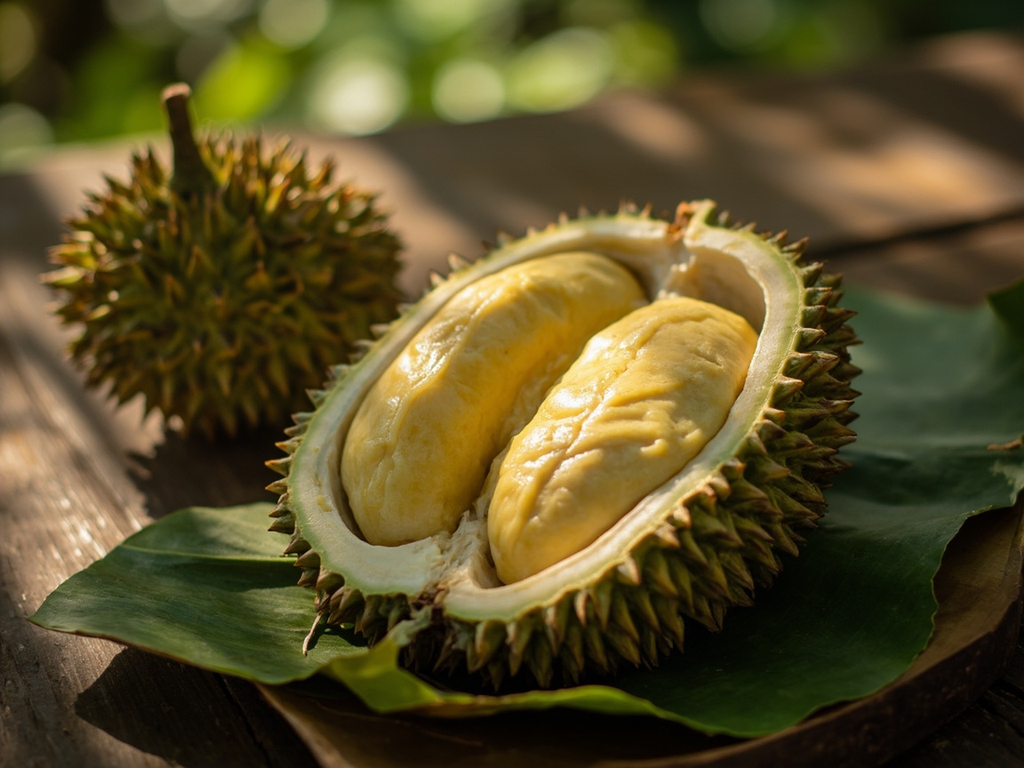
flipRipe durian, split open with a blade
Ripe durian, split open with a blade
Why this dish? Wallace devotes enthusiastic pages to durian in The Malay Archipelago. He ranked it among the two most exquisite fruits in the world and advised every traveler to brave its smell to taste its flesh. It is the signature dish of his tropical stay, his most famous gourmet discovery.
A large fruit bristling with spikes, split in two: inside, lobes of creamy, pale yellow flesh with a heady perfume. The taste blends cream, almond, sweet onion, and a almost cheesy undertone. No cooking: eaten with a spoon, straight from the shell, squatting in the shade.
Allow me to introduce the king of fruits, which my countrymen flee by holding their noses, and they are quite wrong to flee. The first bite disconcerts; by the fifth, you are conquered for life. Beneath the spiky armor hides a rich cream like blancmange, in which I believe I recognize in turn almond, whipped cream, and some oniony undertone that is not at all unpleasant. I assert without blushing that a journey to the Orient would be justified by the sole pleasure of eating durian at its full maturity.
- •Ripe durian fallen from the tree — 1 fruit for 2-4 people (the whole)
Ripe durian, split open with a blade
A large fruit bristling with spikes, split in two: inside, lobes of creamy, pale yellow flesh with a heady perfume. The taste blends cream, almond, sweet onion, and a almost cheesy undertone. No cooking: eaten with a spoon, straight from the shell, squatting in the shade.
Why this dish? Wallace devotes enthusiastic pages to durian in The Malay Archipelago. He ranked it among the two most exquisite fruits in the world and advised every traveler to brave its smell to taste its flesh. It is the signature dish of his tropical stay, his most famous gourmet discovery.
Allow me to introduce the king of fruits, which my countrymen flee by holding their noses, and they are quite wrong to flee. The first bite disconcerts; by the fifth, you are conquered for life. Beneath the spiky armor hides a rich cream like blancmange, in which I believe I recognize in turn almond, whipped cream, and some oniony undertone that is not at all unpleasant. I assert without blushing that a journey to the Orient would be justified by the sole pleasure of eating durian at its full maturity.
Ingredients (period version)
- Ripe durian fallen from the tree — 1 fruit for 2-4 people (the whole)
Ingredients
- Fresh ripe durian (or thawed frozen durian flesh) — 1 fruit or 400 g flesh (fruit)
- Warm cooked sticky rice (modern festive option) — 200 g (optional accompaniment)
- Lightly sweetened and salted coconut milk — 100 ml (optional drizzle)
Method
- Choose a durian that smells strong and whose spikes give slightly under pressure: a sign of ripeness.
- Split the husk along a natural seam with a sturdy knife, protecting your hands from the spikes (a thick cloth helps).
- Detach the flesh lobes, removing the large seed from each chamber.
- Eat as is, with a spoon, at room temperature.
- Festive variation: arrange the flesh on warm sticky rice and drizzle with a little salted-sweet coconut milk.
How it was made : In Wallace's time, durians were not sold: they were picked up under the tree as soon as they fell, a sign of perfect ripeness. Malay villages made a seasonal feast of them, and elephants and tigers were reputed to love them. They were eaten on the spot, without any preparation.
The contemporary twist : In restaurant desserts, it is now served as ice cream or pulut durian (sticky rice with coconut milk) — exactly the marriage Wallace would have approved.
Sources : Alfred Russel Wallace, The Malay Archipelago (1869), chapter on durian
Alfred Russel Wallace · Charactorium