 flip
flipArroz con Habichuelas Guisadas (Rice and Beans from Spanish Harlem)
Arroz con Habichuelas Guisadas (Rice and Beans from Spanish Harlem)
Why this dish? From 1938 to 1962, Alice Neel lived in the heart of Spanish Harlem, among the Puerto Rican community she painted with tenderness. Rice with beans simmered in sofrito was the festive and sharing dish of her neighbors and models — a fragrance that rose through the courtyard on gathering days.
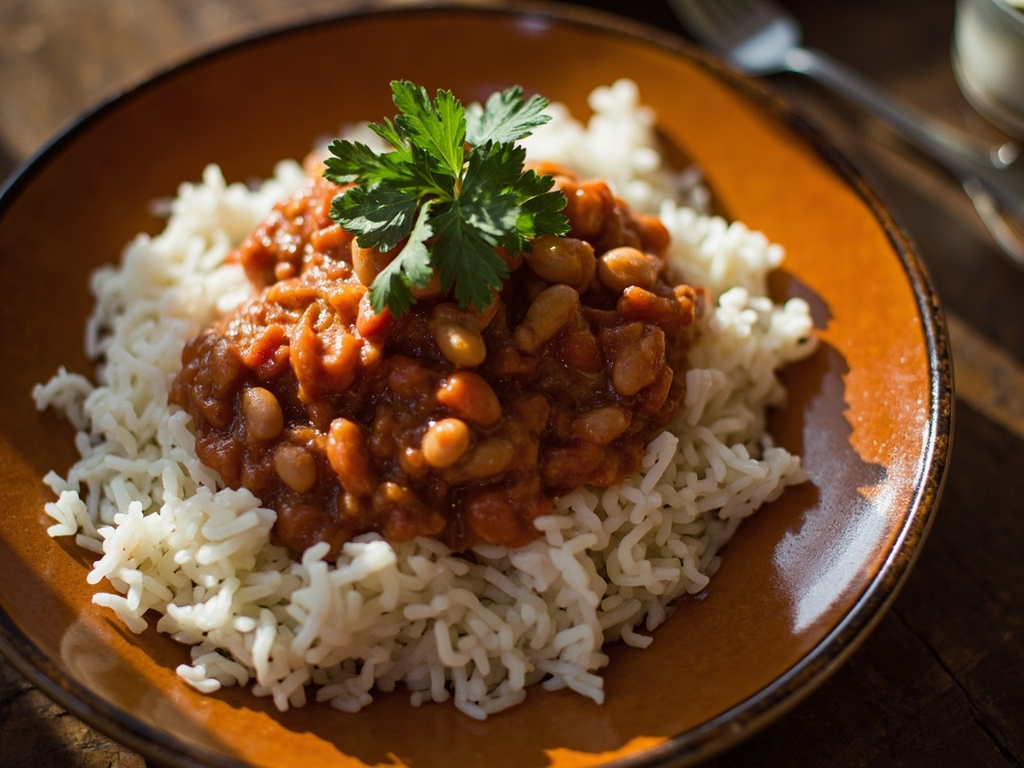
White rice topped with pink beans simmered in a fragrant sofrito (onion, garlic, bell pepper, cilantro). The comforting and festive heart of Puerto Rican cuisine in New York.
My neighbors on 108th Street taught me more about dignity than any Madison Avenue critic. When a family put their rice and beans to simmer, the sofrito perfumed the whole stairwell, and you always ended up being invited to sit down, even if you'd brought nothing. I painted those people because they were real — and their table was as generous as their faces. Taste this, and you'll understand why I never wanted to leave that neighborhood.
- •Long-grain white rice — two cups (staple starch)
- •Pink or red beans — one bowl (stew protein)
- •Onion, garlic, green bell pepper — a good amount (sofrito)
- •Fresh cilantro (or recao) — one bunch (sofrito fragrance)
- •Tomato (paste or fresh) — a few spoonfuls (stew binder)
- •Lard or oil — a little (fat)
- •Salt — to taste (seasoning)
Arroz con Habichuelas Guisadas (Rice and Beans from Spanish Harlem)
White rice topped with pink beans simmered in a fragrant sofrito (onion, garlic, bell pepper, cilantro). The comforting and festive heart of Puerto Rican cuisine in New York.
Why this dish? From 1938 to 1962, Alice Neel lived in the heart of Spanish Harlem, among the Puerto Rican community she painted with tenderness. Rice with beans simmered in sofrito was the festive and sharing dish of her neighbors and models — a fragrance that rose through the courtyard on gathering days.
My neighbors on 108th Street taught me more about dignity than any Madison Avenue critic. When a family put their rice and beans to simmer, the sofrito perfumed the whole stairwell, and you always ended up being invited to sit down, even if you'd brought nothing. I painted those people because they were real — and their table was as generous as their faces. Taste this, and you'll understand why I never wanted to leave that neighborhood.
Ingredients (period version)
- Long-grain white rice — two cups (staple starch)
- Pink or red beans — one bowl (stew protein)
- Onion, garlic, green bell pepper — a good amount (sofrito)
- Fresh cilantro (or recao) — one bunch (sofrito fragrance)
- Tomato (paste or fresh) — a few spoonfuls (stew binder)
- Lard or oil — a little (fat)
- Salt — to taste (seasoning)
Ingredients
- Long-grain white rice — 300 g (staple starch)
- Cooked pink beans (pinto/red), canned — 400 g drained (stew protein)
- Onion — 1 (sofrito)
- Green bell pepper — 1/2 (sofrito)
- Garlic — 3 cloves (sofrito)
- Fresh cilantro — 1 small bunch (fragrance)
- Tomato paste — 1 tbsp (binder)
- Olive oil — 2 tbsp (fat)
- Salt — to taste (seasoning)
Method
- Blend onion, garlic, bell pepper, and cilantro to make the sofrito.
- Sauté the sofrito in oil for 5 minutes, add tomato paste and caramelize for 1 minute.
- Add the beans and a glass of water, salt, and simmer for 15 minutes until thickened.
- Meanwhile, cook the white rice separately until fluffy.
- Plate the rice and generously top with the stewed beans. Garnish with fresh cilantro.
How it was made : Puerto Rican migrants arriving in New York from the 1920s-30s brought sofrito, an aromatic base simmered slowly. Rice and beans formed the daily meal as well as Sunday and holiday dishes, served in large quantities to welcome family and neighbors.
The contemporary twist : A spoonful of mashed avocado and a squeeze of lime on top — a modern nod that adds freshness and creaminess.
Alice Neel · Charactorium