 flip
flipBizcocho, the Sailor's Twice-Baked Biscuit
Bizcocho, the Sailor's Twice-Baked Biscuit
Why this dish? This is the bread of Vespucci's long crossings to Cape Saint Augustine: a dried-to-the-bone cracker, loaded by the hundredweight in Seville, which had to survive months in a barrel salted by sea air.
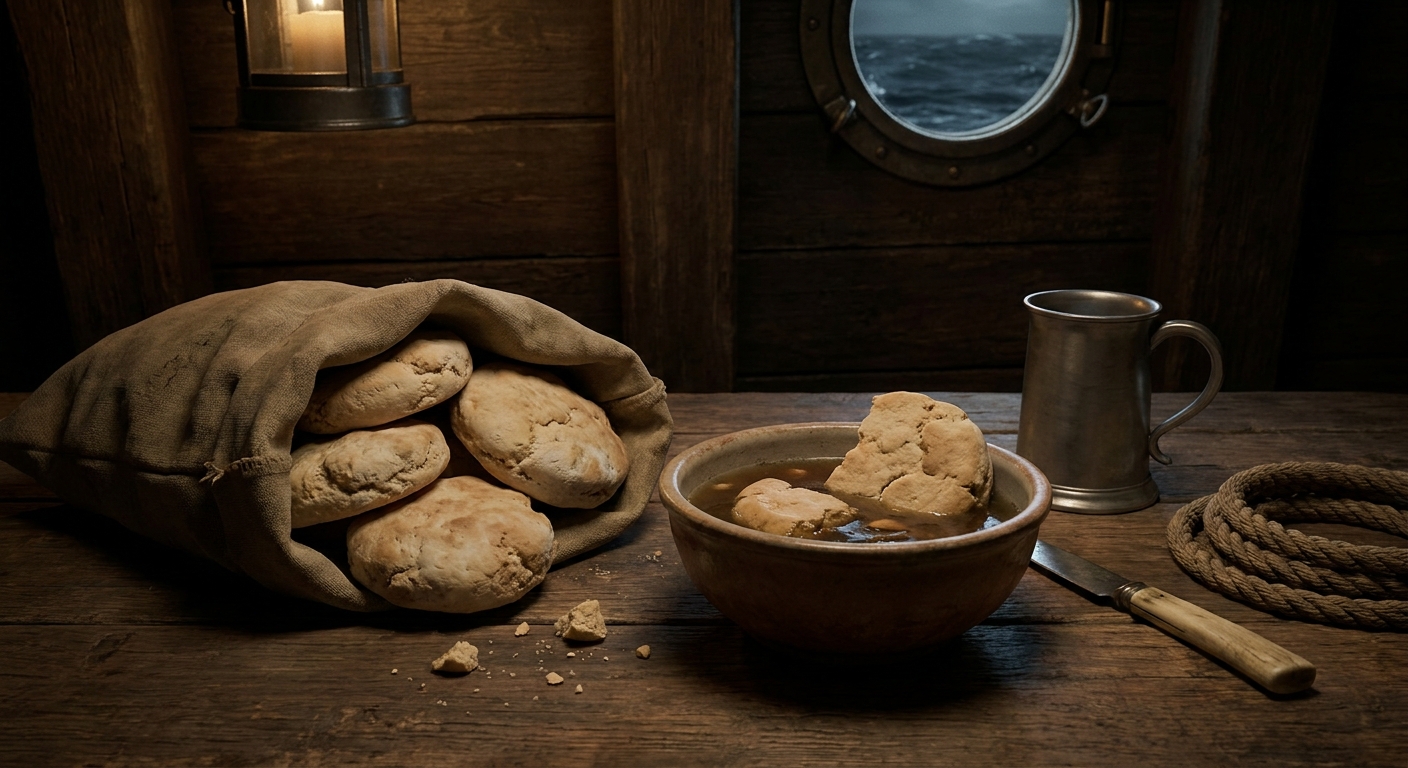
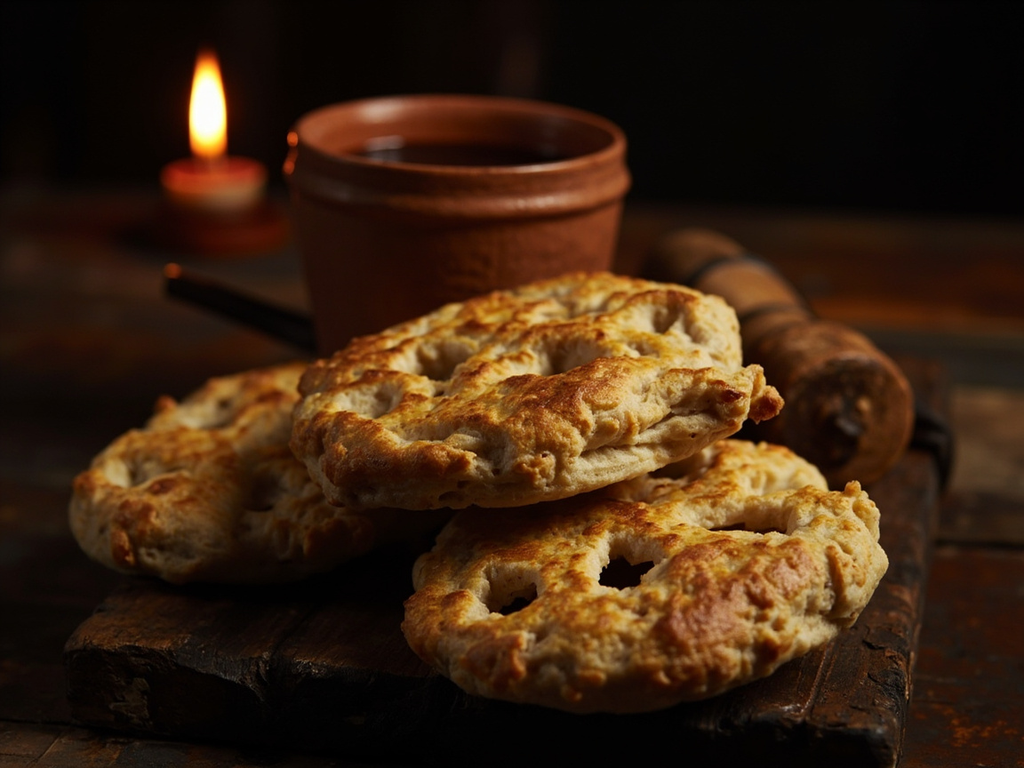
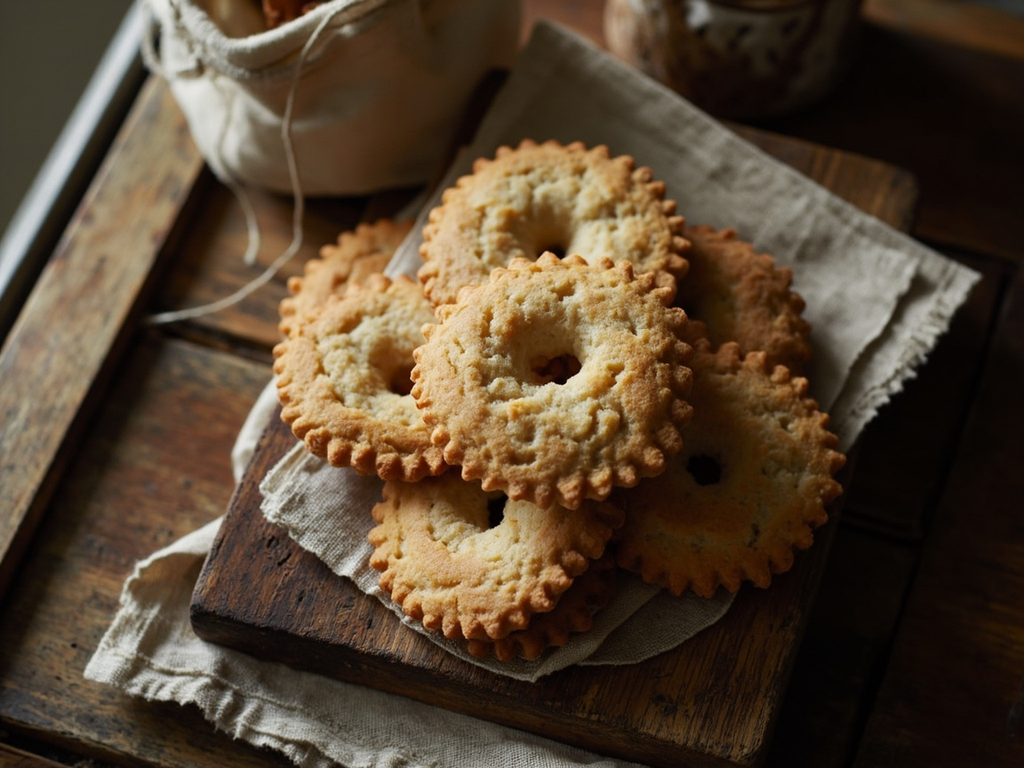
A wheat cracker baked, then re-baked until it lost all moisture, hard as stone and almost eternal. It was soaked in water, watered wine, or salted meat broth to make it edible. The staple of all food at sea.
Know, you who read these lines by a good fire, that on the ocean there is no soft bread. We loaded in Seville this twice-baked biscuit, hard as the wood of the forecastle, which no man can bite without soaking it in water from the barrel or a finger of wine. On the fortieth day at sea, it was still there, and I assure you that a hungry man finds it better than all the capons of Florence.
- •Wheat flour — as needed (base)
- •Water — enough to bind (binder)
- •Salt — a pinch (preservation and flavor)
Bizcocho, the Sailor's Twice-Baked Biscuit
A wheat cracker baked, then re-baked until it lost all moisture, hard as stone and almost eternal. It was soaked in water, watered wine, or salted meat broth to make it edible. The staple of all food at sea.
Why this dish? This is the bread of Vespucci's long crossings to Cape Saint Augustine: a dried-to-the-bone cracker, loaded by the hundredweight in Seville, which had to survive months in a barrel salted by sea air.
Know, you who read these lines by a good fire, that on the ocean there is no soft bread. We loaded in Seville this twice-baked biscuit, hard as the wood of the forecastle, which no man can bite without soaking it in water from the barrel or a finger of wine. On the fortieth day at sea, it was still there, and I assure you that a hungry man finds it better than all the capons of Florence.
Ingredients (period version)
- Wheat flour — as needed (base)
- Water — enough to bind (binder)
- Salt — a pinch (preservation and flavor)
Ingredients
- T65 wheat flour — 500 g (base)
- Warm water — 230 ml (binder)
- Fine salt — 8 g (preservation and flavor)
Method
- Mix flour and salt, add water little by little to obtain a firm, dry dough without leavening.
- Knead at length until smooth and dense, then roll out to 1 cm thickness.
- Cut into rounds (10 cm), prick deeply with a fork and pierce a hole in the center.
- Bake at 200°C for about 20 minutes until pale golden.
- Lower the oven to 120°C and re-bake ('bis-cuit') for 1 to 1.5 hours, until the biscuits are completely dry and sound hollow.
- Let cool and harden in the air. To eat: dip in soup, broth, or watered wine.
How it was made : The bizcocho (from bis coctus, 'twice cooked') was the standard provision of the Carrera de Indias. The ovens of Seville and its surroundings baked tons of it; with no residual moisture, it could keep for months — provided weevils and mold from damp holds spared it.
The contemporary twist : Served on an appetizer board as 'explorer's bread', brushed with olive oil and rubbed with garlic, in the style of a Sevillian tapa.
Amerigo Vespucci · Charactorium