 flip
flipKunun zaki — sweet and spicy millet drink
Kunun zaki — sweet and spicy millet drink
Why this dish? To receive guests in Zazzau, as in any Hausa court, is to offer a drink. Kunun zaki — 'sweet kunu' of lightly fermented millet, perfumed with ginger and sweetened with honey or tamarind — refreshed the visitors and counselors gathered around the queen, where kola nuts were also chewed.
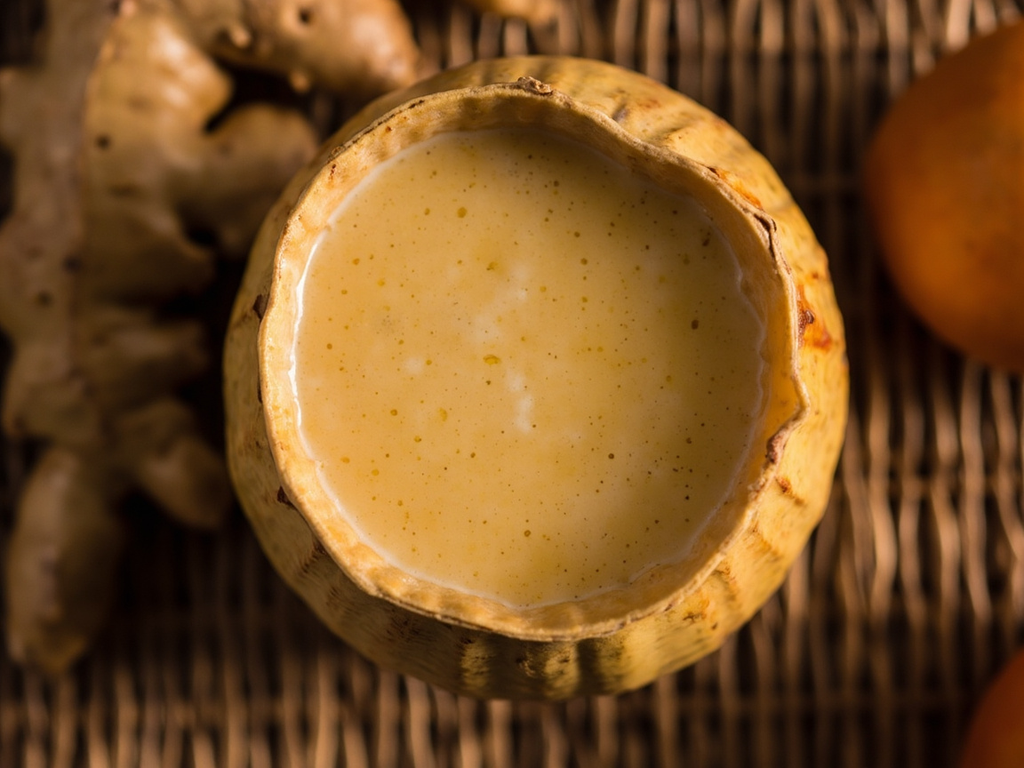
A creamy, refreshing millet drink, gently fermented, flavored with ginger and clove, balanced between sweetness (honey, baobab) and the acidity of tamarind. The quintessential welcome drink.
One does not welcome an envoy with a dry throat. Let him be handed the calabash of kunu, this beaten millet, barely soured, where the ginger stings just enough to awaken the mind. I have them add a little honey and tamarind pulp, for sweetness loosens tongues better than threats. Drink slowly, and then tell me what you have seen on the northern roads.
- •Milled millet (gero) — a calabash (base)
- •Ginger (citta) — a piece (warming fragrance)
- •Clove — a few (spice)
- •Tamarind pulp (tsamiya) — a handful (acidity)
- •Wild honey (or baobab pulp) — to taste (sweetness)
Kunun zaki — sweet and spicy millet drink
A creamy, refreshing millet drink, gently fermented, flavored with ginger and clove, balanced between sweetness (honey, baobab) and the acidity of tamarind. The quintessential welcome drink.
Why this dish? To receive guests in Zazzau, as in any Hausa court, is to offer a drink. Kunun zaki — 'sweet kunu' of lightly fermented millet, perfumed with ginger and sweetened with honey or tamarind — refreshed the visitors and counselors gathered around the queen, where kola nuts were also chewed.
One does not welcome an envoy with a dry throat. Let him be handed the calabash of kunu, this beaten millet, barely soured, where the ginger stings just enough to awaken the mind. I have them add a little honey and tamarind pulp, for sweetness loosens tongues better than threats. Drink slowly, and then tell me what you have seen on the northern roads.
Ingredients (period version)
- Milled millet (gero) — a calabash (base)
- Ginger (citta) — a piece (warming fragrance)
- Clove — a few (spice)
- Tamarind pulp (tsamiya) — a handful (acidity)
- Wild honey (or baobab pulp) — to taste (sweetness)
Ingredients
- Millet flour — 200 g (base)
- Fresh ginger — 1 piece 3 cm (fragrance)
- Cloves — 3 (spice)
- Tamarind paste or pulp — 1 tbsp (acidity)
- Honey (or baobab pulp powder) — to taste (sweetness)
- Water — 1.5 litres (liquid)
Method
- The day before: dissolve millet flour in 500 ml water, let sit at room temperature for 12 hours for a light fermentation (sweet-sour smell).
- Blend ginger, cloves, and tamarind pulp with a little water, strain.
- Bring 700 ml water to a boil, pour in half the millet porridge and cook for 5 min stirring until thickened.
- Off the heat, add the remaining raw fermented millet and the strained spiced juice, mix well for a smooth, creamy texture.
- Sweeten with honey or baobab pulp, adjust acidity with tamarind, let cool, and serve chilled in a calabash.
How it was made : Kunu varied by household and season; the slight fermentation, prized, made it more digestible and longer-lasting in hot weather. Before refined cane sugar, honey, the sweet-sour pulp of baobab, and tamarind built the flavor. Offering a drink remained a codified act of hospitality, inseparable from the shared kola nut.
The contemporary twist : Serve very cold in a tall glass over ice, with a thin stick of candied ginger: a 'spiced millet milk' that holds its own against any counter smoothie.
Amina of Zazzau · Charactorium