 flip
flipBeach Plum Jelly
Beach Plum Jelly
Why this dish? The beach plum (Prunus maritima) grows in bushes on the dunes of the New England coast that Boston society frequented in summer. It was made into jelly to preserve a taste of summer through winter — a household skill familiar to families of Amy Beach's region.
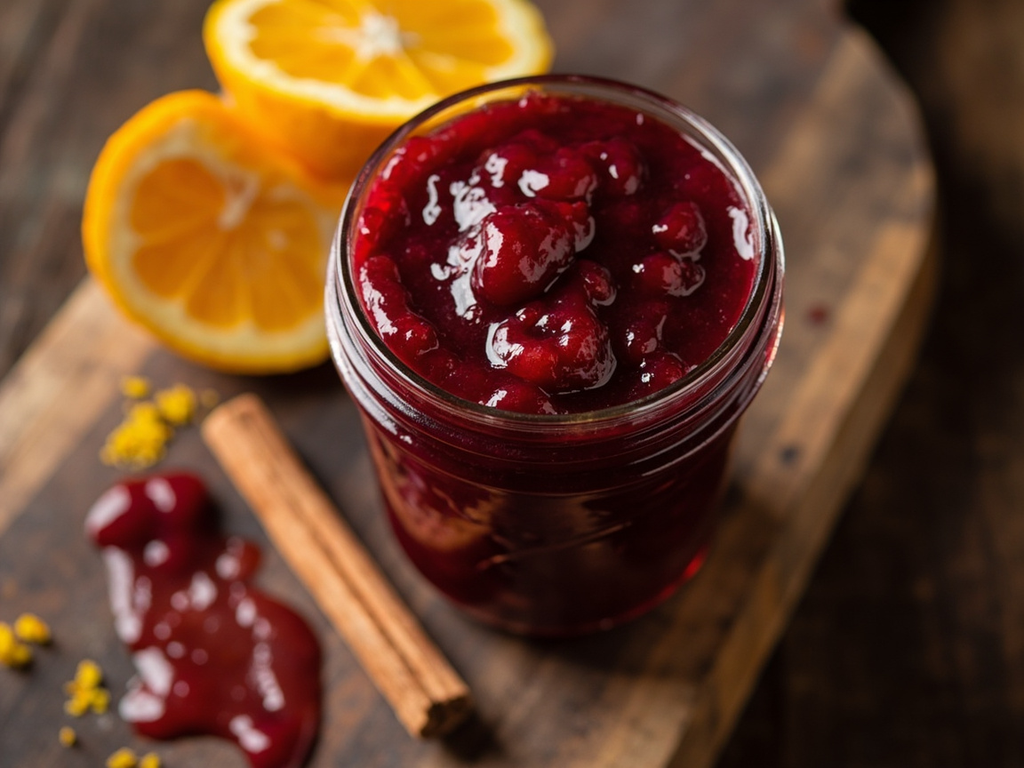
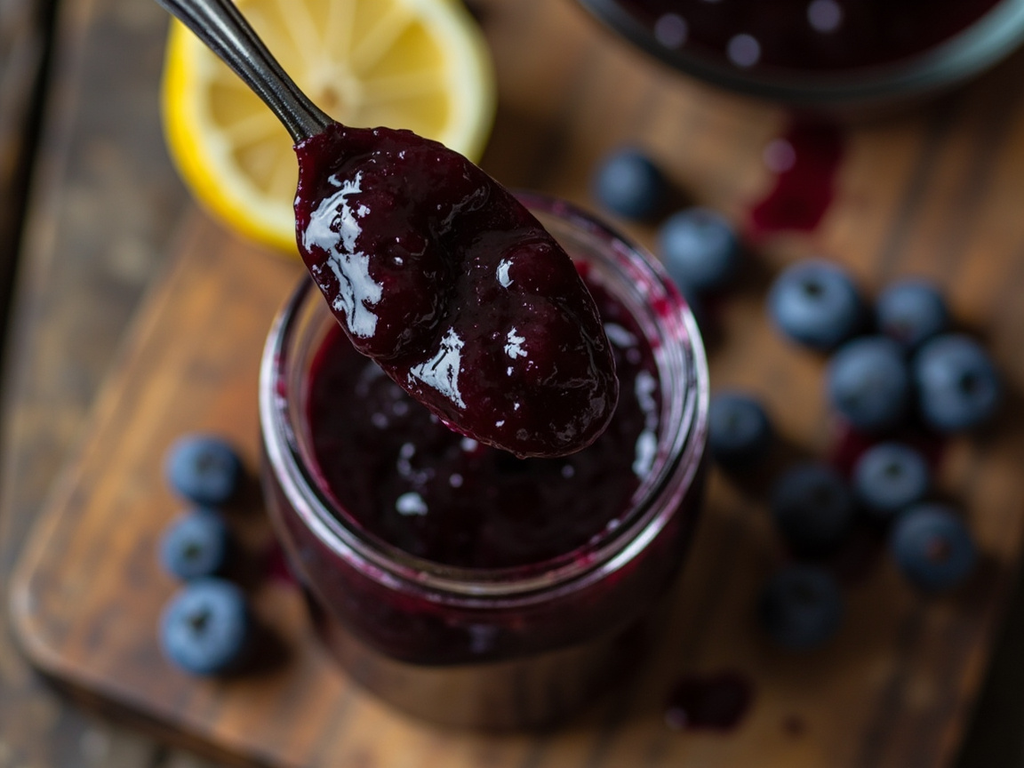
A deep red jelly made from small wild plums of the dunes, tart and fragrant. Canning extended the fleeting season of this coastal fruit into the cold months.
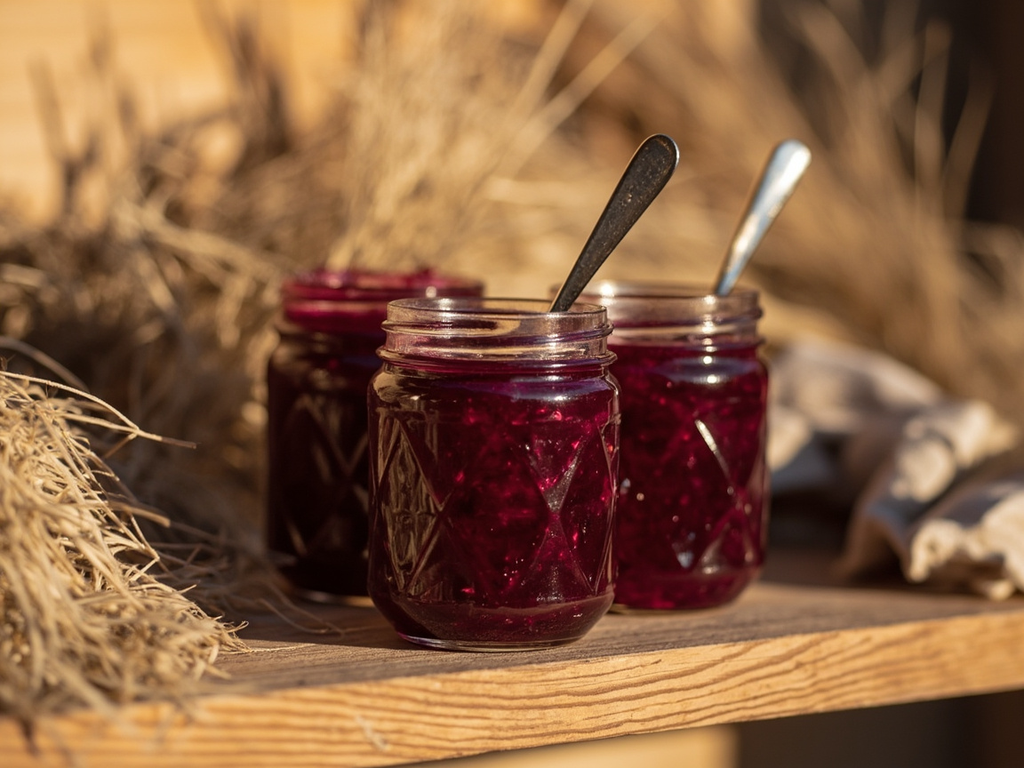
When late summer came and the bushes on the dunes were covered with their small purple plums, it was a big affair to gather baskets of them. They are too tart to eat raw, but what a jelly they make! You must let them burst gently, collect the juice through a cloth, without pressing — for pressing clouds the jelly, and a cloudy jelly shames the mistress of the house. Put into pots, sealed with wax, they reminded us of the seaside all winter long.
- •Wild beach plums — several baskets (tart fruit)
- •Sugar — in measured parts to the juice (preservation and sweetness)
- •Water — just enough to cover (juice extraction)
Beach Plum Jelly
A deep red jelly made from small wild plums of the dunes, tart and fragrant. Canning extended the fleeting season of this coastal fruit into the cold months.
Why this dish? The beach plum (Prunus maritima) grows in bushes on the dunes of the New England coast that Boston society frequented in summer. It was made into jelly to preserve a taste of summer through winter — a household skill familiar to families of Amy Beach's region.
When late summer came and the bushes on the dunes were covered with their small purple plums, it was a big affair to gather baskets of them. They are too tart to eat raw, but what a jelly they make! You must let them burst gently, collect the juice through a cloth, without pressing — for pressing clouds the jelly, and a cloudy jelly shames the mistress of the house. Put into pots, sealed with wax, they reminded us of the seaside all winter long.
Ingredients (period version)
- Wild beach plums — several baskets (tart fruit)
- Sugar — in measured parts to the juice (preservation and sweetness)
- Water — just enough to cover (juice extraction)
Ingredients
- Beach plums (or small tart plums like firm quetsch/mirabelle) — 1.5 kg (tart fruit)
- Granulated sugar — about 750 g (750 g per liter of juice) (preservation and sweetness)
- Water — 25 cl (juice extraction)
- Lemon juice — 1 lemon (acidity and set (pectin))
Method
- Wash the plums, place them in a large pot with the water.
- Cook over low heat until the fruit bursts and releases its juice, about 30 minutes.
- Pour into a fine cloth suspended over a bowl and let the juice drip for several hours, without pressing.
- Measure the juice and pour it into a clean preserving pan with the corresponding sugar and lemon juice.
- Bring to a rolling boil and cook until the setting point is reached (a drop sets on a cold plate), 15-25 minutes.
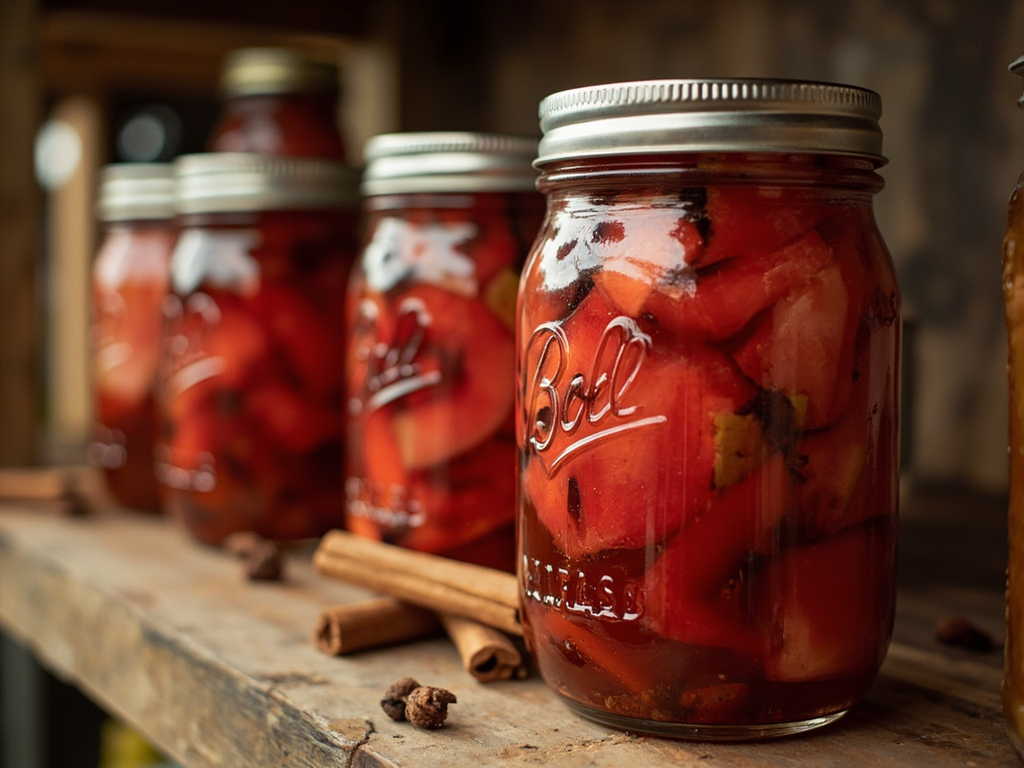
- Skim, pour boiling hot into sterilized jars, seal immediately, and turn jars upside down to create a vacuum.
How it was made : Jelly was once preserved under a layer of melted paraffin or wax poured on top of the jar, before the era of sterilized screw-on lids. The beach plum, a purely wild fruit, was never cultivated on a large scale: its jelly remained a coastal household specialty, passed down from family to family.
The contemporary twist : A few drops of this jelly melted as a glaze on fresh cheese, or as an accompaniment to roast game.
Amy Beach · Charactorium