 flip
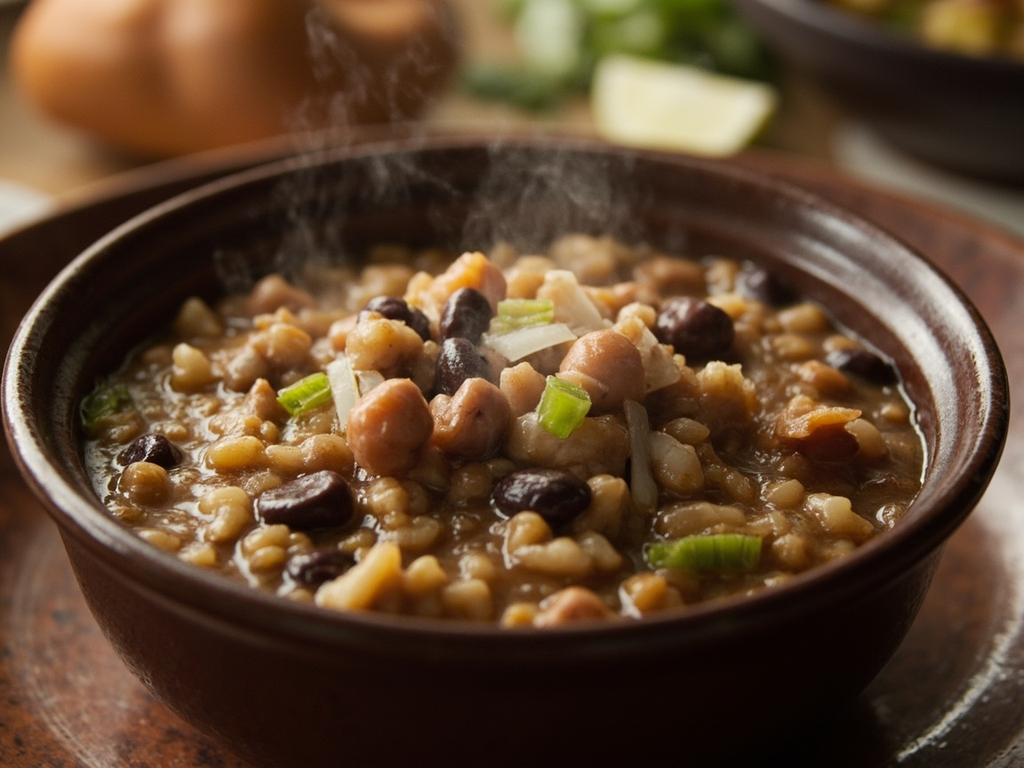
flipHoppin' John (Black-Eyed Peas and Rice)
Hoppin' John (Black-Eyed Peas and Rice)
Why this dish? Black-eyed peas were part of Angela Davis's attested childhood diet. In the Black South, Hoppin' John is eaten on New Year's Day to attract luck and prosperity, and resonates in community celebrations like Juneteenth—a dish of memory and collective hope.
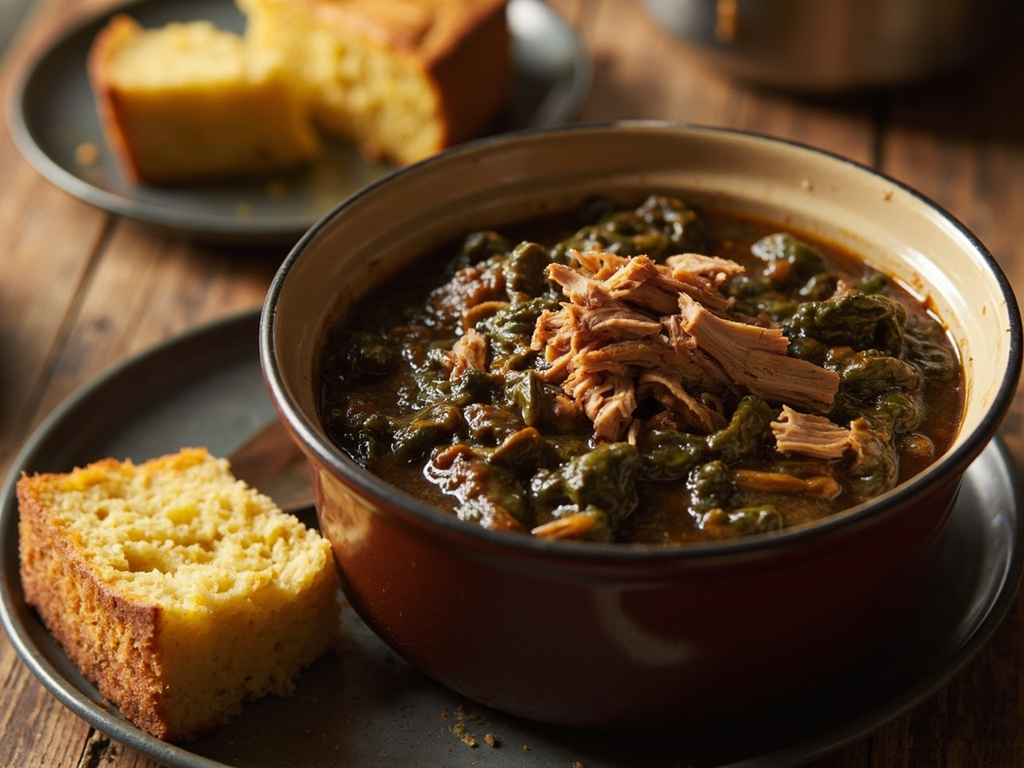
A comforting dish of simmered black-eyed peas and rice, flavored with onion, garlic, and a light smokiness. Often served with greens ('money') and cornbread ('gold'), rich in prosperity symbolism.
On New Year's Day, you had to eat black-eyed peas—that was how it was, no argument. Each little pea, they said, counted as a coin to come, and with the greens on the side for the bills, you started the year on the right foot. But behind the superstition was the truth of a people who, from almost nothing, knew how to make a dish of celebration and hope. That's what I taste in this plate: our stubbornness to celebrate life.
- •Dried black-eyed peas — two cups (main legume)
- •Rice — one cup (starch)
- •Smoked bacon or pork skin — one piece (smoked flavor)
- •Onion — one (aromatic)
- •Salt, pepper — to taste (seasoning)
Hoppin' John (Black-Eyed Peas and Rice)
A comforting dish of simmered black-eyed peas and rice, flavored with onion, garlic, and a light smokiness. Often served with greens ('money') and cornbread ('gold'), rich in prosperity symbolism.
Why this dish? Black-eyed peas were part of Angela Davis's attested childhood diet. In the Black South, Hoppin' John is eaten on New Year's Day to attract luck and prosperity, and resonates in community celebrations like Juneteenth—a dish of memory and collective hope.
On New Year's Day, you had to eat black-eyed peas—that was how it was, no argument. Each little pea, they said, counted as a coin to come, and with the greens on the side for the bills, you started the year on the right foot. But behind the superstition was the truth of a people who, from almost nothing, knew how to make a dish of celebration and hope. That's what I taste in this plate: our stubbornness to celebrate life.
Ingredients (period version)
- Dried black-eyed peas — two cups (main legume)
- Rice — one cup (starch)
- Smoked bacon or pork skin — one piece (smoked flavor)
- Onion — one (aromatic)
- Salt, pepper — to taste (seasoning)
Ingredients
- Dried black-eyed peas (soaked overnight) — 300 g (main legume)
- Long-grain rice — 200 g (starch)
- Sliced onion — 1 (aromatic)
- Garlic — 2 cloves (aromatic)
- Celery — 1 stalk (aromatic)
- Smoked paprika — 1 tsp (smoky, meatless version)
- Vegetable broth — 1 L (cooking liquid)
- Olive oil, salt, pepper — to taste (seasoning)
Method
- Soak the black-eyed peas overnight, then drain.
- Sauté onion, garlic, and celery in oil in a pot.
- Add the peas, smoked paprika, and broth; simmer for 40–50 minutes until tender.
- Meanwhile, cook the rice separately.
- Combine the rice with the peas (or serve rice underneath), adjust seasoning.
- Serve with collard greens and cornbread for a complete New Year's meal.
How it was made : Hoppin' John descends from West African rice and cowpea dishes, passed down by enslaved people in the Carolinas. Traditionally flavored with smoked pork, it was made from affordable, storable ingredients.
The contemporary twist : A plant-based version where smoked paprika replaces the pork, in the spirit of the militant veganism that Angela Davis now advocates as an extension of social justice.
Sources : Jessica B. Harris, High on the Hog: A Culinary Journey from Africa to America (2011) · Adrian Miller, Soul Food (2013)
Angela Davis · Charactorium