
Anna Kournikova is a Russian tennis player born in 1981 in Moscow. Turning professional at just 14, she reached the world top 10 and won two Grand Slam doubles titles at the French Open and Wimbledon alongside Martina Hingis. A media icon of the 1990s and 2000s, she came to embody the intersection of sport and popular culture.
Anna Kournikova(1981 — ?)
Anna Kournikova
États-Unis, Russie
7 min read
Frequently asked questions
Key Facts
- Born June 7, 1981, in Moscow, USSR
- Turned professional in 1995 at age 14
- Reached world No. 8 in singles in 2000
- Won two Grand Slam doubles titles with Martina Hingis (1999 and 2002)
- Retired from professional tennis in 2003 due to recurring injuries
Works & Achievements
At just 16 years old, Anna Kournikova reached the semi-finals at Wimbledon, becoming the youngest player to achieve this feat in over a century. This accomplishment marked the beginning of her international fame.
Kournikova's first Grand Slam doubles title, won alongside Martina Hingis. This success confirmed her abilities as a top-level doubles player on the world stage.
Kournikova reached world No. 8, cementing her status as a top champion and a defining figure in women's tennis at the close of the 1990s.
Kournikova and Hingis reaffirmed their dominance in doubles by winning the Australian Open once again, completing one of the finest doubles partnerships in the history of women's tennis.
Alongside her athletic career, Kournikova signed numerous endorsement deals and became one of the most publicized and highest-paid female athletes in the world, a pioneer of the athlete-as-cultural-icon model.
Anecdotes
At just 16 years old in 1997, Anna Kournikova reached the semi-finals at Wimbledon, becoming the youngest player to achieve this feat at the tournament since 1887. This stunning performance immediately thrust the young Russian into the international spotlight.
In 1999 and 2002, Anna Kournikova won the women's doubles at the Australian Open alongside Swiss player Martina Hingis. The duo, nicknamed 'the Spice Girls of tennis', dominated world doubles and captivated crowds with their on-court chemistry.
In 2002, a computer virus named 'Kournikova' spread worldwide by promising recipients a photo of the player. This episode illustrates just how far her image had transcended sport to become a true global pop culture phenomenon.
Despite a career hampered by numerous injuries that prevented her from winning a singles title on the WTA tour, Kournikova ranked for several years among the most searched athletes on the internet, sometimes surpassing in media fame champions with far more impressive trophy cabinets.
Born in Moscow in 1981, Anna began playing tennis at age 5 and was spotted early by the Spartak Academy, the talent nursery that produced many Soviet and Russian champions. She left to train in the United States at age 10, embodying the new mobility of athletes in the post-Cold War era.
Primary Sources
I want to be the best. I work every day to be the best. Tennis is my life, but I also know that I am a woman, and I don't have to hide that.
I was not nervous. I just played my game. I think I showed today that I belong at this level.
Anna Kournikova reached 8th in the world WTA rankings, becoming the first Russian woman to break into the top 10 in the modern era.
Kournikova and Hingis claimed the women's doubles title at the Australian Open, defeating their opponents in straight sets in a dominant performance.
Key Places
Anna Kournikova's hometown, where she began playing tennis at the Spartak academy. At the time, Moscow was in the midst of post-Soviet transformation, and sport remained one of the most reliable paths to social success.
At this renowned academy — which has trained countless world-class tennis stars — Anna Kournikova refined her game from the age of 10, far from her family back in Russia.
The home of grass-court tennis, where Kournikova made her historic run to the semi-finals in 1997 at just 16 years old, announcing herself to the world on the most iconic court in the game.
Home of the Australian Open, where Kournikova claimed her two women's doubles titles alongside Martina Hingis in 1999 and 2002 — the greatest achievements of her career.
The city where Kournikova settled permanently after retiring from professional tennis. Miami is also home to many international sports and entertainment stars.
Typical Objects
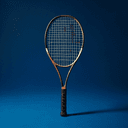
Anna Kournikova was one of the first players to sign a major sponsorship deal with Adidas. Her racket, with its sleek design, became a symbol of the commercialization of tennis in the 1990s.

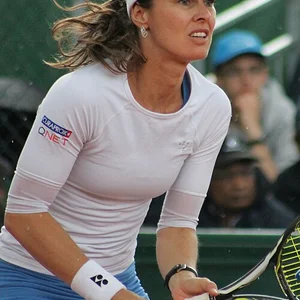
On the grass courts of Wimbledon, Kournikova adhered to the tournament's strict all-white dress code. Her elegant Adidas-designed outfit helped build her image as a glamorous player.

A constant presence on WTA tour courts, Kournikova's branded and sponsored sports bag reflected the growing professionalization of women's tennis in the 1990s and 2000s.

Specialized tennis shoes, designed for play on different surfaces (grass, clay, hard court), are essential at the highest level of the game and are the subject of lucrative endorsement contracts.

Functional accessories worn during matches to absorb sweat, they also became fashion items in 1990s tennis, often coordinated to match a player's outfit.

Kournikova appeared on the cover of Sports Illustrated in 2000, one of the world's most influential sports publications. This appearance symbolized the shift from athletic career to global cultural celebrity.
School Curriculum
Vocabulary & Tags
Key Vocabulary
Daily Life
Morning
Anna Kournikova's day starts early, around 7 a.m., with a preparatory wake-up routine followed by a rigorous physical warm-up. She then puts in several hours of intensive court training, working on groundstrokes, serve, and footwork under her coach's supervision.
Afternoon
The afternoon is dedicated to gym sessions for strength conditioning, recovery work (massages, cold baths), and video analysis of opponents' matches. On tournament days, this is competition time, with mental preparation and a specific warm-up before stepping onto the court.
Evening
Evenings are quiet: a balanced meal prepared by a nutritionist, recovery time, and occasionally media obligations (interviews, photo shoots for sponsors). During major tournaments, evenings may include galas or promotional events.
Food
Kournikova's diet is strictly managed by sports nutritionists: rich in lean proteins, complex carbohydrates, and fresh vegetables, with constant hydration. Excess is avoided during competition periods, and traditional Russian cuisine (soups, cereals) remains a comforting reference.
Clothing
On court, Kournikova wears Adidas technical outfits, carefully selected for their comfort and image. Off the court, she favors a relaxed yet polished style, reflecting her status as an international media figure of the 1990s and 2000s.
Housing
Kournikova lives in Florida, in a comfortable villa in Miami, chosen for its proximity to tennis academies and the sunny climate that allows year-round training. This lifestyle stands in sharp contrast to the Moscow apartments of her Soviet childhood.
Historical Timeline
Period Vocabulary
Visual Style
Esthétique des courts de tennis internationaux des années 1990-2000 : teintes lumineuses, blanc immaculé des tenues Wimbledon, bleus des surfaces dures australiennes, et flashs des médias photographiques.
Sound Ambience
Ambiance sonore des grands courts de tennis des années 1990-2000, mêlant bruits de matchs, foules enthousiastes et atmosphère médiatique internationale caractéristique de l'ère Kournikova.
Liens externes & ressources
Références
Œuvres
Demi-finale à Wimbledon
1997
Titre en double à l'Australian Open (avec Martina Hingis)
1999
Entrée dans le top 10 mondial WTA
1999
Second titre en double à l'Australian Open (avec Martina Hingis)
2002
Carrière de mannequin et ambassadrice de marques (Adidas, Omega, Lycos)
1998-2003