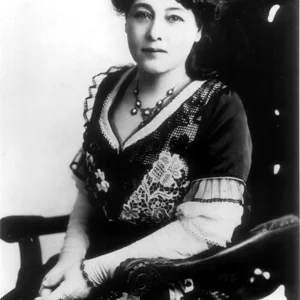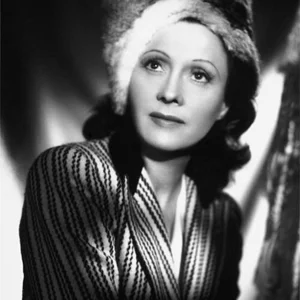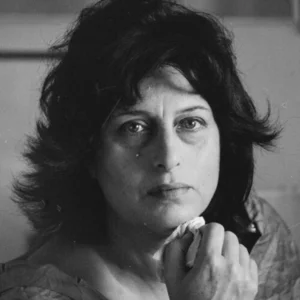

Italian actress (1908-1973), an iconic figure of Italian neorealism. Known for her intense and passionate performances, she won the Academy Award for Best Actress in 1956 for The Rose Tattoo.
Anna Magnani(1908 — 1973)
Anna Magnani
Italie, royaume d'Italie
8 min read
Frequently asked questions
Famous Quotes
« I can only play what I am.»
« Beauty? I prefer expression.»
Key Facts
- Born on March 7, 1908, in Rome
- Stars in Rome, Open City (1945) with Roberto Rossellini, a founding film of neorealism
- Wins the Academy Award for Best Actress in 1956 for The Rose Tattoo by Daniel Mann
- Collaborates with the greatest Italian directors: Visconti, Pasolini, De Sica
- Dies on September 26, 1973, in Rome
Works & Achievements
Roberto Rossellini's neorealist masterpiece, partly filmed during the Nazi occupation of Rome. The role of Pina, shot down in the street, stands as one of the most devastating performances in cinema history.
A two-part film by Roberto Rossellini in which Magnani plays two sharply contrasting roles: a woman deceived by a seducer, and a peasant woman convinced she has been visited by an archangel. An experimental and daring work.
Luchino Visconti's film in which Magnani plays a working-class Roman mother consumed by her desire to launch her daughter into the world of cinema. A sharp portrait of popular ambition in postwar Italy.
An adaptation of Tennessee Williams's play, filmed in the United States. Magnani portrays Serafina, a passionate Sicilian widow. The role earned her the Academy Award for Best Actress in 1956, a first for an Italian actress.
Pier Paolo Pasolini's film in which Magnani plays a former prostitute struggling to rebuild her life and her son's in the working-class suburbs of Rome. A social work of rare intensity, now regarded as a classic.
Anecdotes
In Roberto Rossellini's Rome, Open City (1945), Anna Magnani delivers one of the most devastating scenes in cinema history: her character Pina desperately chases the truck carrying her arrested fiancé away, only to be shot down in the street before the eyes of her young son. The scene was filmed on real locations with a skeleton crew, in a Rome still reeling from the shock of occupation.
Tennessee Williams, the great American playwright, had written the play The Rose Tattoo with Anna Magnani specifically in mind. When it came to adapting the work for the screen in 1955, the actress hesitated at length, daunted by the prospect of performing in English. She overcame her fears, and her performance earned her the Academy Award for Best Actress in 1956 — the first victory for an Italian actress in that category.
Anna Magnani had a passionate relationship with director Roberto Rossellini, who abruptly abandoned her in 1949 to be with Ingrid Bergman. The scandal erupted across Europe. Wounded but proud, Magnani responded through relentless work, taking on one great role after another and proving that her talent needed no one's protection.
In 1962, Pier Paolo Pasolini chose Anna Magnani to play the title role in Mamma Roma, a former prostitute and mother trying to build a dignified life in the working-class suburbs of Rome. Magnani was 54 years old and accepted an uncompromising role, cementing her image as an authentic, untameable Roman woman of the people.
One day, as a makeup artist was trying to conceal the lines on her face before a shoot, Magnani stopped him and reportedly declared: “Leave them! It took me a whole lifetime to earn them.” This oft-quoted anecdote perfectly captures her relationship with authenticity and naturalness — qualities that defined both her acting and her personality.
Primary Sources
Williams writes to her that he composed the role of Serafina with her in mind, describing "a woman of fire, earthy, absolutely true," and that no other actress could embody the character with the same authenticity.
When asked about her acting style, Magnani states: "I don't play characters. I live them. If I have to cry, I really cry. If I have to suffer, I really suffer. The audience can feel it."
A visibly moved Anna Magnani says in halting English: "I don't know how to thank you... this is impossible for me to explain what I feel..." before bursting into tears in front of the Hollywood audience.
Pasolini describes Magnani as "the last popular face of Italian cinema, a face in which one reads two thousand years of Roman history, suffering and vitality intertwined."
Key Places
Anna Magnani's birthplace, where she grew up in a working-class neighborhood and where she died in 1973. Rome lies at the heart of her artistic identity and her greatest films.
Italy's national film school, where Magnani trained as an actress in the 1930s, acquiring the technical foundations that would lend her performances their extraordinary truthfulness.
The streets of Pigneto and Prenestino, Rome's working-class districts, served as the backdrop for the clandestine shooting of *Rome, Open City* in 1944–1945, lending the film its deeply moving authenticity.
Magnani traveled here to film *The Rose Tattoo* in 1955 — a challenging experience due to the language barrier, but one that earned her the Academy Award and worldwide recognition.
Rome's vast film studio complex, nicknamed "Hollywood on the Tiber," where Magnani shot several of her Italian films and which symbolized the rebirth of Italian cinema after the war.
Typical Objects

Anna Magnani was rarely photographed without a cigarette in hand, a symbol of her nervous, intense character. The cigarette was also a common accessory among actresses of the neorealist era, inseparable from their image.

On stage as on screen, Magnani often wore simple black dresses with no frills, which highlighted her physical expressiveness rather than her appearance. She embraced a stripped-down elegance far removed from Hollywood glamour.

Magnani prepared her roles by extensively annotating scripts, searching for the inner truth of each scene rather than mere technical performance. Her preparation notebooks bore witness to a meticulous working process.

Set photographers were ever-present in neorealist cinema; the shots of Anna Magnani — caught between takes, hair disheveled, eyes burning — became icons of that aesthetic of the real.

The statuette she won in 1956 for *The Rose Tattoo* held pride of place in Magnani's Roman apartment, symbolizing the international recognition of her singular art, unmatched in the cinema of her time.

The lightweight camera used on neorealist location shoots — often an Arriflex — was the instrument that allowed Magnani to express her craft in the streets, among real people, far from the sterile studio environment.
School Curriculum
Vocabulary & Tags
Key Vocabulary
Daily Life
Morning
Anna Magnani was a confirmed late riser, a habit common among theatre and film people who worked late into the evening. She rarely got up before noon, starting her day with a strong espresso and a few cigarettes, then browsing the newspapers or welcoming close friends.
Afternoon
In the afternoons, Magnani would read scripts submitted to her, rehearse her lines, or receive actors, directors, and intellectuals at her Roman apartment. She loved lively conversations and passionate debates about politics or cinema. Her afternoons were rarely solitary.
Evening
Evening was her favourite time: neorealist shoots often took place at dusk to capture the natural light of Rome's streets. After the set, Magnani ate late, in the Roman fashion, often at a neighbourhood trattoria surrounded by the film crew or loyal friends.
Food
Magnani ate like a true Roman: *pasta al pomodoro*, *carciofi alla romana*, grilled meats. She followed no diet and proudly embraced a natural figure, far removed from Hollywood standards. A meal was, for her, a moment of conviviality and pleasure — never a dietary constraint.
Clothing
Off set, Magnani dressed simply, without ostentation. She wore dark dresses, often black, and rejected artificial sophistication. She maintained that elegance lay in attitude, not clothing, and freely mocked the flashy luxury of American stars.
Housing
She lived in an apartment in Rome's historic centre, which she had occupied since the 1940s. Well furnished and personalised, it reflected her personality: books, on-set photographs, and little ostentatious luxury. She always refused to settle permanently in Hollywood, remaining deeply attached to her city.
Historical Timeline
Period Vocabulary
Liens externes & ressources
Références
Œuvres
La Rose tatouée (The Rose Tattoo)
1955