 flip
flipSaturday Carioca Feijoada
Saturday Carioca Feijoada
Why this dish? Jobim loved feijoada, this stew of black beans and meats that Carioca families enjoy on Saturday noon, unhurried, before a long afternoon of music. It's the most emblematic dish of his Rio.
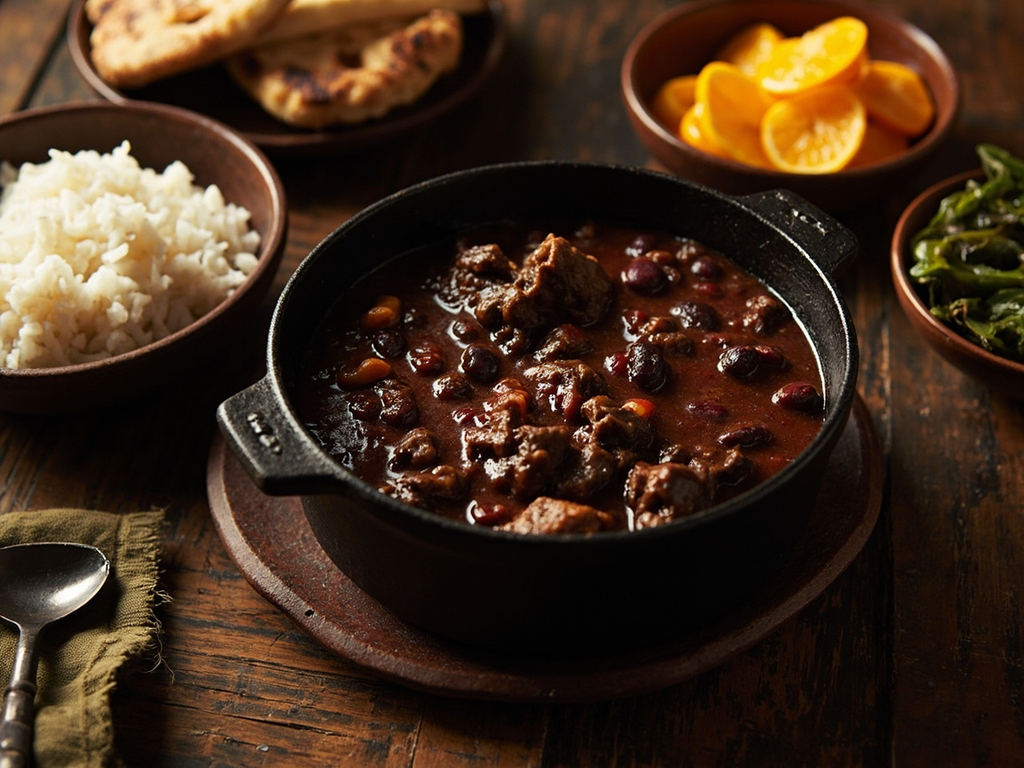
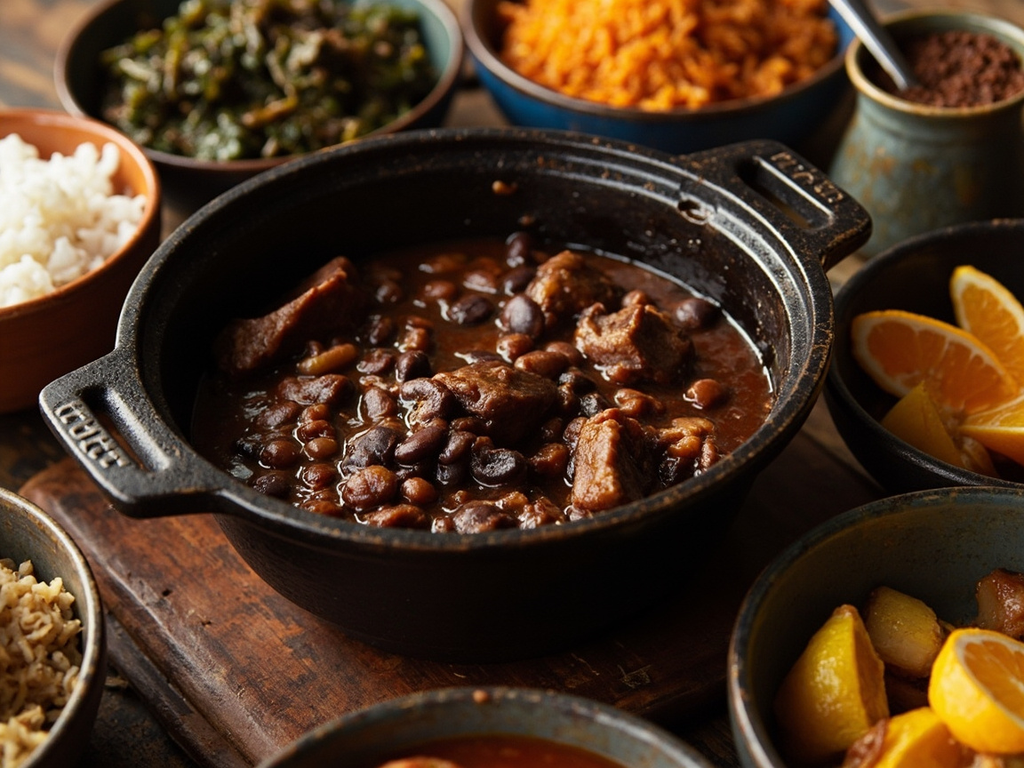
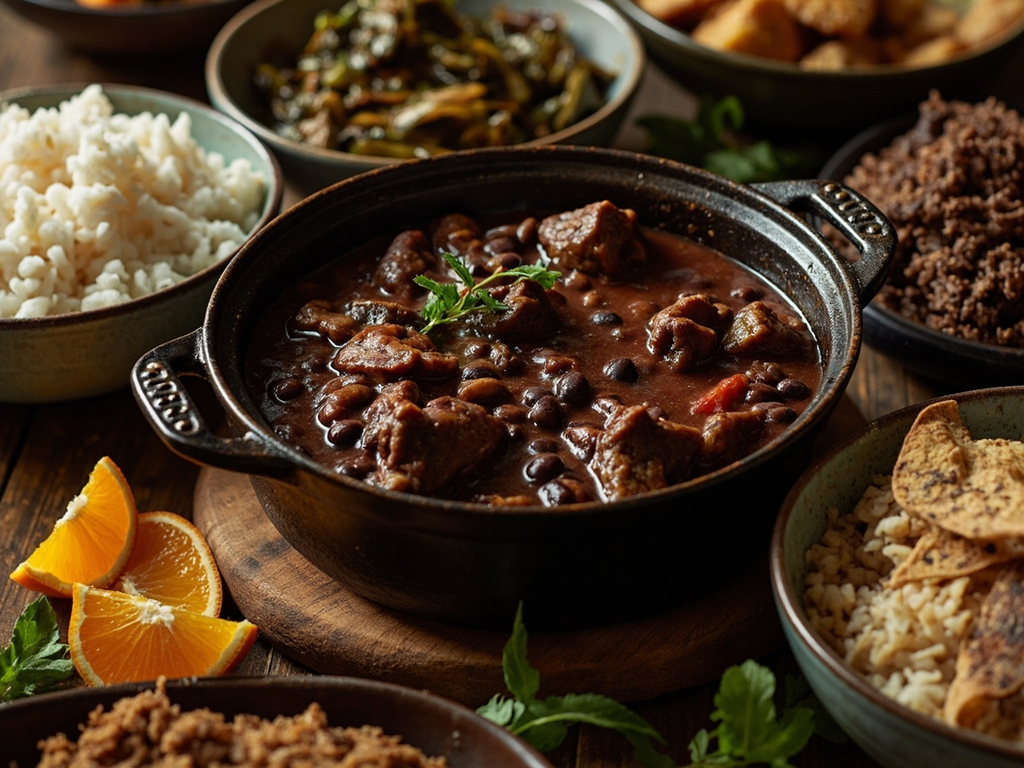
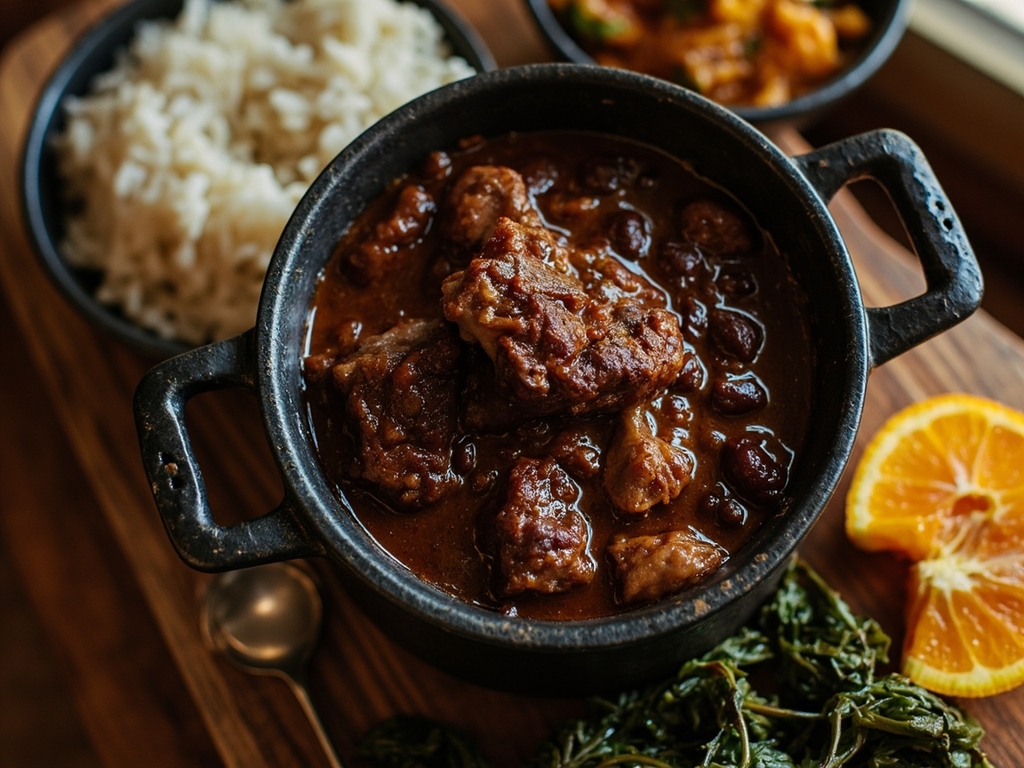
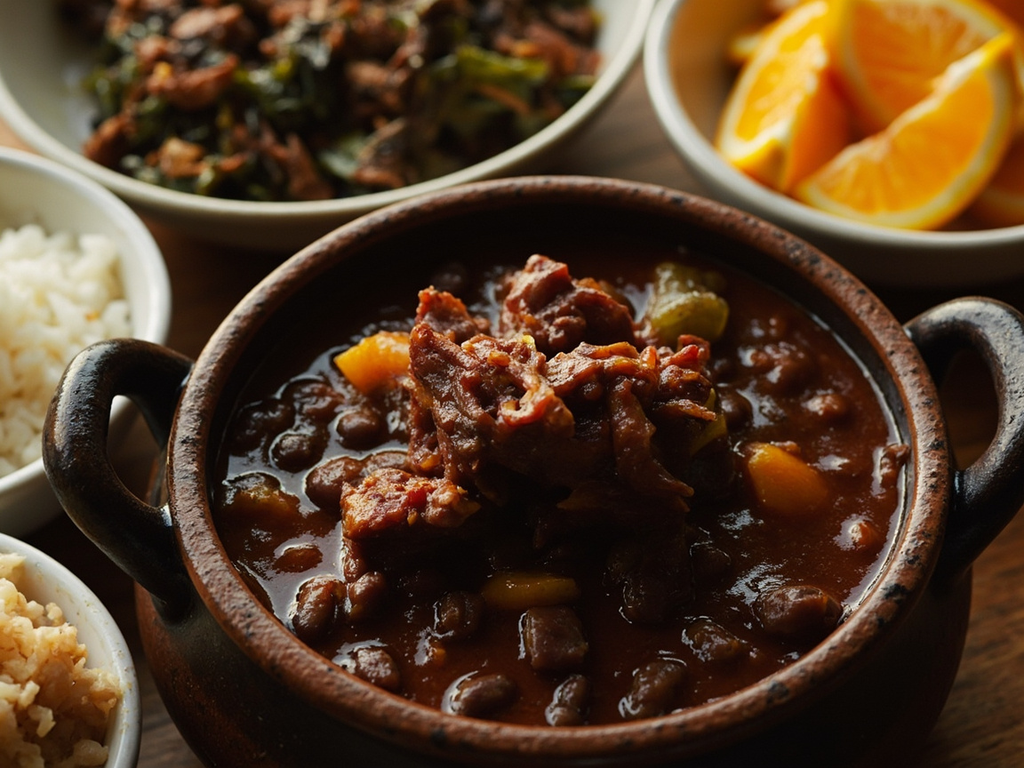
A slow, generous stew of black beans simmered with several smoked and salted pork cuts, served with white rice, orange slices, sautéed shredded kale, and farofa (toasted manioc flour). The monumental dish of Brazilian cuisine.
Ah, a feijoada... come here, let me tell you. At home, on Saturday, we don't rush: we soak the black beans the night before and let them simmer very slowly, like a theme we develop without hurrying. My father used to say that a good feijoada is like a good melody: it needs time, deep black, and a ray of sunshine on top — that's the orange. You eat this in Ipanema with a cold beer, and then, my friend, you just sit at the piano.
- •Black beans (feijão preto) — a good full pot (base of the stew)
- •Salted and smoked pork cuts (shoulder, ribs, ear, trotter) — an assortment (richness and smokiness)
- •Smoked sausage (paio, linguiça) — a few (smoky umami)
- •Garlic, onion, bay leaf — to taste (aromatics)
- •Manioc flour — one bowl (accompanying farofa)
- •Oranges — a few (freshness and digestion)
Saturday Carioca Feijoada
A slow, generous stew of black beans simmered with several smoked and salted pork cuts, served with white rice, orange slices, sautéed shredded kale, and farofa (toasted manioc flour). The monumental dish of Brazilian cuisine.
Why this dish? Jobim loved feijoada, this stew of black beans and meats that Carioca families enjoy on Saturday noon, unhurried, before a long afternoon of music. It's the most emblematic dish of his Rio.
Ah, a feijoada... come here, let me tell you. At home, on Saturday, we don't rush: we soak the black beans the night before and let them simmer very slowly, like a theme we develop without hurrying. My father used to say that a good feijoada is like a good melody: it needs time, deep black, and a ray of sunshine on top — that's the orange. You eat this in Ipanema with a cold beer, and then, my friend, you just sit at the piano.
Ingredients (period version)
- Black beans (feijão preto) — a good full pot (base of the stew)
- Salted and smoked pork cuts (shoulder, ribs, ear, trotter) — an assortment (richness and smokiness)
- Smoked sausage (paio, linguiça) — a few (smoky umami)
- Garlic, onion, bay leaf — to taste (aromatics)
- Manioc flour — one bowl (accompanying farofa)
- Oranges — a few (freshness and digestion)
Ingredients
- Dried black beans — 500 g (soaked 12 h) (base of the stew)
- Semi-salted pork shoulder — 400 g (main meat)
- Smoked pork ribs — 300 g (smokiness)
- Smoked sausage like Morteau or linguiça — 2 (smoky umami)
- Smoked bacon — 150 g (flavorful fat)
- Onion + 4 garlic cloves — 2 onions (aromatics)
- Bay leaf — 2 leaves (flavor)
- White rice — 300 g (accompaniment)
- Manioc flour (farinha) — 150 g (farofa)
- Green cabbage (couve) — 1/2 (shredded garnish)
- Oranges — 2 (serving)
Method
- The day before, soak the black beans in plenty of cold water. Desalt the semi-salted pork by changing the water.
- In a large pot, put the drained beans, the salted and smoked meats (except sausages), the bay leaf, cover generously with water, and simmer for 1.5 to 2 hours over low heat.
- Add the sausages, cook for another 30 minutes. The beans should be creamy and the broth thick and very dark.
- Sauté garlic and onion in a little fat, take a ladle of beans, mash them, and return to the pot to thicken.
- Prepare the farofa: toast the manioc flour in a pan with a little fat. Sauté the shredded kale. Cook the white rice.
- Serve the feijoada hot with rice, farofa, kale, and orange wedges.
How it was made : The feijoada as we know it was established in Rio during the 19th–20th centuries. The romantic legend of a dish born from the cheap cuts given to slaves is now nuanced by historians: it is mainly an Iberian bean stew enriched with pork, which became a national emblem. Oranges help digest this very rich dish, and kale (couve) brings freshness.
The contemporary twist : Serve a 'tasting' version in small black lacquered bowls, each guest composing their plate like choosing notes — a nod to the freedom of bossa nova.
Sources : Câmara Cascudo, História da Alimentação no Brasil · Ministério da Cultura do Brasil, dossier sur la feijoada
Antônio Carlos Jobim · Charactorium