 flip
flipSasqû qalû — soldier's toasted barley porridge with dates
Sasqû qalû — soldier's toasted barley porridge with dates
Why this dish? Ashurbanipal led long military campaigns, as far as Egypt (Thebes) and Elam (Susa). An army on the march fed on toasted barley and dates, dry foods that travel without spoiling. Here is the robust sustenance that followed the king and his troops on the roads of the empire.
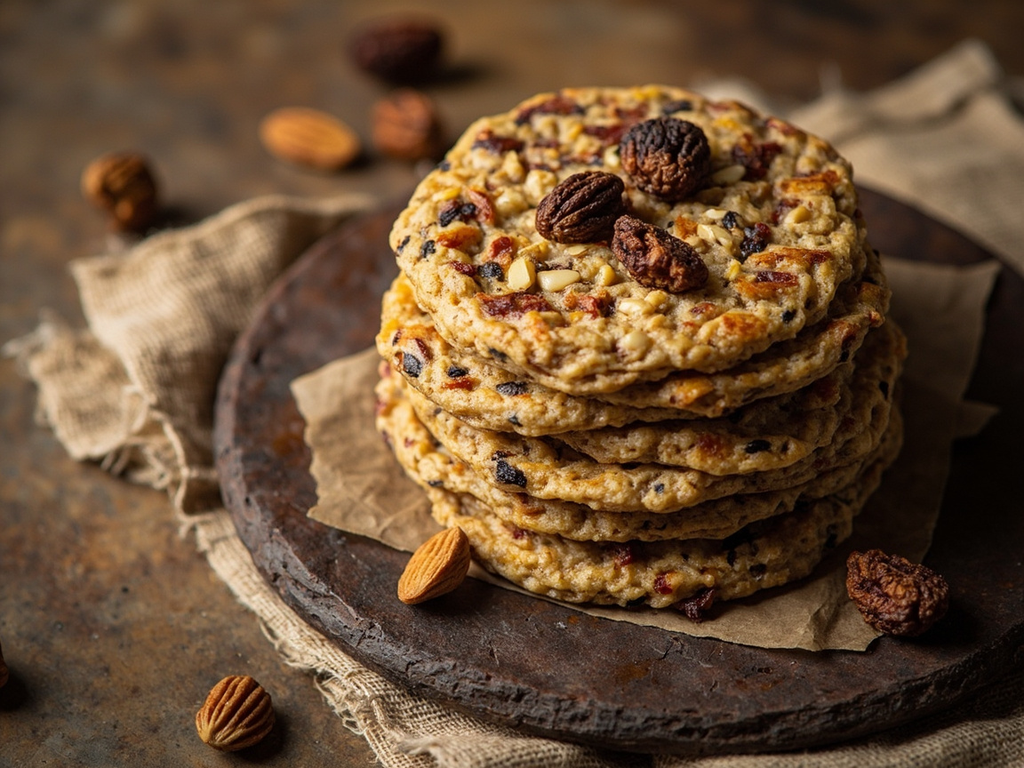
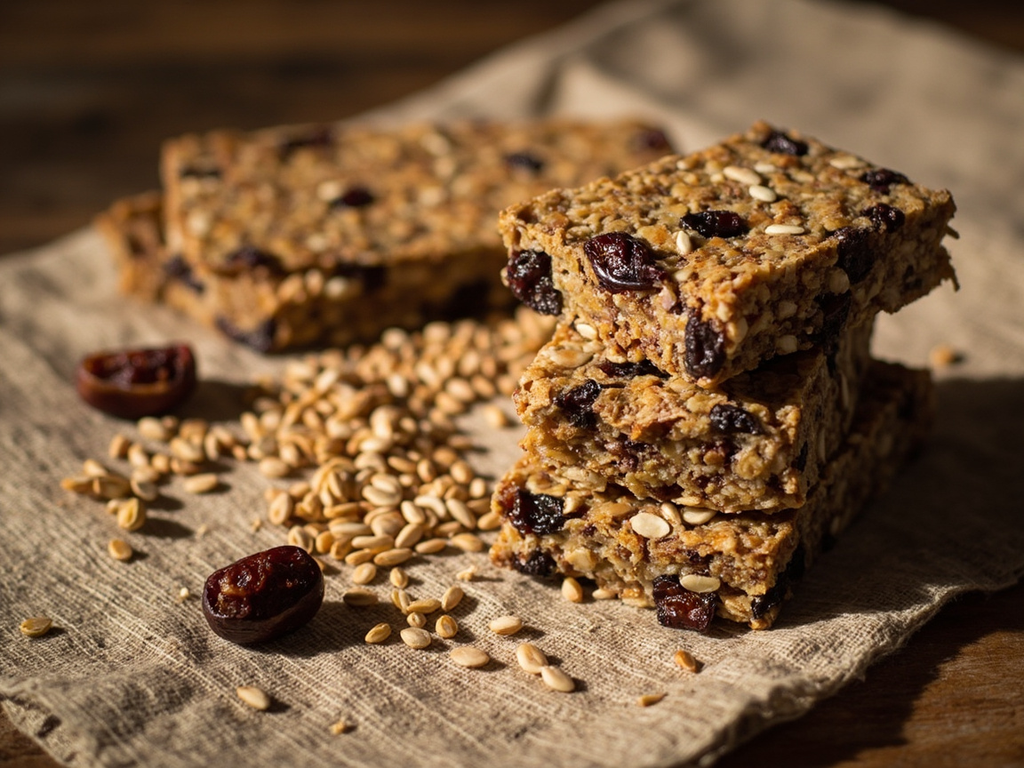
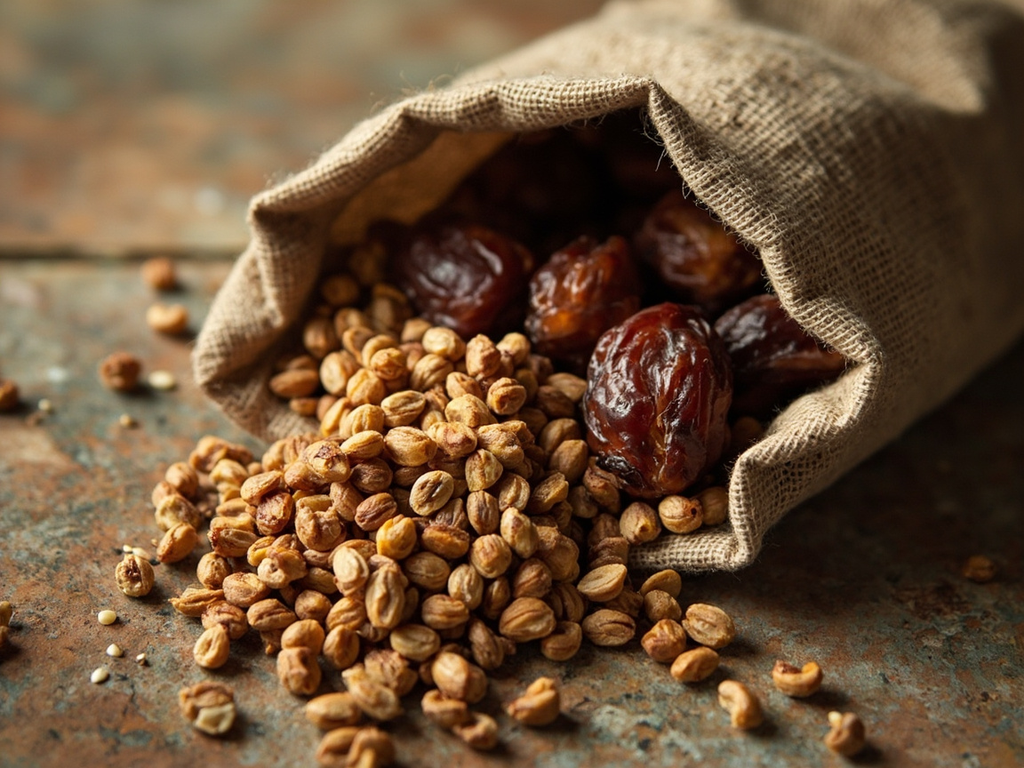
Barley toasted dry then coarsely crushed, mixed with chopped dates and a little salt, carried in a sack and eaten dry or mixed with hot water into a nourishing porridge. Sweet-salty, calorie-dense, made to sustain marching.
When my armies set out to strike down the rebels of Elam or Thebes, they carry no golden cauldrons. We toast the barley on the hot stone until it smells fragrant, we crush it, we throw in dates and a pinch of salt — and there is enough to march for days. Pour hot water over it in the evening, at the camp, and you have a porridge that warms a man. A king knows that empires are won as much by grain as by the bow.
- •Barley grains — two measures (energy base)
- •Chopped dates — a handful (sugar and energy)
- •Salt — a pinch (preservation and taste)
- •Sesame seeds — a little (fat and flavour)
Sasqû qalû — soldier's toasted barley porridge with dates
Barley toasted dry then coarsely crushed, mixed with chopped dates and a little salt, carried in a sack and eaten dry or mixed with hot water into a nourishing porridge. Sweet-salty, calorie-dense, made to sustain marching.
Why this dish? Ashurbanipal led long military campaigns, as far as Egypt (Thebes) and Elam (Susa). An army on the march fed on toasted barley and dates, dry foods that travel without spoiling. Here is the robust sustenance that followed the king and his troops on the roads of the empire.
When my armies set out to strike down the rebels of Elam or Thebes, they carry no golden cauldrons. We toast the barley on the hot stone until it smells fragrant, we crush it, we throw in dates and a pinch of salt — and there is enough to march for days. Pour hot water over it in the evening, at the camp, and you have a porridge that warms a man. A king knows that empires are won as much by grain as by the bow.
Ingredients (period version)
- Barley grains — two measures (energy base)
- Chopped dates — a handful (sugar and energy)
- Salt — a pinch (preservation and taste)
- Sesame seeds — a little (fat and flavour)
Ingredients
- Hulled barley (or barley flakes) — 200 g (energy base)
- Pitted and chopped dates — 100 g (sugar and energy)
- Salt — 1/2 tsp (preservation and taste)
- Sesame seeds — 2 tbsp (fat and flavour)
- Hot water — at serving time (transforms into porridge)
Method
- Toast the barley dry in a pan over medium heat, stirring, until it browns and smells fragrant (5 to 8 min).
- Briefly toast the sesame seeds in the same way.
- Coarsely crush the barley in a mortar or blender.
- Mix with the chopped dates, sesame seeds and salt.
- Store in a bag or airtight jar: keeps for several days.
- To serve, eat by the handful as is, or pour hot water over it and let swell for 10 minutes into a porridge.
How it was made : The armies of the ancient Near East marched on barley, a cereal easy to toast and transport; toasted, it keeps and can be eaten without lengthy cooking. Dates, naturally dried, provided concentrated sugar ideal for exertion. Assyrian administrative texts detail the barley rations distributed to soldiers and workers.
The contemporary twist : Pour the mixture into a bowl like an ancient granola, with plain yogurt and a drizzle of date syrup: the conqueror's breakfast, revisited as a morning bowl.
Ashurbanipal · Charactorium