 flip
flipBucellatum — the Soldier's Marching Biscuit
Bucellatum — the Soldier's Marching Biscuit
Why this dish? Aurelian led his armies from one end of the Empire to the other—from the Danube to Palmyra, from the Catalaunian Fields to Thrace where he died. These lightning campaigns depended on iron logistics: bucellatum, twice-baked and nearly imperishable bread, fed the legionary on forced marches.
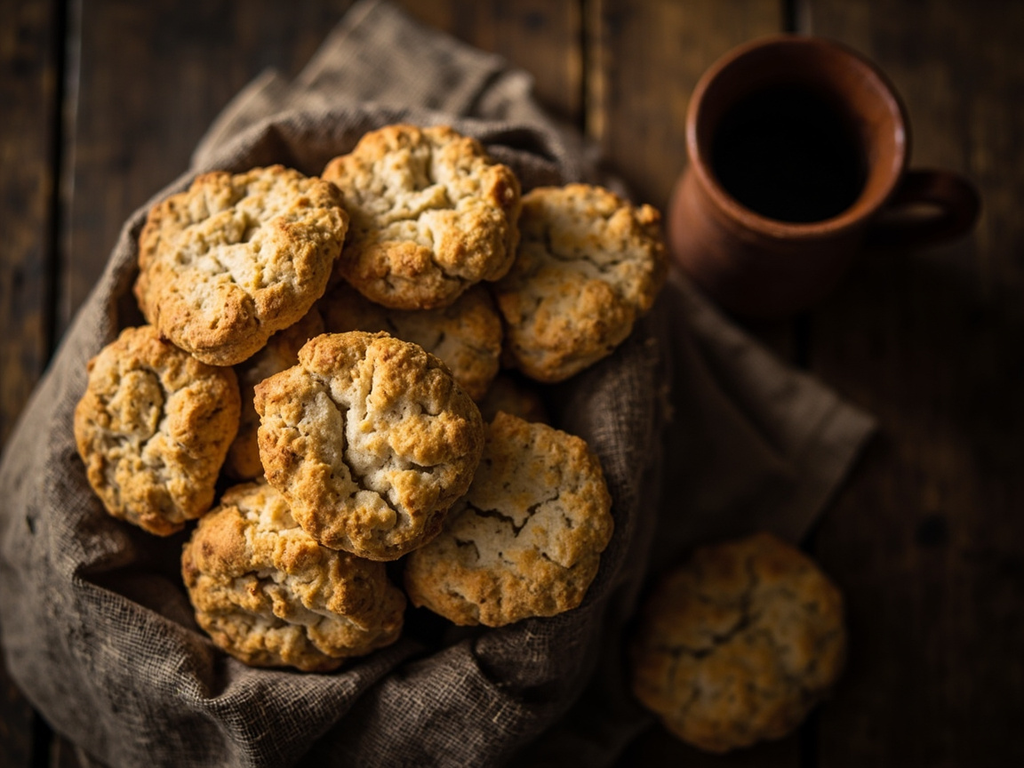
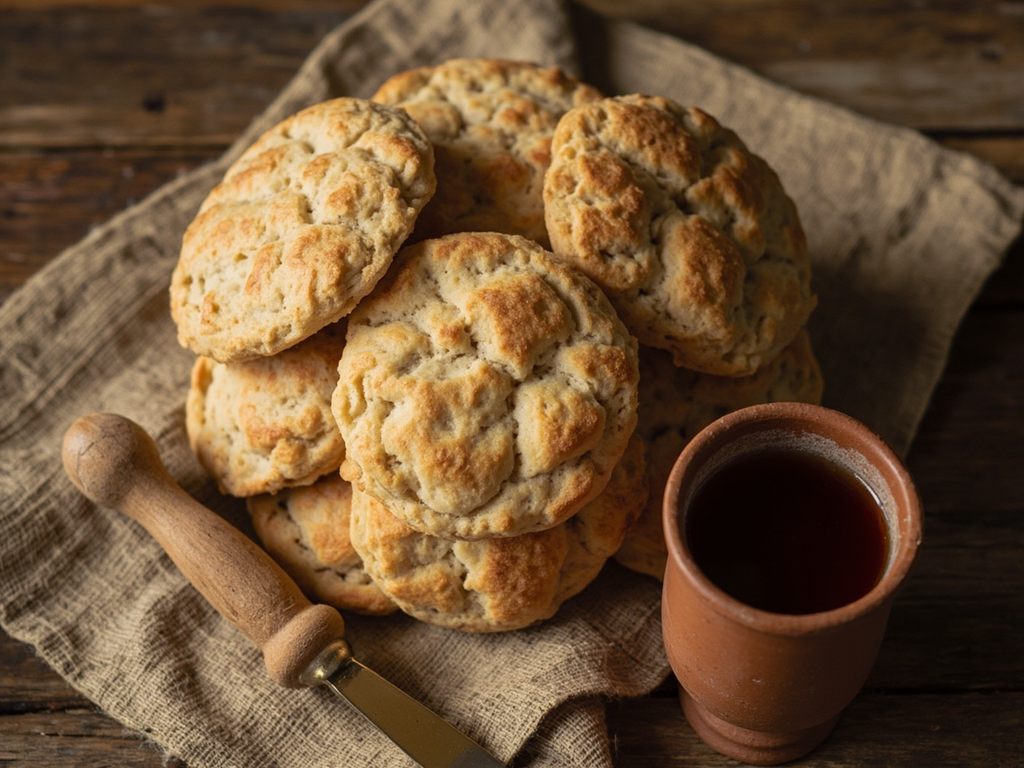
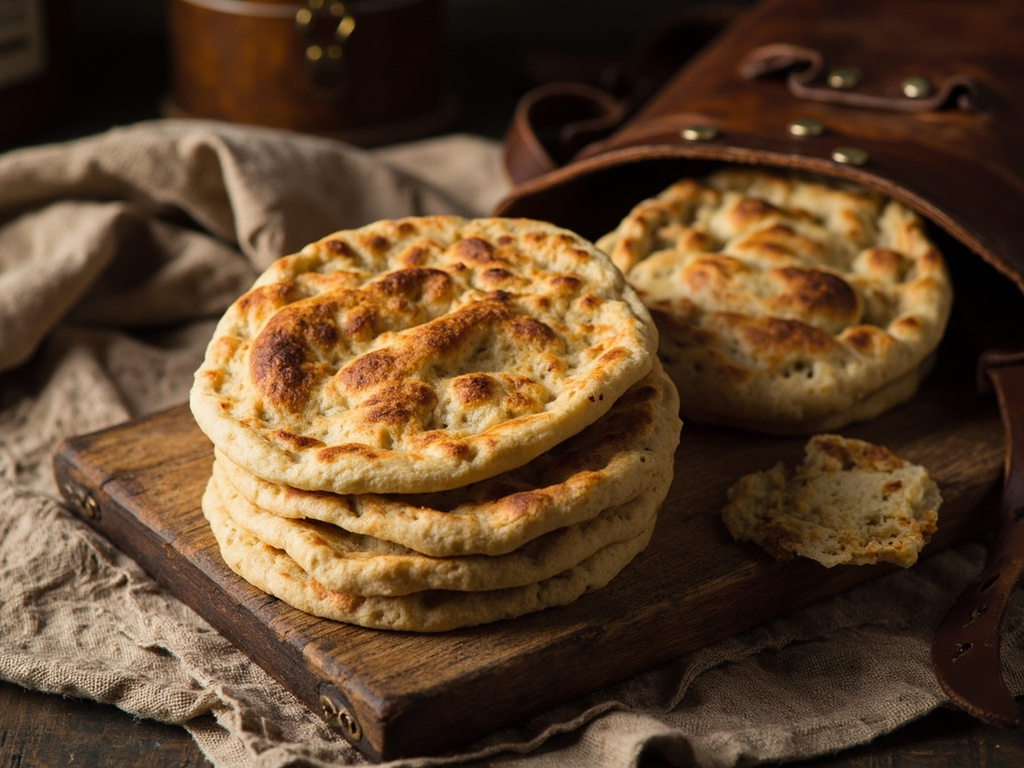
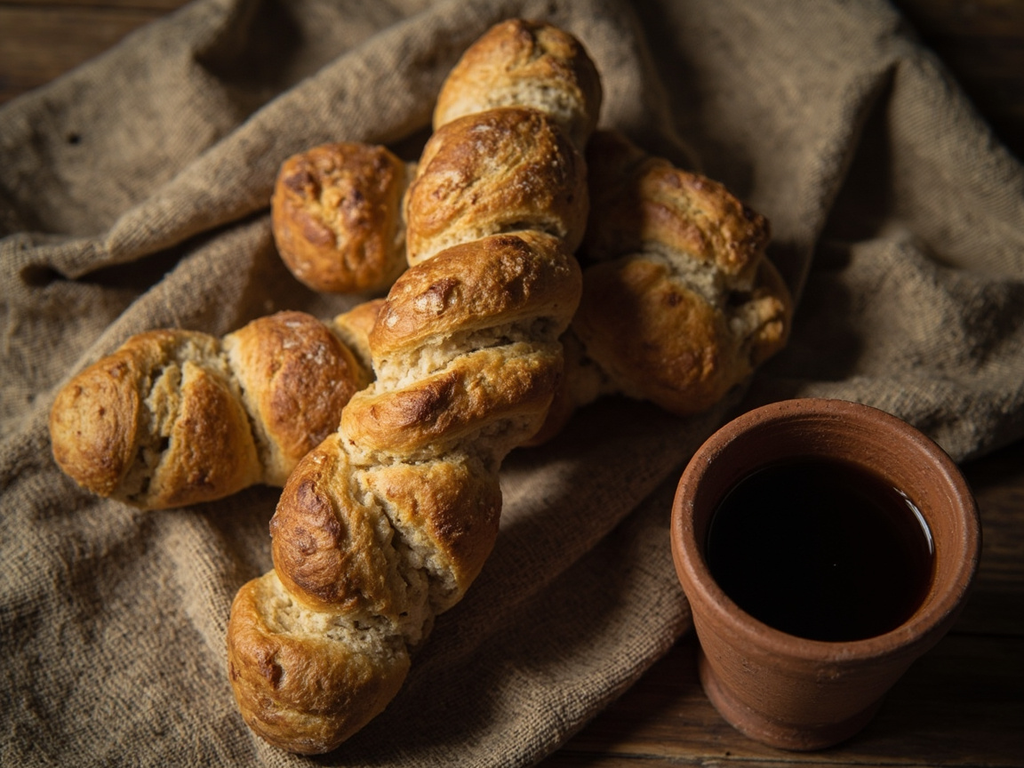
A hard bread baked twice, the ancestor of ship's biscuit and hardtack. Light, dry, it keeps for weeks and softens in water, watered wine, or soup. The survival ration of the Roman army on the move.
When I say we break camp at dawn, we march—and the man who lags because he is hungry loses me a battle. That is why each man carries in his pack this bread baked twice, hard as a pebble, that does not mold. You dip it in your posca or in the evening broth, it swells, and you are satisfied. An empire is not reconquered on an empty stomach: it is with such biscuits, not with banquets, that I restored unity to the world.
- •Wheat flour (far or siligo) — as needed (base)
- •Water — as needed (dough)
- •Salt — a good pinch (flavor and preservation)
- •Sourdough (optional) — a little (light fermentation)
Bucellatum — the Soldier's Marching Biscuit
A hard bread baked twice, the ancestor of ship's biscuit and hardtack. Light, dry, it keeps for weeks and softens in water, watered wine, or soup. The survival ration of the Roman army on the move.
Why this dish? Aurelian led his armies from one end of the Empire to the other—from the Danube to Palmyra, from the Catalaunian Fields to Thrace where he died. These lightning campaigns depended on iron logistics: bucellatum, twice-baked and nearly imperishable bread, fed the legionary on forced marches.
When I say we break camp at dawn, we march—and the man who lags because he is hungry loses me a battle. That is why each man carries in his pack this bread baked twice, hard as a pebble, that does not mold. You dip it in your posca or in the evening broth, it swells, and you are satisfied. An empire is not reconquered on an empty stomach: it is with such biscuits, not with banquets, that I restored unity to the world.
Ingredients (period version)
- Wheat flour (far or siligo) — as needed (base)
- Water — as needed (dough)
- Salt — a good pinch (flavor and preservation)
- Sourdough (optional) — a little (light fermentation)
Ingredients
- All-purpose wheat flour (T65) — 400 g (base)
- Water — 200 ml (dough)
- Salt — 8 g (flavor and preservation)
- Sourdough or yeast (optional) — 1 tsp dry yeast (lightness)
Method
- Mix flour, salt, and water (with yeast if using) to a firm dough. Knead well.
- Shape into small flat loaves or thick finger-width cakes. Rest 30 minutes if using leavening.
- First bake: bake at 200°C for about 20 minutes, until golden.
- Let cool slightly, then slice the loaves in half horizontally.
- Second bake: return the slices to the oven at 130°C for 40 to 60 minutes to dry completely. They should be hard and crisp.
- Store dry. To eat, soak in soup, watered wine, or posca.
How it was made : Bucellatum (from Latin bucella, 'mouthful') is attested in late sources as a military ration; the Historia Augusta mentions it among supplies distributed to soldiers. The double baking removes moisture, preventing mold—a principle reused for two millennia by sailors and armies.
The contemporary twist : Serve these 'Roman rusks' as an appetizer, rubbed with olive oil and oregano, like Italian friselle—their direct descendants.
Sources : Historia Augusta (Vita Pescennii) · Junkelmann, Panis Militaris (study on the diet of the Roman legion)
Aurelian · Charactorium