 flip
flipBuccellatum, Legionary's Marching Biscuit
Buccellatum, Legionary's Marching Biscuit
Why this dish? During his long Eastern campaigns against the Parthians, Cassius's army lived on its reserves. Buccellatum, a wholemeal bread baked twice to last weeks, fed the soldier — and the general who ate like him.
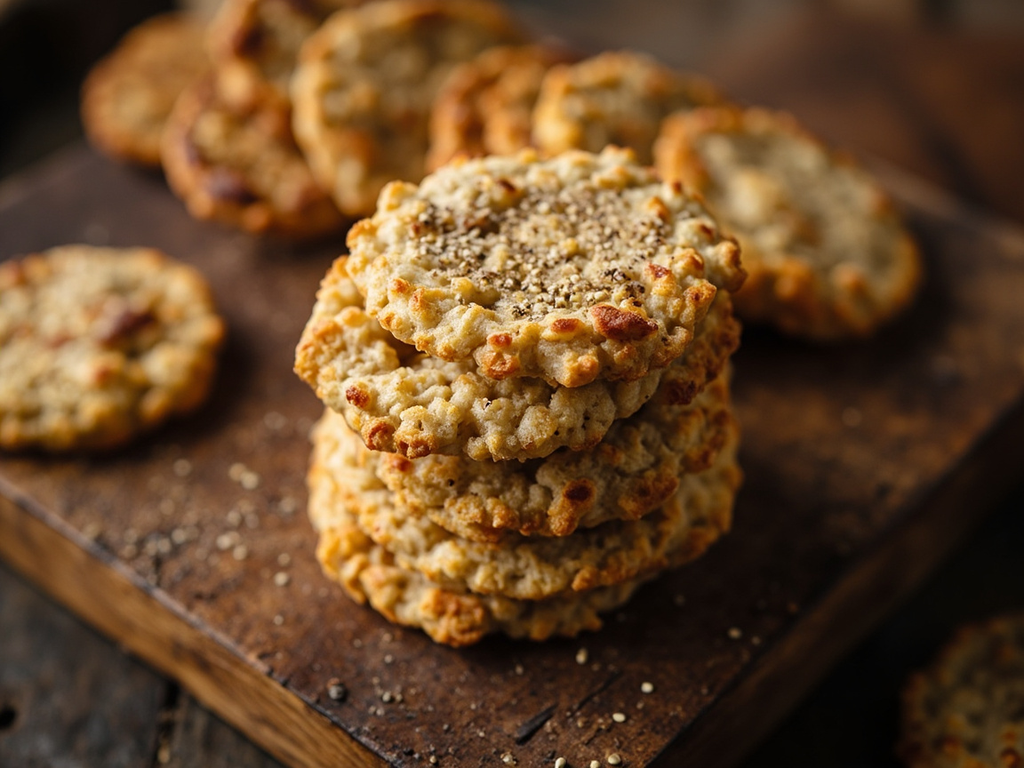
A dense, dry flatbread of wheat flour, baked and then re-baked to remove all moisture. Hard as stone, it kept for weeks and was softened in posca or evening soup. It is the direct ancestor of hardtack.
On the road to Ctesiphon, you do not carry fresh bread: it molds in three days. You bake the buccellatum twice, until it sounds hollow and hard under the finger. The soldier breaks it on the pommel of his sword, dips it in posca, and is satisfied. I have eaten it like them, on my saddle — a leader who scorns the rank's hardtack does not deserve men to die for him.
- •Whole wheat flour — enough to knead a flatbread (base)
- •Water — just enough (binder)
- •Salt — a pinch (preservation and flavor)
Buccellatum, Legionary's Marching Biscuit
A dense, dry flatbread of wheat flour, baked and then re-baked to remove all moisture. Hard as stone, it kept for weeks and was softened in posca or evening soup. It is the direct ancestor of hardtack.
Why this dish? During his long Eastern campaigns against the Parthians, Cassius's army lived on its reserves. Buccellatum, a wholemeal bread baked twice to last weeks, fed the soldier — and the general who ate like him.
On the road to Ctesiphon, you do not carry fresh bread: it molds in three days. You bake the buccellatum twice, until it sounds hollow and hard under the finger. The soldier breaks it on the pommel of his sword, dips it in posca, and is satisfied. I have eaten it like them, on my saddle — a leader who scorns the rank's hardtack does not deserve men to die for him.
Ingredients (period version)
- Whole wheat flour — enough to knead a flatbread (base)
- Water — just enough (binder)
- Salt — a pinch (preservation and flavor)
Ingredients
- Whole wheat flour (T110 or T150) — 250 g (base)
- Water — about 120 ml (binder)
- Salt — 1 teaspoon (preservation and flavor)
Method
- Mix flour and salt, add water gradually to form a firm, low-hydration dough.
- Knead briefly, then flatten into thick flatbreads about 1 cm thick.
- Bake at 200°C for 20 minutes until colored.
- Lower the oven to 120°C, optionally cut the flatbreads, and re-bake for 40 minutes to dry them completely.
- Let cool: the biscuit should be very hard and dry.
- To eat, dip it in a hot drink, soup, or posca to soften.
How it was made : Buccellatum (from *buccella*, 'small mouthful') was the survival ration of the Roman army, mentioned especially by authors of late antiquity. Its double baking — the very idea of 'bis-cuit' — made it almost imperishable, essential for long marches far from supplies.
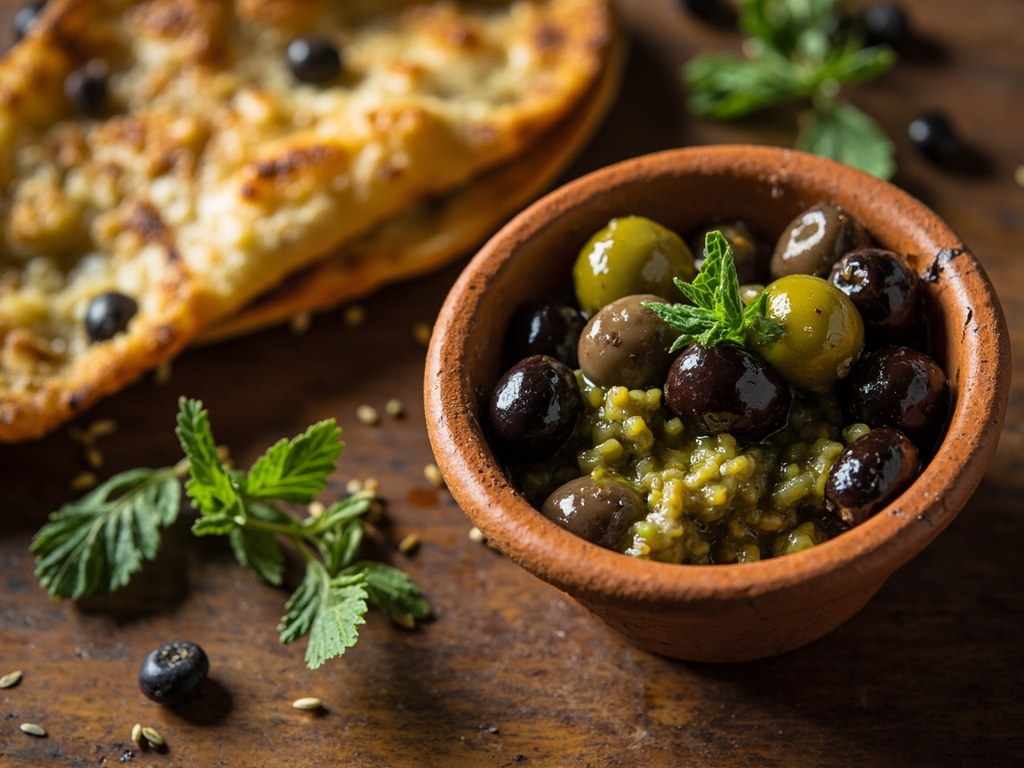
The contemporary twist : Sprinkled with cumin and sesame seeds before the second baking, buccellatum becomes a rustic cracker perfect with moretum — a nod between two recipes from this same Roman table.
Avidius Cassius · Charactorium