 flip
flipSel roti — festive fried rice ring
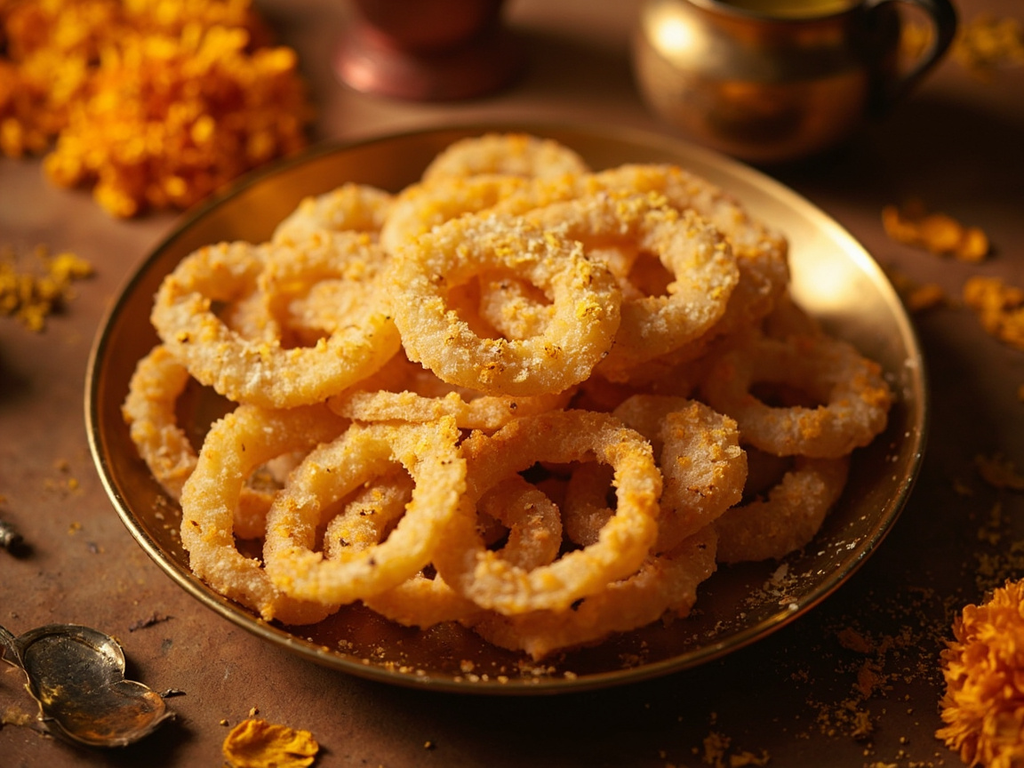
Sel roti — festive fried rice ring
Why this dish? Sel roti, a golden ring of fried rice batter, is prepared during major Hindu festivals like Tihar, where it is offered, shared, and presented to deities. Birendra, a Hindu sovereign crowned according to rites and linked to Pashupatinath temple, presided over a kingdom where these ritual sweets marked the sacred calendar.
Crispy ring of sweet rice batter, perfumed with cardamom and fried in ghee. Festive sweet offered to gods and shared with family during Tihar. Inspired by ritual preparations, without reproducing the sacred rite.
At Tihar, the palace kitchens filled with the scent of hot ghee: sel roti was being made. Watch the cook's hand — she lets the rice batter flow in a perfect circle over the sizzling oil, in one single motion, and the golden ring forms as if by magic. It is offered first to the gods, then shared. Crispy outside, tender inside, barely sweet and perfumed with cardamom: this is the very taste of celebration in Nepal.
- •Soaked and ground rice — one measure (batter base)
- •Sugar or gur — to taste (sweetness)
- •Ghee or clarified butter — abundant (frying)
- •Cardamom — a few ground pods (aroma)
- •Milk or water — as needed (binder)
Sel roti — festive fried rice ring
Crispy ring of sweet rice batter, perfumed with cardamom and fried in ghee. Festive sweet offered to gods and shared with family during Tihar. Inspired by ritual preparations, without reproducing the sacred rite.
Why this dish? Sel roti, a golden ring of fried rice batter, is prepared during major Hindu festivals like Tihar, where it is offered, shared, and presented to deities. Birendra, a Hindu sovereign crowned according to rites and linked to Pashupatinath temple, presided over a kingdom where these ritual sweets marked the sacred calendar.
At Tihar, the palace kitchens filled with the scent of hot ghee: sel roti was being made. Watch the cook's hand — she lets the rice batter flow in a perfect circle over the sizzling oil, in one single motion, and the golden ring forms as if by magic. It is offered first to the gods, then shared. Crispy outside, tender inside, barely sweet and perfumed with cardamom: this is the very taste of celebration in Nepal.
Ingredients (period version)
- Soaked and ground rice — one measure (batter base)
- Sugar or gur — to taste (sweetness)
- Ghee or clarified butter — abundant (frying)
- Cardamom — a few ground pods (aroma)
- Milk or water — as needed (binder)
Ingredients
- Rice flour — 300 g (batter base)
- Sugar — 80 g (sweetness)
- Melted ghee — 2 tablespoons (in batter) + oil for frying (richness and frying)
- Ground cardamom — 1/2 teaspoon (aroma)
- Milk — about 200 ml (binder, for a flowing batter)
- Pinch of salt — 1 pinch (balance)
Method
- Mix rice flour, sugar, cardamom, salt, melted ghee, and milk until you have a smooth, flowing batter (consistency of thick crêpe batter); let rest for 30 minutes.
- Heat a deep pan of oil (or ghee).
- Pour the batter in a continuous stream to form a ring on the oil's surface (using a fine ladle or piping bag).
- Fry until the underside is golden, flip gently, then brown the other side.
- Drain on a cloth. Serve warm or cold; the ring keeps for several days.
How it was made : Sel roti was shaped by bare hand: the cook let the batter flow directly from her fingers in a circle over the oil, a gesture requiring years of practice. Fried in ghee for ritual occasions, it kept well — making it also a travel and festival provision. It is one of the most emblematic sweets of the Nepali Hindu calendar.
The contemporary twist : Dust with a veil of cardamom sugar and stack the rings in a small golden tower: a "Himalayan donut" that fascinates young and old alike.
Birendra · Charactorium