 flip
flipBarley Maza with Fennel of the Island
Barley Maza with Fennel of the Island
Why this dish? In the Odyssey, Calypso prepares for Odysseus 'the food of mortals' while she herself feeds on nectar and ambrosia. Maza, an unleavened barley cake, was the daily bread of the ordinary Greek: it is exactly what a divine hostess would offer to a man she wants to feed as a mortal, without ever raising him to her own table.
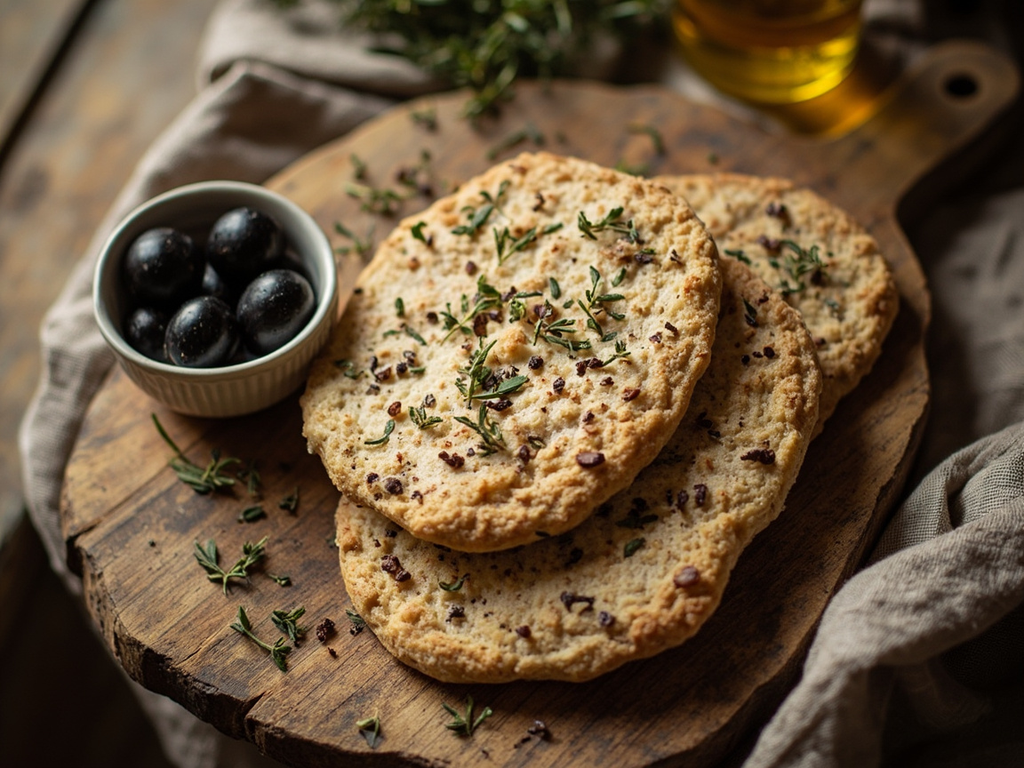
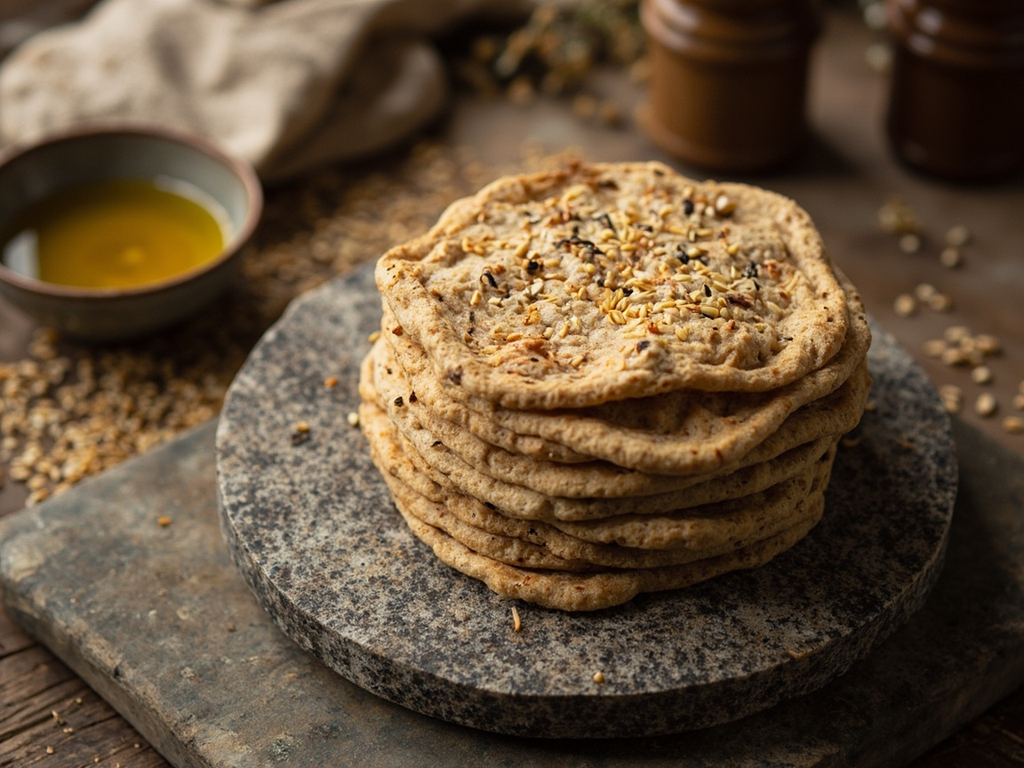
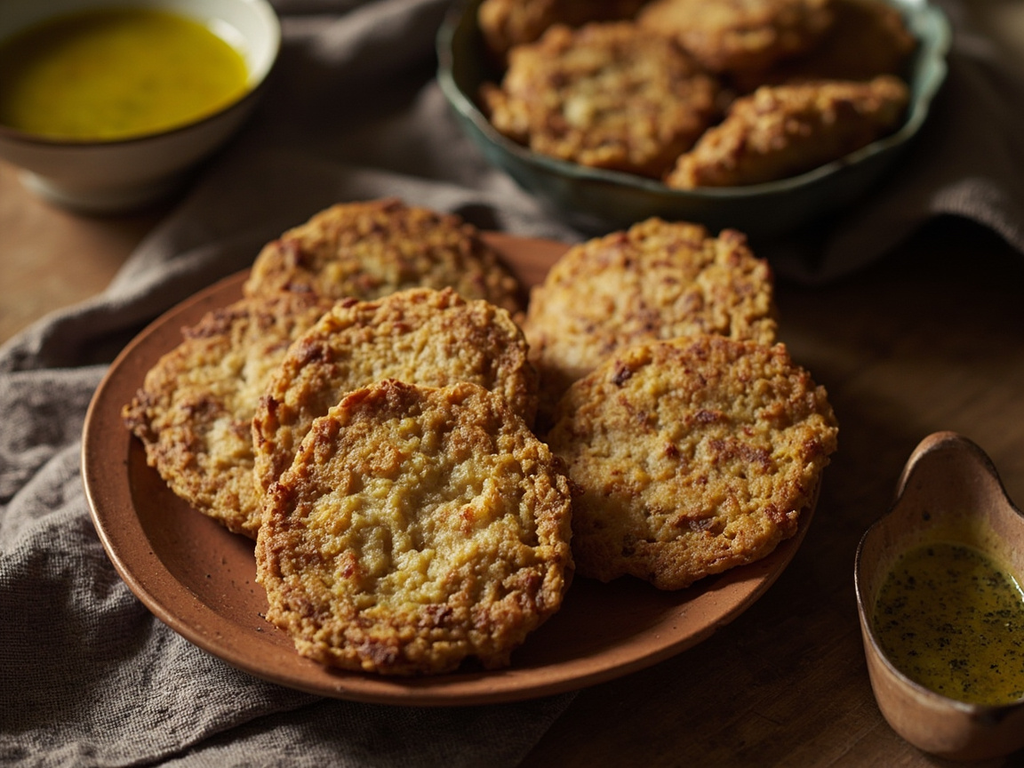
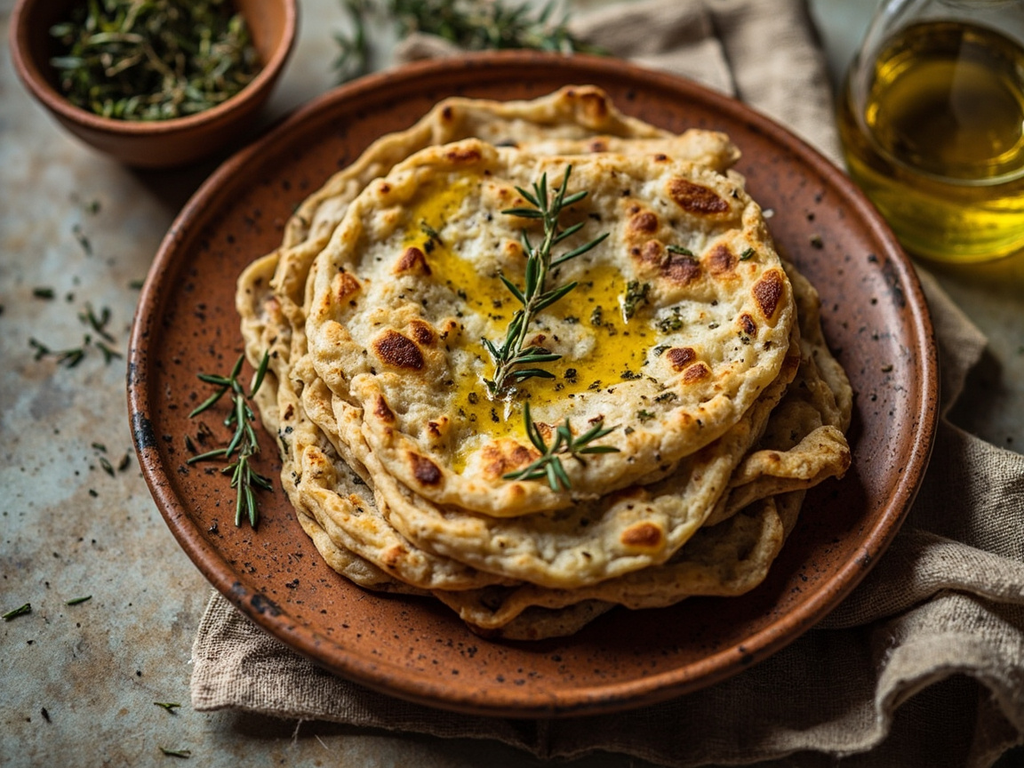
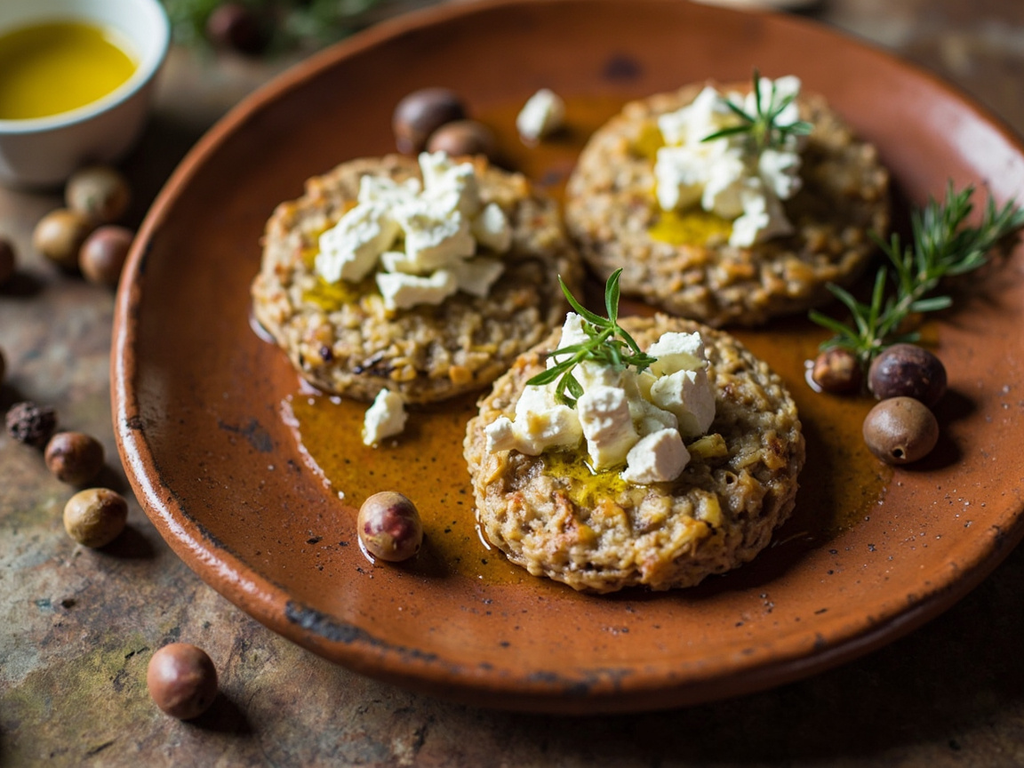
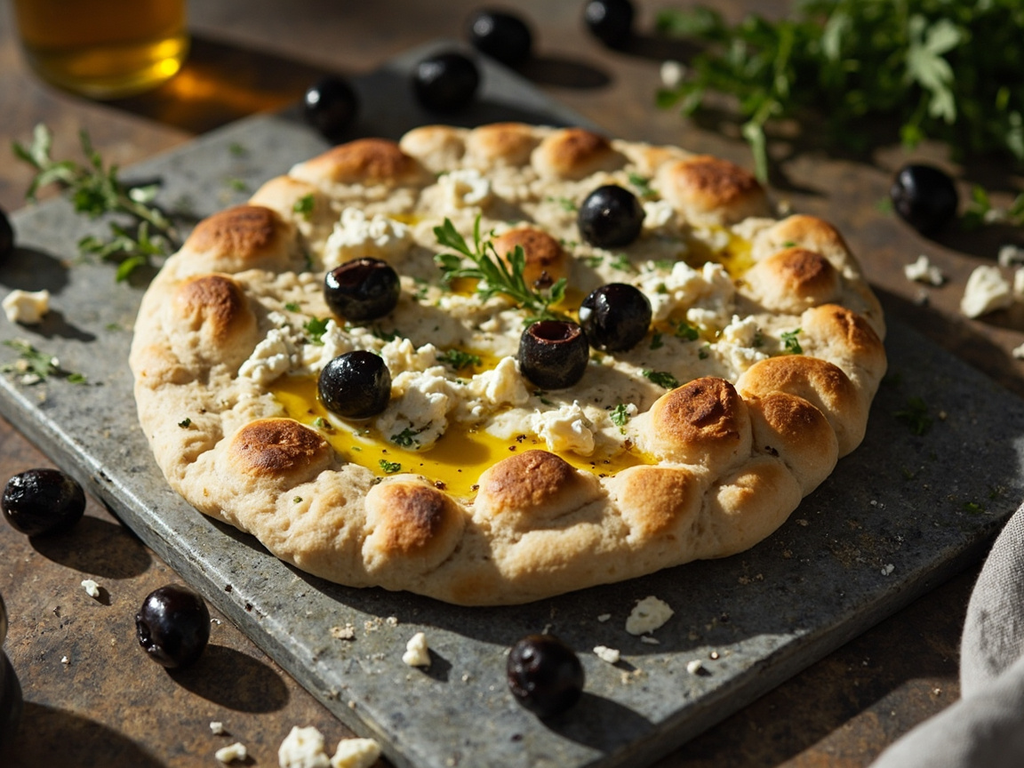
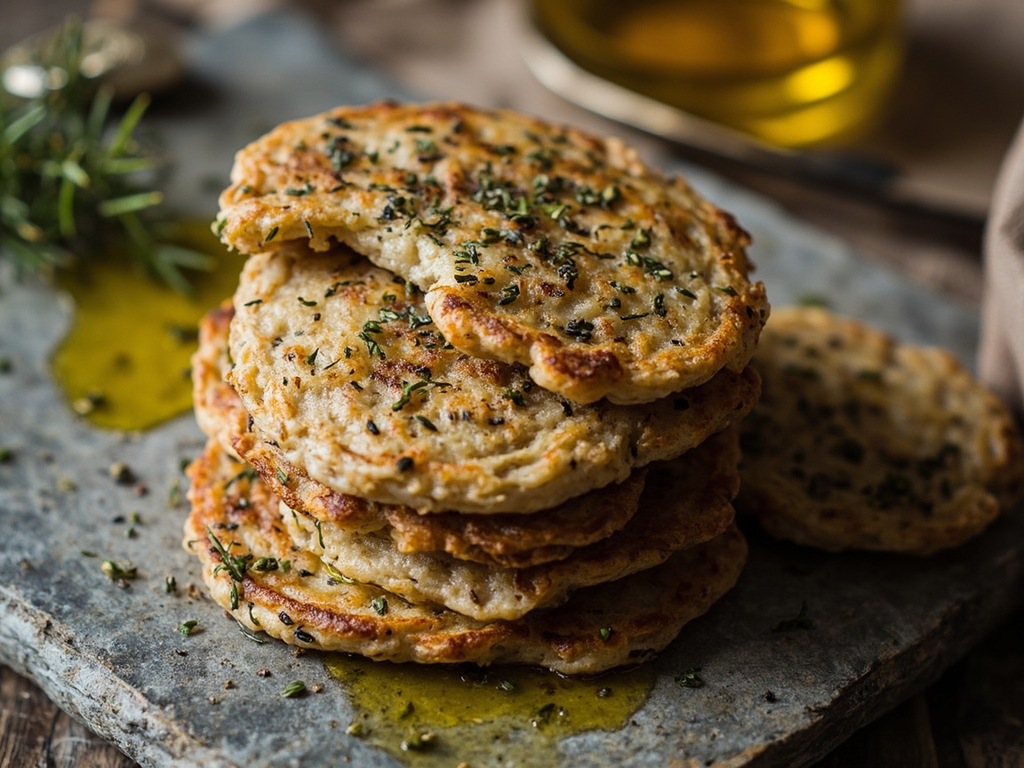
A flat barley cake, toasted then kneaded with water and olive oil, perfumed with the wild herbs of the island. Dense, rustic, slightly bitter—the true bread of the Greek world before leavened wheat became a luxury.
Come closer, mortal, and fear nothing from my hearth. See: I toast the barley on the hot stone before grinding it, for raw barley weighs heavy on the stomachs of men—and you are only a man. I knead it with water from my spring and a drizzle of oil, I crush the fennel that grows before my cave, and I bake it on the embers while my loom sings behind me. Eat. I would give you the ambrosia that never dies, but you would still refuse it for your distant Ithaca.
- •Toasted barley flour — two handfuls per guest (base, roasted flavor)
- •Spring water — as needed to bind (binder)
- •Olive oil — a drizzle (softness)
- •Sea salt — a pinch (seasoning)
- •Wild fennel and fresh oregano — a few sprigs (scent of the island)
Barley Maza with Fennel of the Island
A flat barley cake, toasted then kneaded with water and olive oil, perfumed with the wild herbs of the island. Dense, rustic, slightly bitter—the true bread of the Greek world before leavened wheat became a luxury.
Why this dish? In the Odyssey, Calypso prepares for Odysseus 'the food of mortals' while she herself feeds on nectar and ambrosia. Maza, an unleavened barley cake, was the daily bread of the ordinary Greek: it is exactly what a divine hostess would offer to a man she wants to feed as a mortal, without ever raising him to her own table.
Come closer, mortal, and fear nothing from my hearth. See: I toast the barley on the hot stone before grinding it, for raw barley weighs heavy on the stomachs of men—and you are only a man. I knead it with water from my spring and a drizzle of oil, I crush the fennel that grows before my cave, and I bake it on the embers while my loom sings behind me. Eat. I would give you the ambrosia that never dies, but you would still refuse it for your distant Ithaca.
Ingredients (period version)
- Toasted barley flour — two handfuls per guest (base, roasted flavor)
- Spring water — as needed to bind (binder)
- Olive oil — a drizzle (softness)
- Sea salt — a pinch (seasoning)
- Wild fennel and fresh oregano — a few sprigs (scent of the island)
Ingredients
- Barley flour — 200 g (base)
- Warm water — 120 ml approx. (binder)
- Extra virgin olive oil — 2 tbsp (softness)
- Sea salt — 1/2 tsp (seasoning)
- Fennel seeds + dried oregano — 1 tsp each (scent)
Method
- Toast the barley flour dry in a pan for 3-4 minutes, stirring, until it smells nutty.
- Mix with salt, fennel, and oregano.
- Add oil then warm water little by little, kneading until a soft, non-sticky dough forms.
- Shape into cakes 1 cm thick.
- Cook 4-5 minutes per side on a hot pan or griddle until marked and firm.
- Serve warm, drizzled with olive oil.
How it was made : Barley, more rustic than wheat, dominated archaic Greek diet. It was often toasted before grinding—hence 'alphita,' toasted barley flour. Maza was eaten raw (simply kneaded) or cooked, and accompanied every modest meal.
The contemporary twist : Serve as mini cakes for an appetizer, spread with fresh goat cheese and a drizzle of honey, to recreate in one bite the border between the table of men and that of the gods.
Sources : Homer, Odyssey, Book V · Andrew Dalby, Siren Feasts: A History of Food and Gastronomy in Greece (1996)
Calypso · Charactorium