 flip
flipOfellae — Little Pork Roasts with Garum and Honey
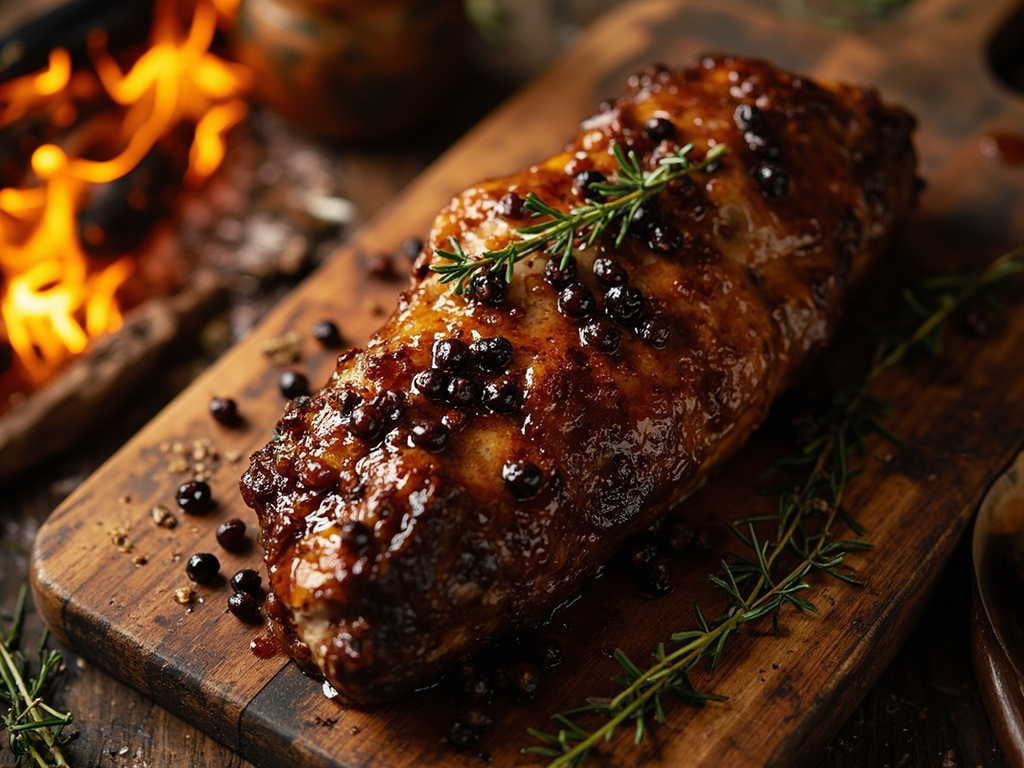
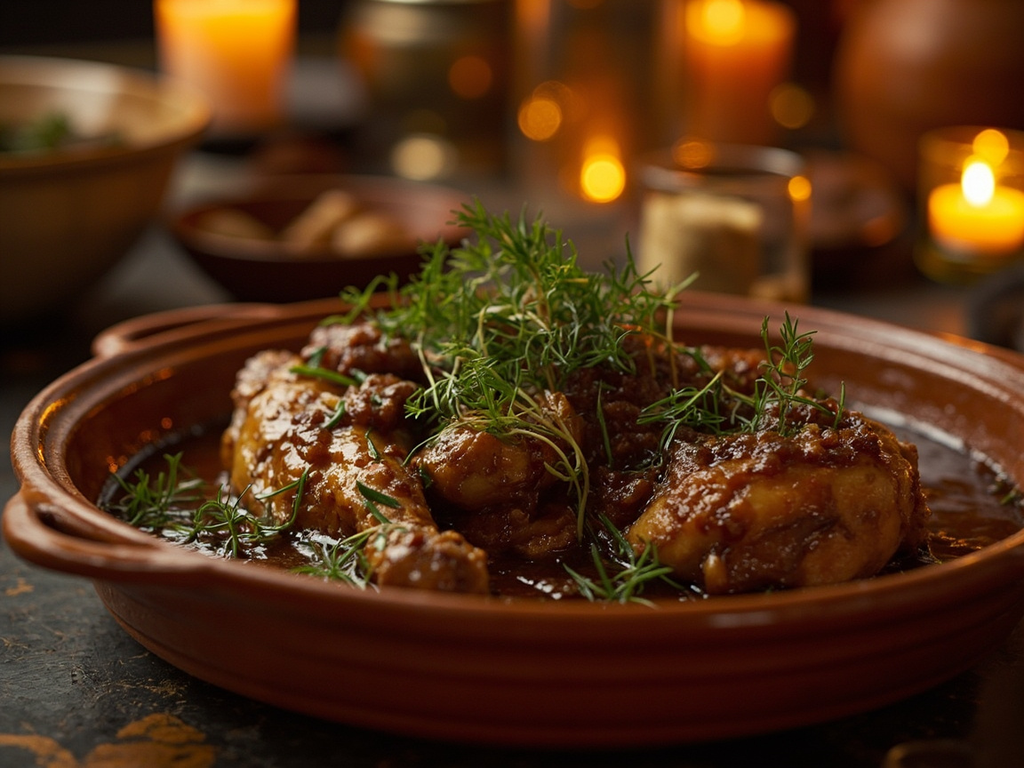
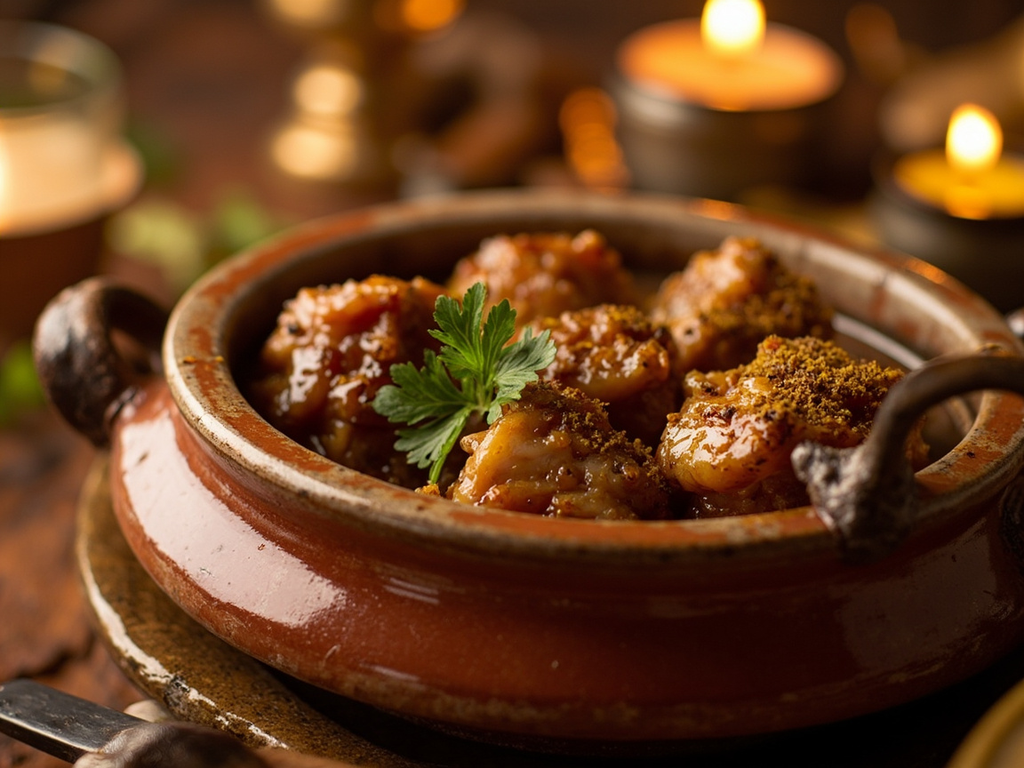
Ofellae — Little Pork Roasts with Garum and Honey
Why this dish? When Caracalla shed the soldier's mask for the palace's splendor, his imperial table offered the sweet-and-sour dishes beloved by the Roman aristocracy: meats lacquered with garum, honey, and cumin, as in the banquet of the poet Apicius, whose recipes circulated at the Severan court.
Pork pieces first poached, then roasted and lacquered with a sauce where salty garum marries honey and cumin—the grand Roman sweet-and-salt game that delighted the reclining guests of the triclinium.
At the palace, when I deign to take off the mail coat, my table yields to none. They serve me ofellae: meat that is boiled, then roasted, and glazed with garum, honey, and cumin until it shines like the gold of my antoniniani. The senator stretched beside me dips his fingers in it, flattering the Augustus—and I think that tomorrow I will eat lentils again at camp. Taste this: it is all of Rome in a mouthful, the salt of the sea and the honey of Latium.
- •Pork (shoulder or belly) — fine pieces (meat)
- •Garum — generously (salt and umami)
- •Honey — as much as you like (sweet lacquer)
- •Cumin and coriander — ground (spices)
- •Pepper — a few grains (luxury heat)
- •Wine (defrutum, reduced must) — a splash (sweetness and color)
Ofellae — Little Pork Roasts with Garum and Honey
Pork pieces first poached, then roasted and lacquered with a sauce where salty garum marries honey and cumin—the grand Roman sweet-and-salt game that delighted the reclining guests of the triclinium.
Why this dish? When Caracalla shed the soldier's mask for the palace's splendor, his imperial table offered the sweet-and-sour dishes beloved by the Roman aristocracy: meats lacquered with garum, honey, and cumin, as in the banquet of the poet Apicius, whose recipes circulated at the Severan court.
At the palace, when I deign to take off the mail coat, my table yields to none. They serve me ofellae: meat that is boiled, then roasted, and glazed with garum, honey, and cumin until it shines like the gold of my antoniniani. The senator stretched beside me dips his fingers in it, flattering the Augustus—and I think that tomorrow I will eat lentils again at camp. Taste this: it is all of Rome in a mouthful, the salt of the sea and the honey of Latium.
Ingredients (period version)
- Pork (shoulder or belly) — fine pieces (meat)
- Garum — generously (salt and umami)
- Honey — as much as you like (sweet lacquer)
- Cumin and coriander — ground (spices)
- Pepper — a few grains (luxury heat)
- Wine (defrutum, reduced must) — a splash (sweetness and color)
Ingredients
- Pork shoulder, cut into large cubes — 800 g (meat)
- Fish sauce (garum/nuoc-mam) — 3 tbsp (salt and umami)
- Honey — 3 tbsp (lacquer)
- Ground cumin — 1 tsp (spice)
- Ground coriander — 1 tsp (spice)
- Black pepper — 1/2 tsp (heat)
- Reduced grape juice (or reduced sweet wine) — 4 tbsp (sweetness/color)
Method
- Poach the pork cubes in simmering water for 30 minutes, drain, and pat dry.
- Prepare the lacquer: garum, honey, reduced grape juice, cumin, coriander, and pepper.
- Sear the cubes in a hot pan until browned, then pour in the lacquer.
- Let reduce, stirring, until the meat is glossy and coated. Serve hot, sprinkled with cumin.
How it was made : Apicius describes ofellae, pieces of meat boiled then roasted, and the omnipresence of the garum + honey (or defrutum, reduced grape must) pairing in aristocratic Roman cuisine, fond of sweet-salt contrasts and imported spices like pepper.
The contemporary twist : “Imperial street food” plating: skewer the ofellae on small sticks with a pot of garum-honey lacquer for dipping, a skewer version of Caracalla's banquet.
Sources : Apicius, De re coquinaria, book VII (ofellae) · Historia Augusta, Life of the Severans (court splendor)
Caracalla · Charactorium