 flip
flipFrittatensuppe (pancake strip broth)
Frittatensuppe (pancake strip broth)
Why this dish? Clear beef broth opened almost every meal in bourgeois Viennese households like that of a professor at the University of Vienna. Economical, comforting, and refined all at once, it accompanied the long days of reading and writing of Menger bent over his Grundsätze.
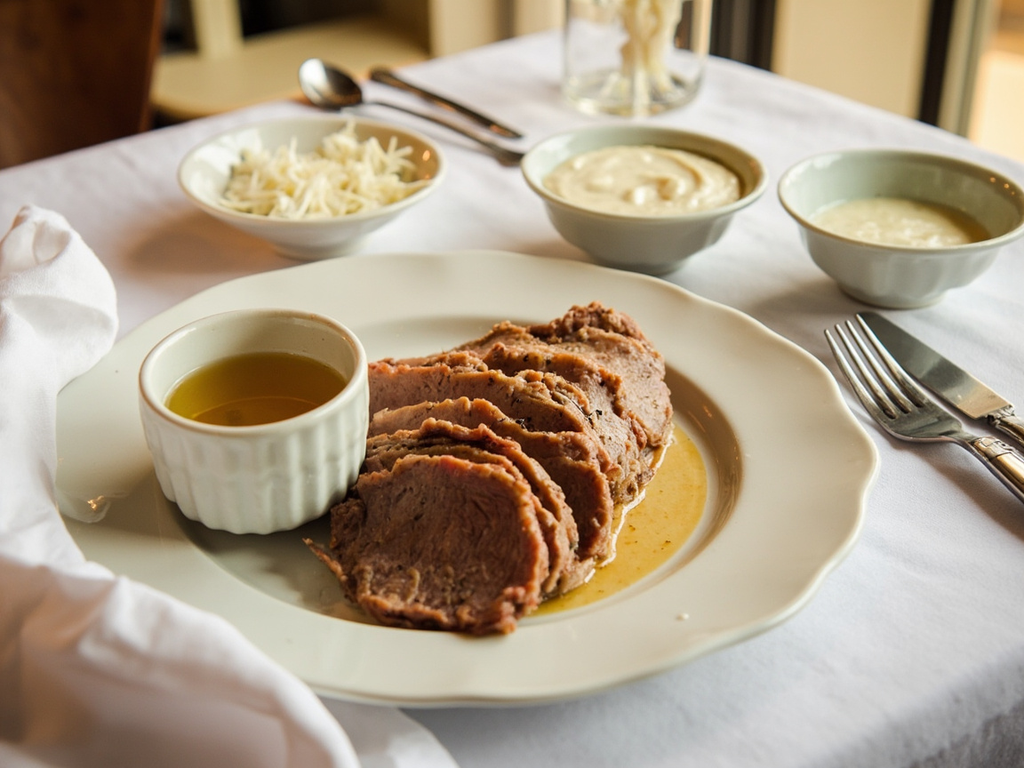
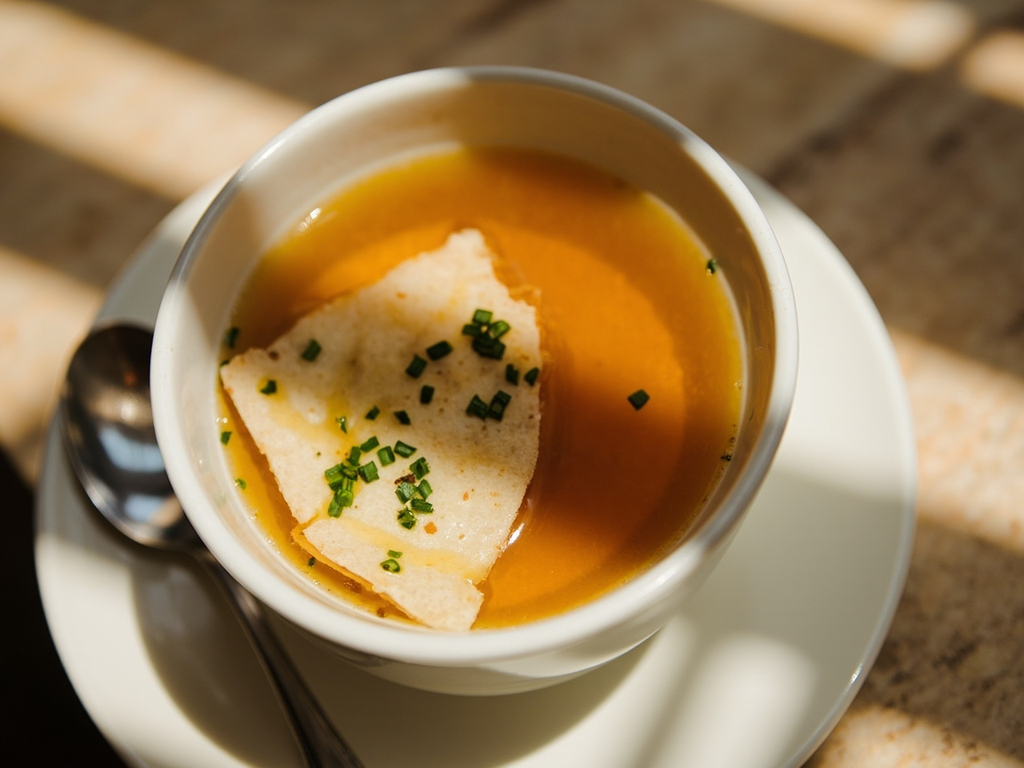
A golden, clear beef broth in which thin strips of salted crêpe, rolled and cut into ribbons, float. Light, warm, scented with chives: the modest but careful entry to the Viennese table.
You see, nothing better prepares the mind for work than a clear broth taken at midday. In our Vienna, one could not begin a meal otherwise. My cook would brown the beef bones at length, then cut from a cold crêpe those fine ribbons that are thrown at the last moment into the steaming bowl. It is a small thing, and yet that is where the care of a household is measured: the value of a dish, like that of a good, depends less on its matter than on the use one knows how to make of it.
- •Beef bones and shank — a good piece (base of broth)
- •Carrot, onion, parsley root, celery — a few root vegetables (broth aromatics)
- •Wheat flour — one bowl (crêpe batter)
- •Eggs — 2 (crêpe batter)
- •Milk — a glass (crêpe batter)
- •Lard or butter — a knob (cooking crêpes)
- •Chives — a few sprigs (finishing)
Frittatensuppe (pancake strip broth)
A golden, clear beef broth in which thin strips of salted crêpe, rolled and cut into ribbons, float. Light, warm, scented with chives: the modest but careful entry to the Viennese table.
Why this dish? Clear beef broth opened almost every meal in bourgeois Viennese households like that of a professor at the University of Vienna. Economical, comforting, and refined all at once, it accompanied the long days of reading and writing of Menger bent over his Grundsätze.
You see, nothing better prepares the mind for work than a clear broth taken at midday. In our Vienna, one could not begin a meal otherwise. My cook would brown the beef bones at length, then cut from a cold crêpe those fine ribbons that are thrown at the last moment into the steaming bowl. It is a small thing, and yet that is where the care of a household is measured: the value of a dish, like that of a good, depends less on its matter than on the use one knows how to make of it.
Ingredients (period version)
- Beef bones and shank — a good piece (base of broth)
- Carrot, onion, parsley root, celery — a few root vegetables (broth aromatics)
- Wheat flour — one bowl (crêpe batter)
- Eggs — 2 (crêpe batter)
- Milk — a glass (crêpe batter)
- Lard or butter — a knob (cooking crêpes)
- Chives — a few sprigs (finishing)
Ingredients
- Homemade beef broth — 1.5 L (base)
- Flour — 100 g (crêpe batter)
- Eggs — 2 (crêpe batter)
- Milk — 250 ml (crêpe batter)
- Butter — 20 g (cooking)
- Salt — 1 pinch (seasoning)
- Chopped chives — 1 tbsp (finishing)
Method
- Prepare a clear beef broth (or reheat a good one) and strain it to keep it clear.
- Whisk flour, eggs, milk, and a pinch of salt into a smooth crêpe batter; let rest 20 minutes.
- Cook 2-3 thin, golden crêpes in butter; let them cool slightly.
- Roll each crêpe into a cigar and slice into thin strips, about half a centimeter wide.
- Divide the strips among bowls, pour the boiling broth over, and sprinkle with chives.
How it was made : Leftover savory crêpes from the day before were used: nothing was wasted in a bourgeois kitchen. The broth itself simmered for hours on the coal stove and served as the base for a whole family of garnished soups (Leberknödelsuppe, Grießnockerlsuppe).
The contemporary twist : Serve the broth in a clear tea cup to see the crêpe ribbons dance, and add a grating of nutmeg.
Carl Menger · Charactorium