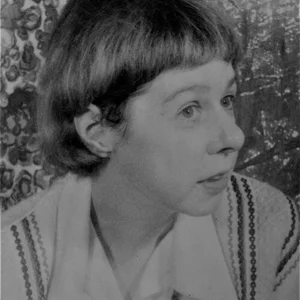

American novelist from the Deep South (1917–1967), Carson McCullers explores loneliness, marginality, and the longing to belong. Her first novel, *The Heart Is a Lonely Hunter* (1940), introduced her to the literary world at just 23.
Carson McCullers(1917 — 1967)
Carson McCullers
États-Unis
7 min read
Frequently asked questions
Famous Quotes
« The heart is a lonely hunter seeking what it cannot find.»
« Life is a strange thing. You spend years wanting something, and when you finally get it, you no longer know what to do with it.»
Key Facts
- 1917: born in Columbus, Georgia
- 1940: publication of *The Heart Is a Lonely Hunter* at age 23, an immediate success
- 1943: publication of *The Ballad of the Sad Café*
- 1946: publication of *The Member of the Wedding*, later adapted for the stage
- 1967: died in Nyack, New York, after a long illness
Works & Achievements
McCullers's debut novel, published when she was 23. It centers on a deaf-mute man around whom a cast of lonely characters orbit in a small Southern town, immediately revealing her extraordinary talent.
A short, unsettling novel set on a Southern military base, exploring repressed desire, violence, and madness. Tennessee Williams regarded it as one of the masterpieces of American literature.
A coming-of-age novel about a 12-year-old girl who dreams of belonging to something greater than herself. McCullers successfully adapted it for the stage in 1950.
A story collection whose title novella is often considered the pinnacle of McCullers's craft. In it she explores love as a one-sided and destructive force in a time-frozen Southern village.
McCullers's final completed novel, set in the South during the civil rights struggle. It confronts death, racism, and the transformation of a society in the throes of upheaval.
Anecdotes
At 17, Carson McCullers arrived in New York with the ambition of studying piano at the Juilliard School of Music. She lost her tuition money on the subway and found herself working as a waitress to survive. It was thus, out of necessity, that she enrolled in fiction courses at Columbia University, radically changing the course of her life.
In 1940, McCullers moved to 7 Middagh Street in Brooklyn Heights, into a house nicknamed “the boarding house of geniuses”: W. H. Auden, Gypsy Rose Lee, Benjamin Britten, and Richard Wright all lived there together. This community of bohemian artists, in the midst of World War II, became a hub of intense creativity and intellectual solidarity.
Carson McCullers fell hopelessly in love with Annemarie Clarac-Schwarzenbach, a Swiss aristocrat and writer. This unrequited love inspired her deeply: the character of Miss Amelia in The Ballad of the Sad Café is said to bear the traces of this painful, impossible passion.
Afflicted with a heart condition since adolescence, McCullers suffered her first stroke at only 29 years old. Paralyzed on one side of her body, she continued to write in spite of everything, sometimes by dictating her texts, stubbornly refusing to abandon her literary vocation.
Adapted for the stage by McCullers herself, Frankie Addams (The Member of the Wedding) won the New York Drama Critics’ Circle Award on Broadway in 1950. The play revealed the talent of the young Julie Harris in the role of Frankie, launching the careers of both women on the American cultural scene.
Primary Sources
In the town there were two mutes, and they were always together. Early every morning they would come out from the house where they lived and walk arm in arm down the street to work.
The lover craves any possible relation with the beloved, even if this experience can cause him only pain.
She was an unjoined person who hung around in doorways, and she was afraid.
I live with the people I create and it has always made my essential loneliness less keen.
Key Places
Carson McCullers's hometown, deep in the American South. The stifling, segregated, and provincial atmosphere of Columbus permeates all her work and feeds her themes of confinement and marginality.
The famous brownstone where McCullers lived in 1940–1941, alongside W. H. Auden, Gypsy Rose Lee, and Richard Wright. This bohemian household was a crucible of vibrant artistic creation at the height of the war.
McCullers settled in Nyack, on the banks of the Hudson River, in the 1940s. She died there on September 29, 1967. The town is now home to a house museum in her honor.
McCullers visited Paris several times during the 1950s. It was there that her husband Reeves took his own life in 1953, a traumatic episode that cast a long shadow over her final years.
A prestigious artists' retreat where McCullers stayed on several occasions, writing portions of her work in an environment conducive to concentration, far from the turbulence of her personal life.
Typical Objects

McCullers wrote her manuscripts on a typewriter, often from her bed due to her chronic illnesses. The mechanical clatter of the keys set the rhythm for her long nights of grueling work.

A heavy drinker throughout her life, McCullers saw bourbon as a companion in creation and a balm against the constant physical pain she endured.

Before turning to writing, McCullers was a gifted pianist. The piano from her childhood home in Columbus symbolizes the defining fork in her artistic life.

Progressively paralyzed by repeated strokes, McCullers came to rely on crutches and then a wheelchair — silent witnesses to her creative tenacity.

McCullers filled her notebooks with observations of the outcasts and loners of the South she encountered, the raw material for the unforgettable characters that populate her work.

The novelist maintained an extensive correspondence with Tennessee Williams, Truman Capote, and her editors, revealing in her letters her doubts, her passions, and her deep conception of literature.
School Curriculum
Vocabulary & Tags
Key Vocabulary
Tags
Daily Life
Morning
Carson McCullers rarely woke up early: nights of insomnia caused by chronic pain pushed her rising time later and later. She would have a strong coffee and begin writing from her bed, surrounded by manuscripts and notebooks, in a creative disorder she proudly claimed as her own.
Afternoon
Afternoons were devoted to revising her texts or receiving visits from friends. During periods of relative health, she enjoyed walking around Nyack or chatting with her neighbors. Tennessee Williams and Truman Capote were frequent guests — her closest literary confidants.
Evening
McCullers's evenings were fueled by conversation, piano music when her health allowed, and inevitably whiskey. She loved gathering a small circle of loyal friends around her, holding court well into the small hours of the night.
Food
McCullers ate little and irregularly, often preferring alcohol to food. Her favorite cuisine remained Southern cooking: fried chicken, flour biscuits, slow-simmered green beans. Her illnesses sometimes imposed strict diets she was rarely inclined to follow.
Clothing
McCullers favored an androgynous, relaxed style, with little regard for the feminine dress conventions of the 1940s. She often wore wide-leg trousers and men's shirts — considered eccentric in the conservative South.
Housing
The Victorian house in Nyack, inherited from her mother, was her primary home: a large, rambling dwelling cluttered with books, sheet music, and memories. McCullers lived there surrounded by friends and caregivers, in an unapologetic creative disorder her close ones described as “lived-in chaos.”
Historical Timeline
Period Vocabulary
Liens externes & ressources
Références
Œuvres
Le Cœur est un chasseur solitaire (The Heart is a Lonely Hunter)
1940
Reflets dans un œil d'or (Reflections in a Golden Eye)
1941
Frankie Addams (The Member of the Wedding)
1946
La Ballade du café triste (The Ballad of the Sad Café)
1951
L'Horloge sans aiguilles (Clock Without Hands)
1961