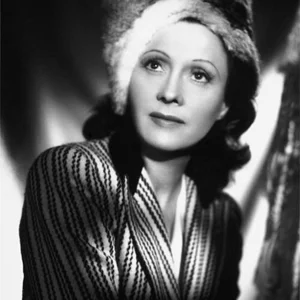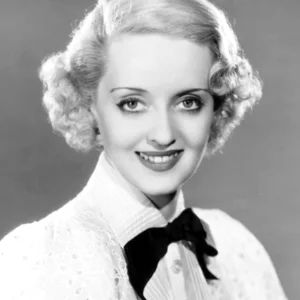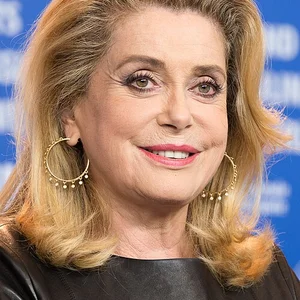

French actress born in 1943, Catherine Deneuve is one of the greatest stars in world cinema. She played iconic roles in films by Truffaut, Buñuel, and Demy, becoming a symbol of French elegance.
Catherine Deneuve(1943 — ?)
Catherine Deneuve
France
8 min read
Frequently asked questions
Famous Quotes
« Cinema is a way of living many lives.»
« I don't fight against time passing — I live with it.»
Key Facts
- 1943: Born in Paris on October 22
- 1964: International breakthrough with Jacques Demy's *The Umbrellas of Cherbourg* (Palme d'Or at Cannes)
- 1967: Collaboration with Luis Buñuel in *Belle de Jour*
- 1973: Honorary César and international recognition with *La Chamade* and *The Savage*
- 1993: Oscar nomination for Régis Wargnier's *Indochine*
Works & Achievements
An entirely sung film by Jacques Demy, winner of the Palme d'Or at Cannes. This role as a young woman in love introduced Deneuve to the world at age 20 and marked the beginning of an international career.
A film by Luis Buñuel, Golden Lion at Venice. Deneuve plays a bourgeois woman leading a secret double life — an ambiguous and daring role that established her talent in world auteur cinema.
A musical by Jacques Demy in which Deneuve stars alongside her sister Françoise Dorléac. A unique and moving document of the only on-screen collaboration between the two sisters, filmed just weeks before Françoise's death.
Deneuve's second film with Buñuel, shot in Spain. She plays a young woman under guardianship who transforms into an ambiguous and powerful figure, confirming her mastery of complex roles.
François Truffaut's film about the German Occupation, co-starring Gérard Depardieu. The film won 10 César Awards, including Best Actress for Deneuve — a historic record.
An epic saga by Régis Wargnier about French decolonization in Southeast Asia. The film won the Academy Award for Best Foreign Language Film, bringing Deneuve's career to a global stage.
Anecdotes
Catherine Deneuve adopted her mother's maiden name to launch her career, so as to distinguish herself from her older sister Françoise Dorléac, who was already an actress. This choice proved prescient: the two sisters appeared together in 1967 in Jacques Demy's 'The Young Girls of Rochefort,' a unique and deeply moving reunion. Françoise Dorléac died tragically in a car accident that same year, at the age of 25, leaving Catherine to carry the family legacy alone.
In Jacques Demy's 'The Umbrellas of Cherbourg' (1964), every line of dialogue is sung — there is not a single spoken word — a radical gamble for the time. The film won the Palme d'Or at the Cannes Film Festival, introducing Deneuve to the entire world at just 20 years old. Michel Legrand's melancholic and inventive score helped make this film a masterpiece of French cinema.
When Luis Buñuel made 'Belle de Jour' in 1967, he deliberately refused to tell Deneuve — or anyone else — what was inside the mysterious box that a client gazes at with such fascination. This unresolved narrative secret has become one of the most famous enigmas in art-house cinema, with Buñuel insisting he had no answer himself. The film was awarded the Golden Lion at the Venice Film Festival.
In 1985, the French government chose Catherine Deneuve's face to embody Marianne, the official symbol of the French Republic, on the busts displayed in every town hall across the country. This symbolic consecration made her far more than an actress: she became a national icon, representing French elegance and freedom in the eyes of the world.
In October 2019, Catherine Deneuve suffered a stroke while in the middle of filming. She survived and gradually recovered, resuming her public activities a few months later. This dramatic episode highlighted her tenacity and her profound bond with the craft of acting — a calling she has practiced for more than sixty years without interruption.
Primary Sources
We defend a freedom to importune, indispensable to sexual freedom. We are savvy enough not to confuse sexual assault with clumsy flirting.
I am a free woman and I will remain one. I am addressing the victims of rape and assault who felt hurt by the letter published in Le Monde. It is to them alone that I offer my apologies.
What interests me in a character is what they conceal, not what they show. Buñuel taught me that mystery is worth more than explanation.
French cinema is an extraordinary gift. It allows us to tell stories unlike any other, with a freedom the rest of the world still envies.
Key Places
Catherine Deneuve was born here on October 22, 1943. She remained deeply attached to Paris throughout her life — the city where most of her career and personal life unfolded.
The main setting of Jacques Demy's *The Umbrellas of Cherbourg* (1964). The Norman streets and quaysides serve as the backdrop for this film-opera that introduced Deneuve to the world.
Deneuve received the Palme d'Or for *The Umbrellas of Cherbourg* here in 1964 and presented many films over the decades. Cannes has been the global showcase of her career.
Catherine Deneuve received the Golden Lion here for Buñuel's *Belle de Jour* in 1967. Venice cemented her status as a leading international actress.
The filming location for several major works in her career, most notably Truffaut's *The Last Metro*. These studios on the outskirts of Paris are the industrial heart of French cinema.
Typical Objects

Deneuve prepares her roles by meticulously annotating scripts, sketching out the emotions and intentions behind each scene. Her co-stars have spoken of her thorough preparation before every shoot.

A close friend of couturier YSL, Deneuve wore his creations both on screen and in life, most notably in *Belle de Jour*. Their collaboration made her an icon of French fashion throughout the 1960s–1980s.

The iconic tool of any film set, the clapperboard marks the start of each take. Deneuve has worked across dozens of productions, from Parisian studios to the exotic locations of Indochina or Morocco.

Deneuve won the César Award for Best Actress in **1981** for *The Last Metro*. The bronze statuette represents recognition by her peers in French cinema.

From **1985** onward, the official bust of Marianne — symbol of the French Republic — bore the likeness of Catherine Deneuve in every town hall across France, a piece of civic everyday life for millions of French people.

The photochemical medium used to shoot virtually all of Deneuve's films up through the 2000s. The 35 mm format gives images that distinctive grain so characteristic of French auteur cinema of the era.
School Curriculum
Vocabulary & Tags
Key Vocabulary
Daily Life
Morning
During shoots, Deneuve rises early to reach the set before dawn. Hair and makeup sessions can last several hours for period costume films. She carefully reads through the day's pages and prepares her acting intentions before the first take.
Afternoon
Afternoons are devoted to scenes shot in natural light or in studio interiors. Between takes, Deneuve discusses choices with the director and crew, actively contributing to artistic decisions. Outside of filming, she attends private screenings, reviews scripts, and consults with collaborators on future projects.
Evening
In the evenings, Deneuve is known for moving through Parisian cultural circles: gallery openings, theatre premieres, dinners with artists, filmmakers, and intellectuals. An avid reader, she also spends her evenings with books and scripts. She maintains lasting friendships in the fashion world, most notably with Yves Saint Laurent.
Food
Deneuve follows a traditional French approach to eating, with a strong attachment to quality ingredients. She frequents well-known Parisian brasseries and restaurants. When filming abroad, she sometimes brings French products with her to maintain her usual habits.
Clothing
A loyal devotee of Yves Saint Laurent — whose muse and friend she is — Deneuve wears his designs both on screen and in everyday life. She embodies classic French elegance: understated suits, timeless dresses, with no excessive ostentation. Her style has influenced French fashion from the 1960s to the present day.
Housing
Catherine Deneuve lives primarily in Paris, in bourgeois apartments in the heart of the capital. She also owns a country property where she recharges between shoots. According to those close to her, her interiors are filled with art, books, and mementos from her films.
Historical Timeline
Period Vocabulary
Liens externes & ressources
Références
Œuvres
Les Demoiselles de Rochefort
1967