 flip
flipHoney-and-Juniper Venison Offering
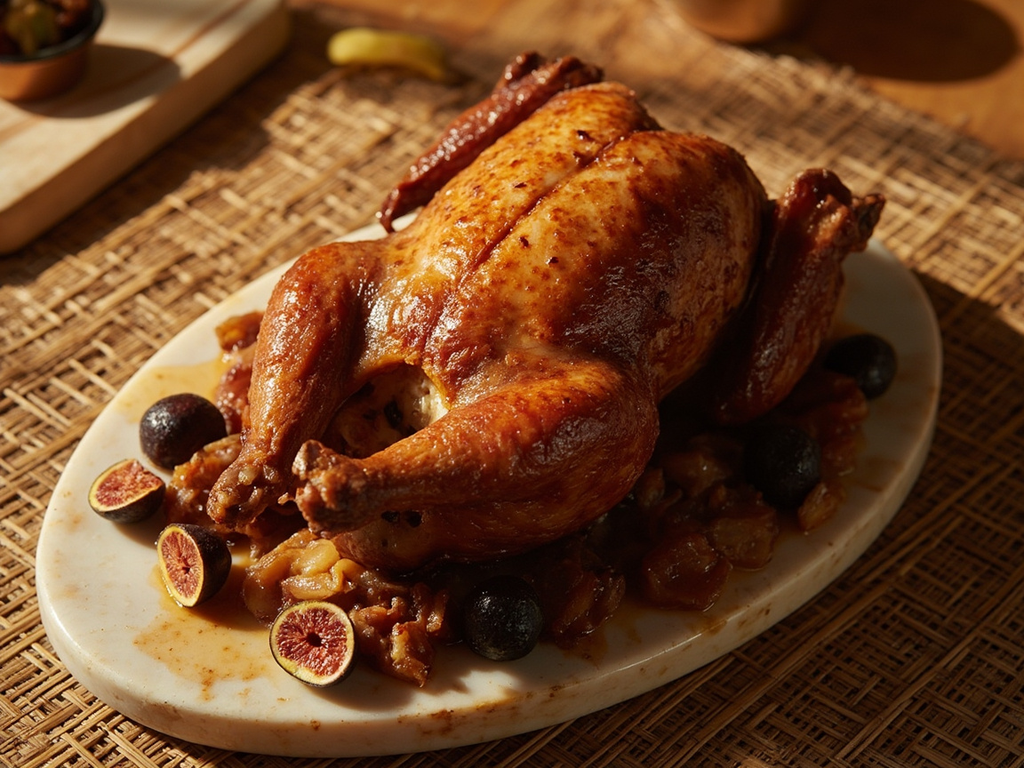
Honey-and-Juniper Venison Offering
Why this dish? Cernunnos is the master of game and bears the antlers of the stag: portions of venison, grains, and sweet libations were consecrated to him, deposited in sacred clearings (nemeton) or thrown into springs. This dish evokes that hunting offering, glazed with forest honey that symbolizes the earth's abundance.
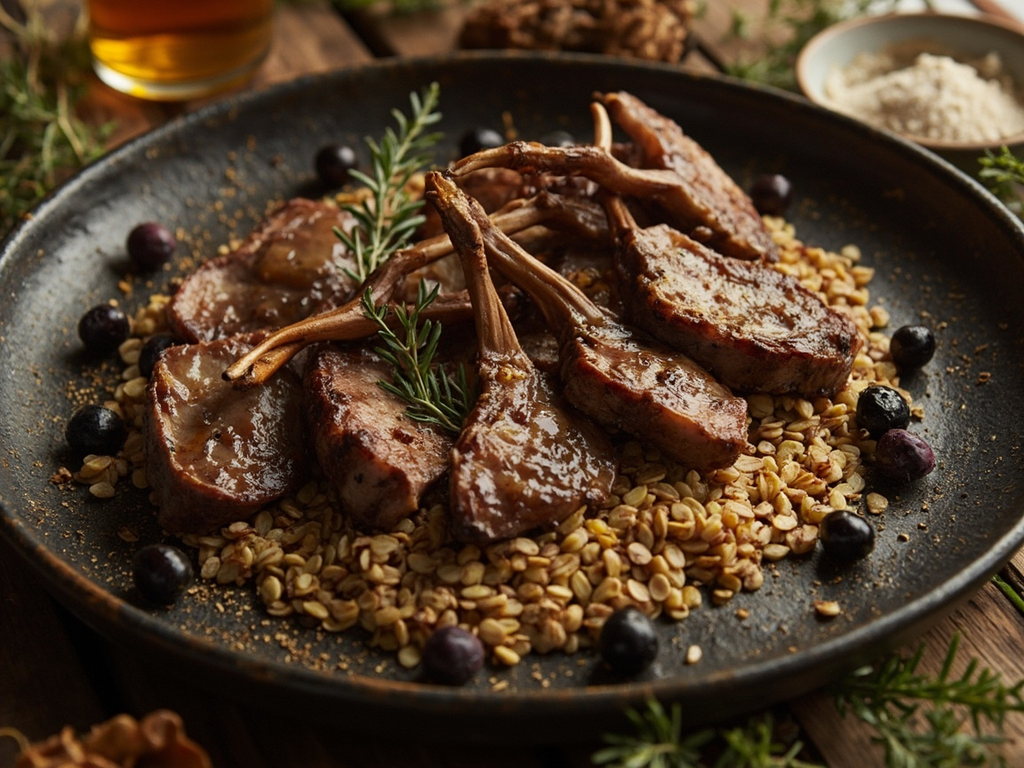
Pieces of venison roasted on a spit, lacquered with wild honey and perfumed with crushed juniper berries, laid on a bed of toasted cereals. A bite at once wild, sweet, and resinous — the taste of the forest offered up.
Approach, mortal, and fear not my antlers. It is I who push the stag from the thicket and guide your arrow; in return, you give me the finest portion. Rub the flesh with honey taken from the bees of my clearings, throw upon it the small black berries of the juniper, and let the fire lick it all until the skin gleams like bark in the sun. Lay it beneath the great oak, and know that what you give to the forest, the forest returns to you a hundredfold.
- •Haunch of venison — a fine piece (game meat, heart of the offering)
- •Wild honey — by the ladleful (glaze, symbol of abundance)
- •Juniper berries — a handful, crushed (resinous perfume of the woods)
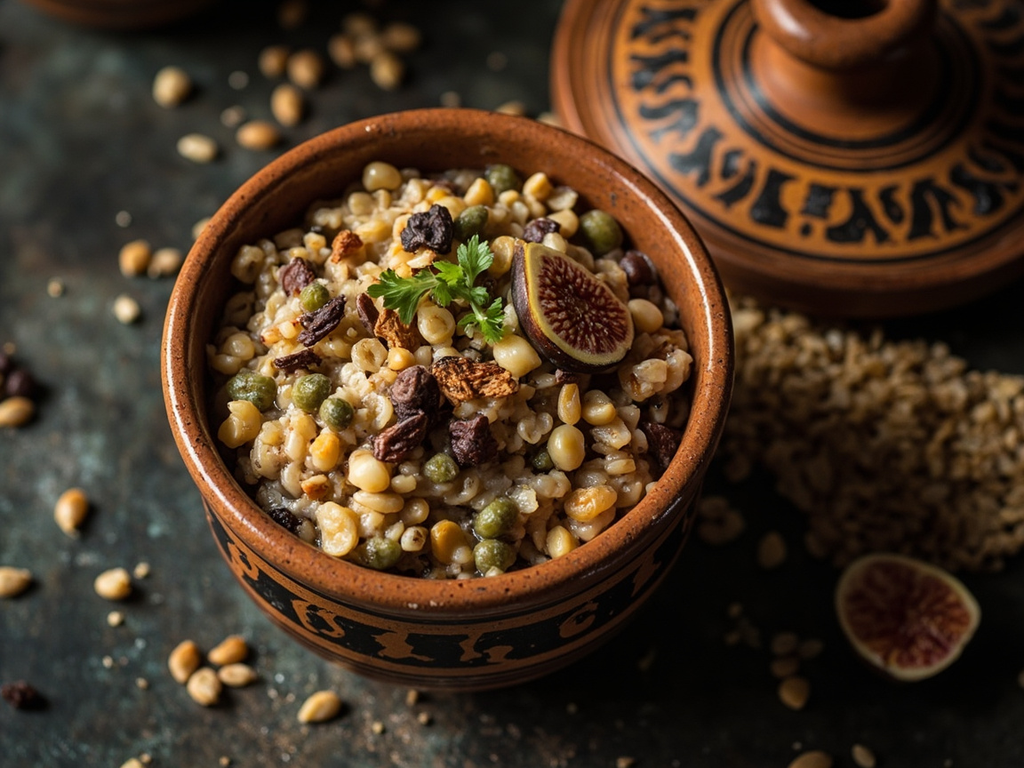
- •Toasted crushed barley — a full bowl (cereal bed, offering of the earth)
- •Salt — a few pinches (seasoning)
Honey-and-Juniper Venison Offering
Pieces of venison roasted on a spit, lacquered with wild honey and perfumed with crushed juniper berries, laid on a bed of toasted cereals. A bite at once wild, sweet, and resinous — the taste of the forest offered up.
Why this dish? Cernunnos is the master of game and bears the antlers of the stag: portions of venison, grains, and sweet libations were consecrated to him, deposited in sacred clearings (nemeton) or thrown into springs. This dish evokes that hunting offering, glazed with forest honey that symbolizes the earth's abundance.
Approach, mortal, and fear not my antlers. It is I who push the stag from the thicket and guide your arrow; in return, you give me the finest portion. Rub the flesh with honey taken from the bees of my clearings, throw upon it the small black berries of the juniper, and let the fire lick it all until the skin gleams like bark in the sun. Lay it beneath the great oak, and know that what you give to the forest, the forest returns to you a hundredfold.
Ingredients (period version)
- Haunch of venison — a fine piece (game meat, heart of the offering)
- Wild honey — by the ladleful (glaze, symbol of abundance)
- Juniper berries — a handful, crushed (resinous perfume of the woods)
- Toasted crushed barley — a full bowl (cereal bed, offering of the earth)
- Salt — a few pinches (seasoning)
Ingredients
- Venison steak or roast (or doe) — 600 g (main meat)
- Forest or chestnut honey — 3 tbsp (glaze)
- Juniper berries — 1 tsp, crushed (aromatic)
- Pearl barley — 150 g (toasted side)
- Salt and fresh thyme — to taste (seasoning)
Method
- Toast the pearl barley dry in a pan until fragrant, then cook in salted water for 25 min.
- Mix honey, crushed juniper berries, thyme, and a pinch of salt.
- Sear the venison on all sides in a very hot pan, then generously brush with the honey mixture.
- Finish in the oven at 200°C for 12–15 min, basting twice with the juices, for a pink and lacquered meat.
- Rest 5 min, slice, and place on the bed of toasted barley. (Symbolically) return the first bite to nature.
How it was made : The Celts consecrated portions of game, grains, and fermented drinks to the deities, deposited in open-air sanctuaries (nemeton) or immersed in sacred waters — springs, rivers, and marshes have yielded many votive deposits to archaeologists. Honey and juniper, both from the forest, linked the table of men to the wild world of the horned god.
The contemporary twist : Serve on a slate board scattered with a few juniper twigs and an oak leaf — Cernunnos's altar invited to your table.
Sources : Diodorus Siculus, Bibliotheca historica, Book V (customs and food of the Gauls) · Jean-Louis Brunaux, Les Gaulois. Sanctuaires et rites
Cernunnos · Charactorium