 flip
flipAmbul thiyal — sour black fish curry of the South
Ambul thiyal — sour black fish curry of the South
Why this dish? A specialty of the southern Sri Lankan coast, ambul thiyal was the technique of preserving fish before refrigeration, thanks to the acidic goraka (Malabar tamarind) that protects the flesh. On an island encircled by the Indian Ocean that Chandrika Kumaratunga wanted to pacify and unite, this dish tells of coastal resourcefulness and the country's maritime wealth.
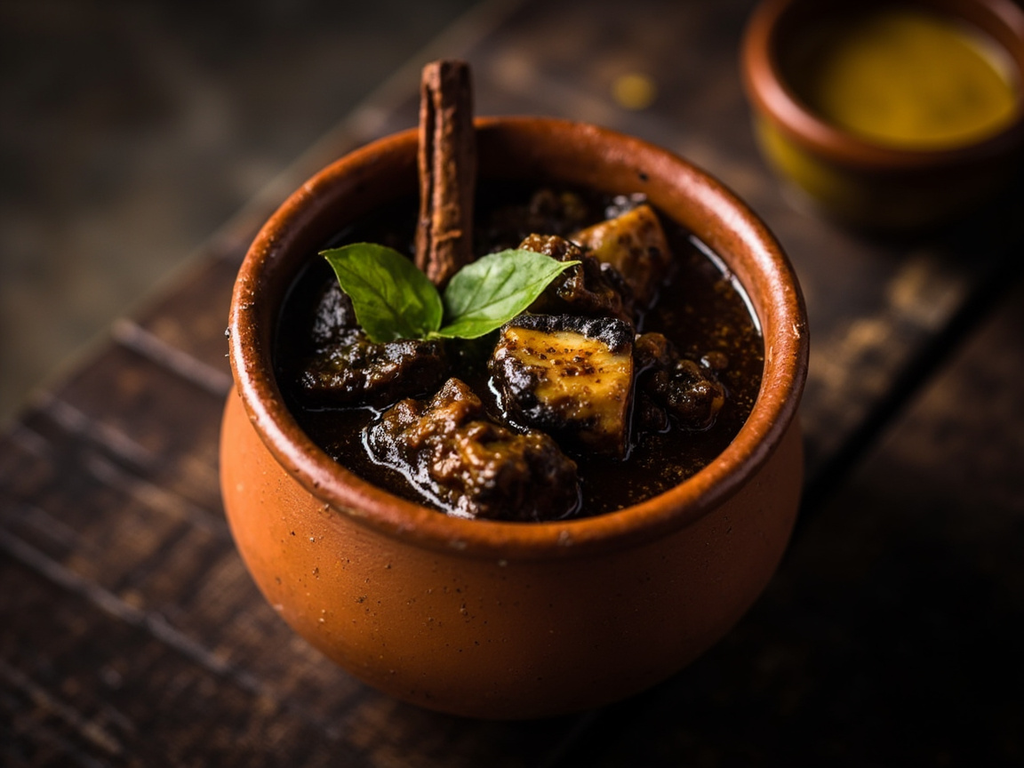
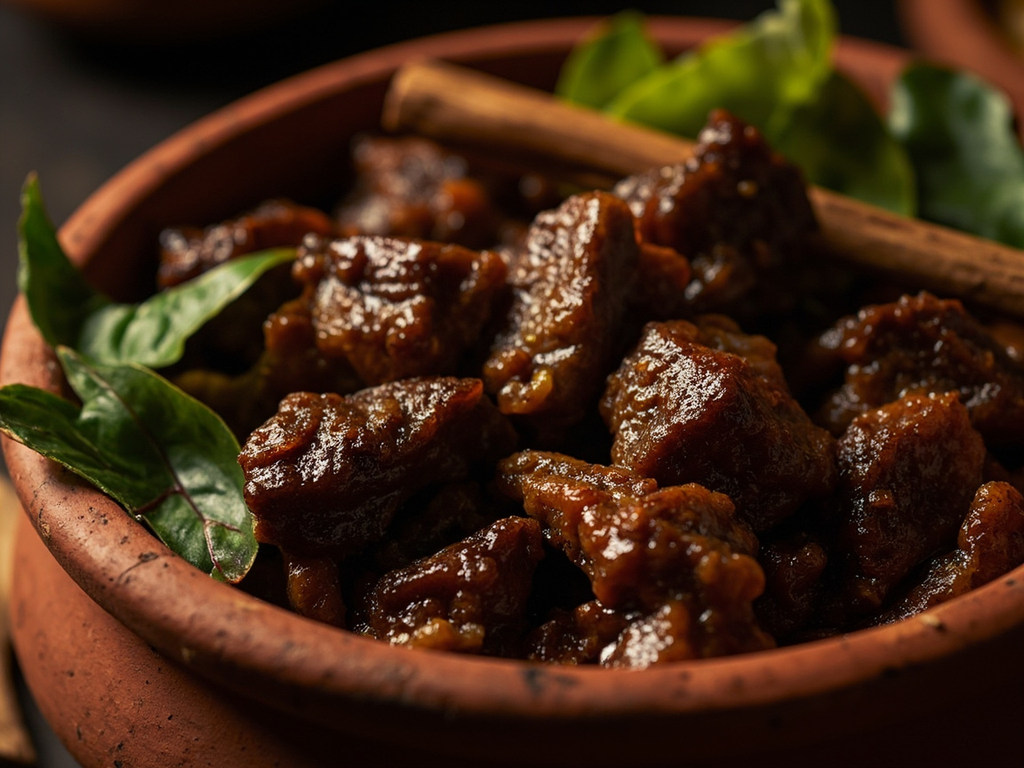
Firm fish cubes coated in a black paste of spices and goraka, dry-cooked until the sauce caramelizes and coats each piece. Tangy, intense, almost without liquid — made to last.
You see this fish black as coal? Do not trust its looks — that is how our southern fishermen kept it under the heat, long before iceboxes. The goraka, that dried sour fruit, does all the work: it preserves and it flavors. We cook it dry, almost without water, until the spices stick to the flesh like a second skin — and it improves the next day, I assure you.
- •Firm-fleshed fish (tuna, bonito, jack) — in large cubes (base)
- •Goraka (dried Malabar tamarind) — a few soaked petals (acidity and preservation)
- •Ceylon black pepper — generously (warm heat)
- •Dark roasted curry powder — to taste (signature spice)
- •Ceylon cinnamon, cardamom, clove — a little (warm aromatics)
- •Curry leaves, pandanus, garlic, ginger — to taste (aroma)
Ambul thiyal — sour black fish curry of the South
Firm fish cubes coated in a black paste of spices and goraka, dry-cooked until the sauce caramelizes and coats each piece. Tangy, intense, almost without liquid — made to last.
Why this dish? A specialty of the southern Sri Lankan coast, ambul thiyal was the technique of preserving fish before refrigeration, thanks to the acidic goraka (Malabar tamarind) that protects the flesh. On an island encircled by the Indian Ocean that Chandrika Kumaratunga wanted to pacify and unite, this dish tells of coastal resourcefulness and the country's maritime wealth.
You see this fish black as coal? Do not trust its looks — that is how our southern fishermen kept it under the heat, long before iceboxes. The goraka, that dried sour fruit, does all the work: it preserves and it flavors. We cook it dry, almost without water, until the spices stick to the flesh like a second skin — and it improves the next day, I assure you.
Ingredients (period version)
- Firm-fleshed fish (tuna, bonito, jack) — in large cubes (base)
- Goraka (dried Malabar tamarind) — a few soaked petals (acidity and preservation)
- Ceylon black pepper — generously (warm heat)
- Dark roasted curry powder — to taste (signature spice)
- Ceylon cinnamon, cardamom, clove — a little (warm aromatics)
- Curry leaves, pandanus, garlic, ginger — to taste (aroma)
Ingredients
- Fresh tuna or bonito — 500 g cubed (base)
- Goraka (or tamarind paste) — 5-6 petals (or 2 tbsp tamarind) (acidity)
- Ground black pepper — 1 tbsp (heat)
- Sri Lankan roasted curry powder — 2 tsp (spice)
- Ceylon cinnamon stick — 1 piece (aromatic)
- Garlic and ginger — 1 tbsp paste (aroma)
- Curry leaves — 1 sprig (aroma)
- Salt — to taste (seasoning)
Method
- Soak goraka in a little hot water for 15 min, then grind to a paste (or dilute tamarind).
- Mix pepper, curry powder, garlic-ginger, salt, and goraka paste into a thick black paste.
- Coat the fish cubes with the paste, let marinate 15 min.
- Place in a heavy-bottomed pot with cinnamon, curry leaves, and just a splash of water.
- Cover and cook on low heat for 20-25 min, stirring gently, until the liquid evaporates and the spices coat the fish. Let rest: it is better the next day.
How it was made : Traditionally cooked in an earthenware pot ("chatty") that withstands slow dry cooking, ambul thiyal could be kept nearly a week at room temperature thanks to the hydroxycitric acid in goraka, which slows spoilage — a domestic chemistry mastered long before refrigerators.
The contemporary twist : Served cold, flaked on a slice of grilled coconut bread, as a Sri Lankan tapa for aperitifs.
Chandrika Kumaratunga · Charactorium