 flip
flipKokis — crispy rosettes of the Sinhalese festival
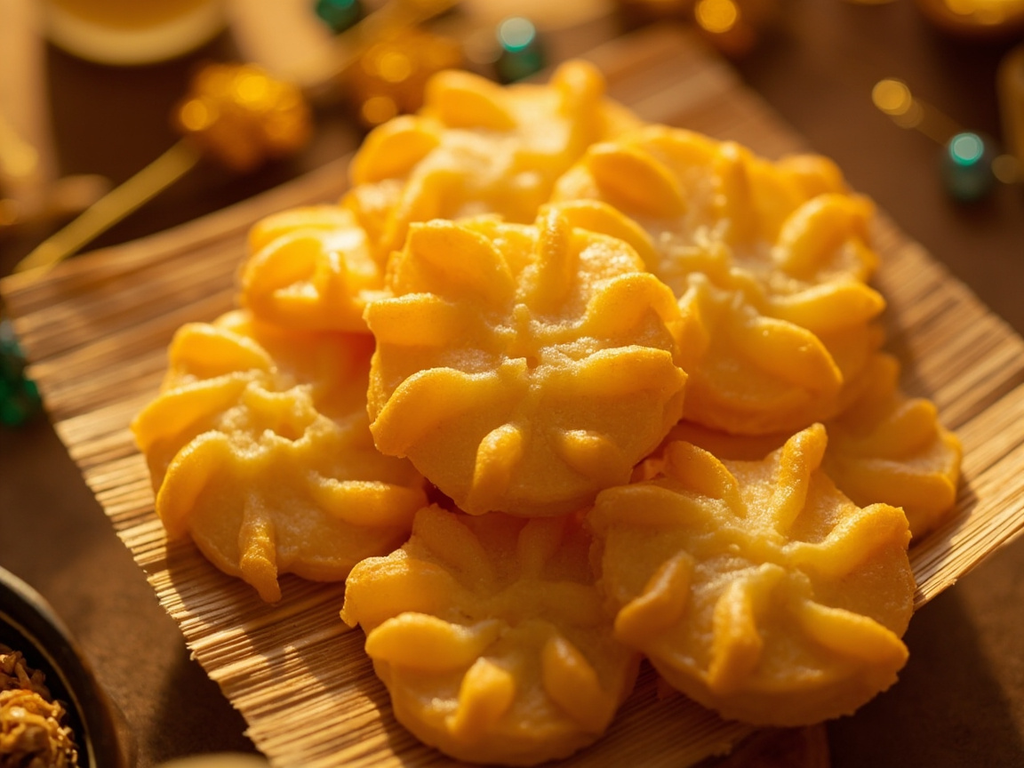
Kokis — crispy rosettes of the Sinhalese festival
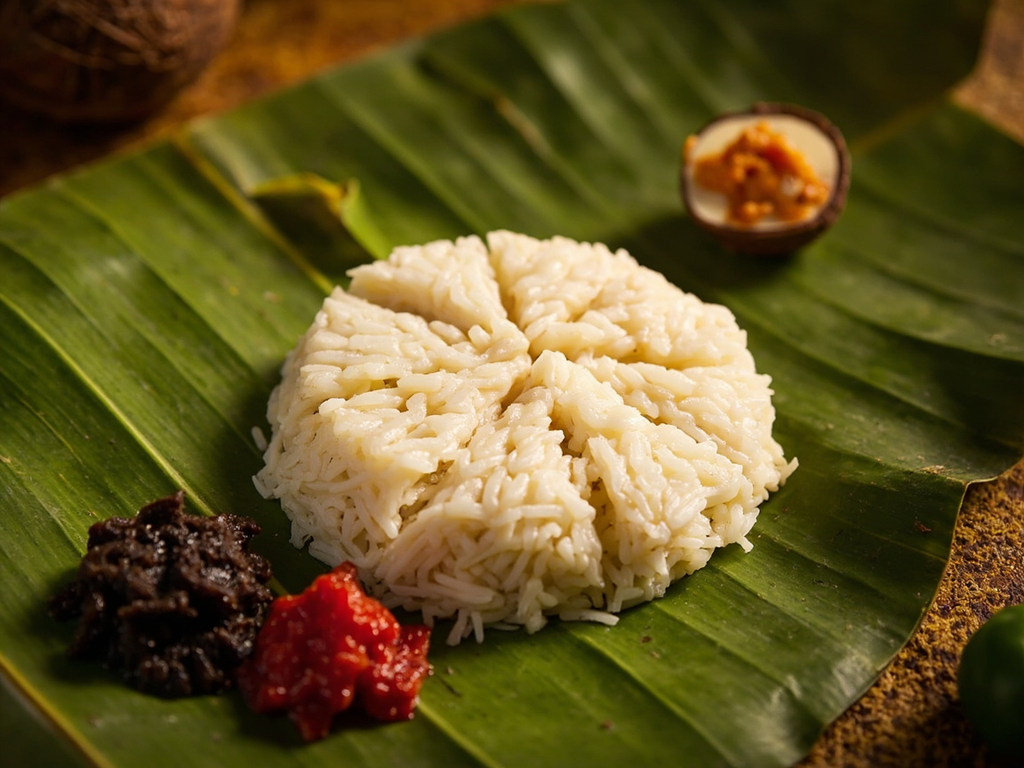
Why this dish? Kokis reigns on every Sri Lankan New Year (Avurudu) tray, a moment of national unity between Sinhalese and Tamil communities — exactly the rapprochement Chandrika Kumaratunga sought all her political life. Crunchy, golden, it is the biscuit of hospitality and large family tables at the Horagolla estate.
A fluid batter of rice flour and coconut milk, taken on an iron flower-shaped mold dipped in hot oil: you get ultra-crispy rosettes, barely sweet, that crack under the tooth.
Ah, kokis! Without it, there is no worthy Avurudu. When I was a child, we heated the flower mold in the oil, dipped it only halfway into the batter — especially not to the edge, otherwise the rosette won't come off — and plunged it back in: a little thrill, a sizzle, and the flower falls off by itself. We piled golden mountains for the neighbors, Sinhalese and Tamil, because on that day we share with everyone.
- •Rice flour — a large bowl (base)
- •Coconut milk — to loosen (liquid)
- •Egg — one or two (binding)
- •Turmeric (for golden color) or palm sugar — a pinch (color / sweetness)
- •Salt — a pinch (balance)
- •Coconut oil — for deep frying (cooking)
Kokis — crispy rosettes of the Sinhalese festival
A fluid batter of rice flour and coconut milk, taken on an iron flower-shaped mold dipped in hot oil: you get ultra-crispy rosettes, barely sweet, that crack under the tooth.
Why this dish? Kokis reigns on every Sri Lankan New Year (Avurudu) tray, a moment of national unity between Sinhalese and Tamil communities — exactly the rapprochement Chandrika Kumaratunga sought all her political life. Crunchy, golden, it is the biscuit of hospitality and large family tables at the Horagolla estate.
Ah, kokis! Without it, there is no worthy Avurudu. When I was a child, we heated the flower mold in the oil, dipped it only halfway into the batter — especially not to the edge, otherwise the rosette won't come off — and plunged it back in: a little thrill, a sizzle, and the flower falls off by itself. We piled golden mountains for the neighbors, Sinhalese and Tamil, because on that day we share with everyone.
Ingredients (period version)
- Rice flour — a large bowl (base)
- Coconut milk — to loosen (liquid)
- Egg — one or two (binding)
- Turmeric (for golden color) or palm sugar — a pinch (color / sweetness)
- Salt — a pinch (balance)
- Coconut oil — for deep frying (cooking)
Ingredients
- Rice flour — 200 g (base)
- Wheat flour — 2 tbsp (structure)
- Coconut milk — about 250 ml (liquid)
- Egg — 1 (binding)
- Sugar — 1 tbsp (light sweetness)
- Turmeric — 1 pinch (golden color)
- Salt — 1 pinch (balance)
- Neutral or coconut oil — for frying (cooking)
Method
- Whisk flours, egg, salt, sugar, turmeric, and coconut milk into a smooth batter, fluid like thin pancake batter.
- Heat oil (about 180°C) with the kokis mold immersed so it is scorching hot.
- Dip the hot mold into the batter up to two-thirds of its height only (not to the edge), then plunge it back into the oil.
- After a few seconds, shake gently: the rosette detaches. Fry until light golden and crispy.
- Drain on a cloth. Cool completely for maximum crunch. Store in an airtight container.
How it was made : The brass or iron mold, inherited from the Dutch colonial influence ("rosette cookies"), was passed down from generation to generation. The knack — heating the mold just enough for the batter to stick then release — was a grandmother's skill learned standing by the oil pot.
The contemporary twist : Dusted with a veil of cardamom icing sugar and stacked in a tower, like a tropical croquembouche.
Chandrika Kumaratunga · Charactorium