 flip
flipHerbed Ale with Honey (Frankish Gruit)
Herbed Ale with Honey (Frankish Gruit)
Why this dish? At Charles Martel's table, ale flowed freely: it is the drink of the Frankish North, brewed from the barley of the estates, where wine from the South remains rarer. Offering a horn of ale to one's followers seals loyalty around the hearth.
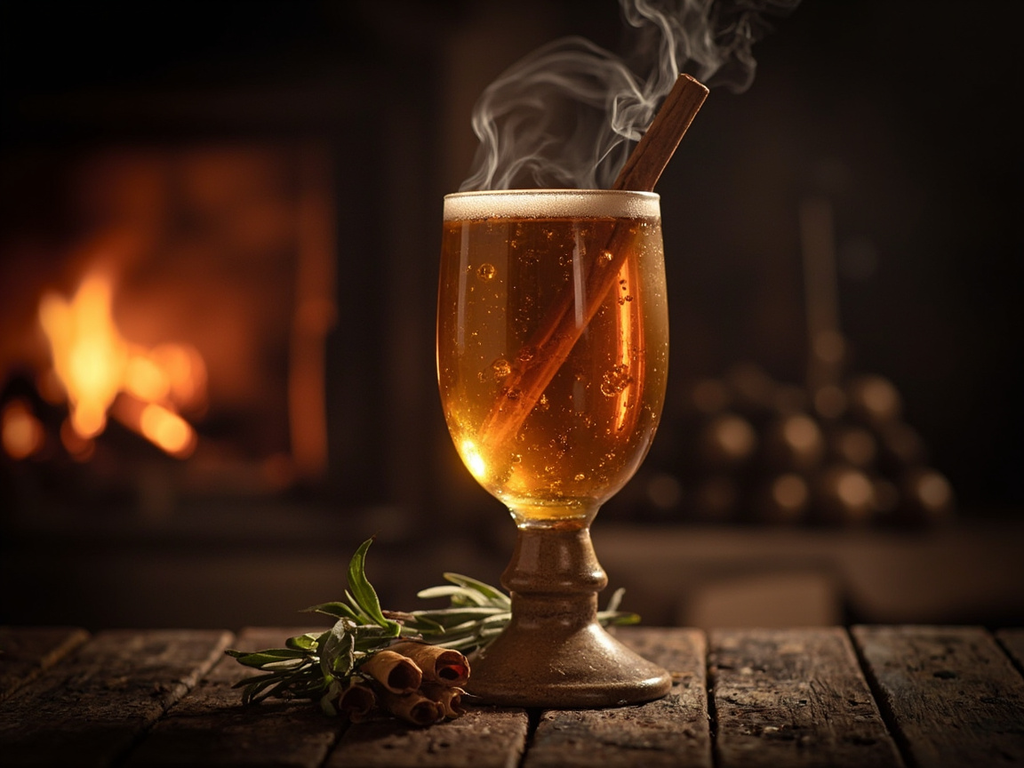
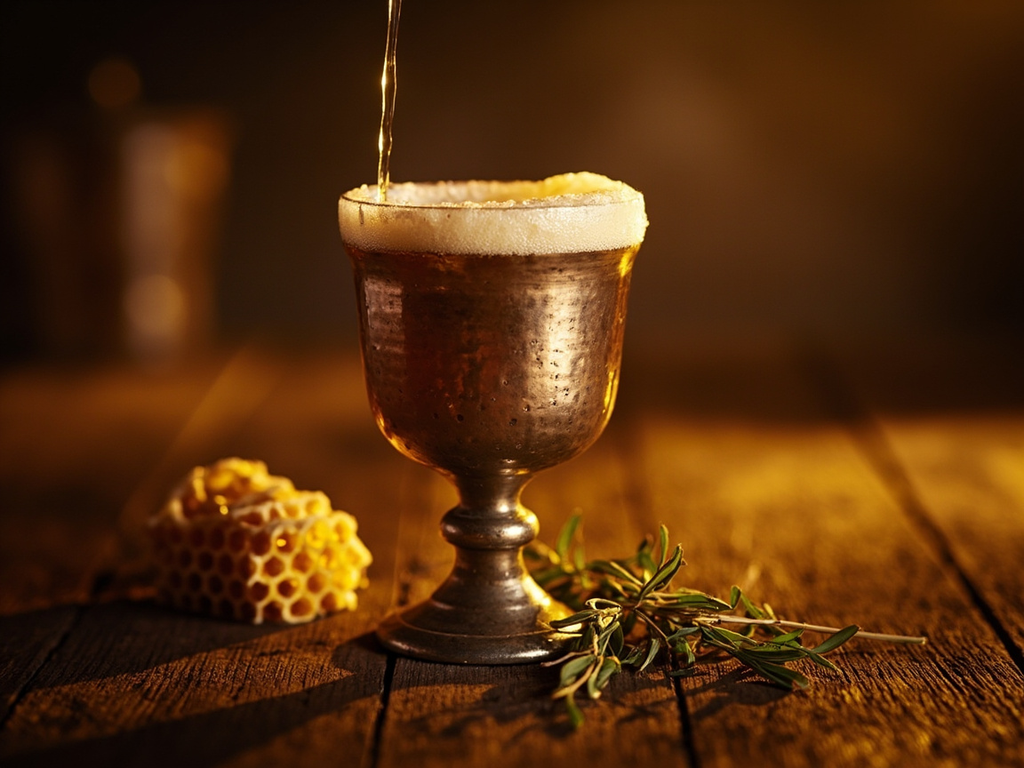
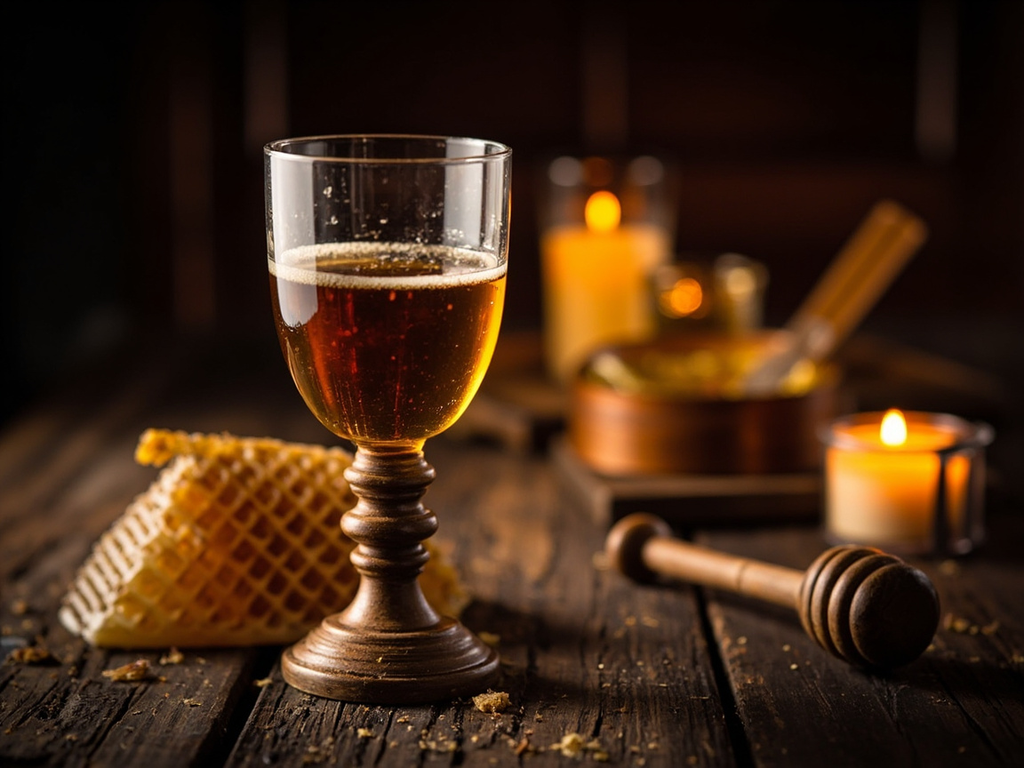
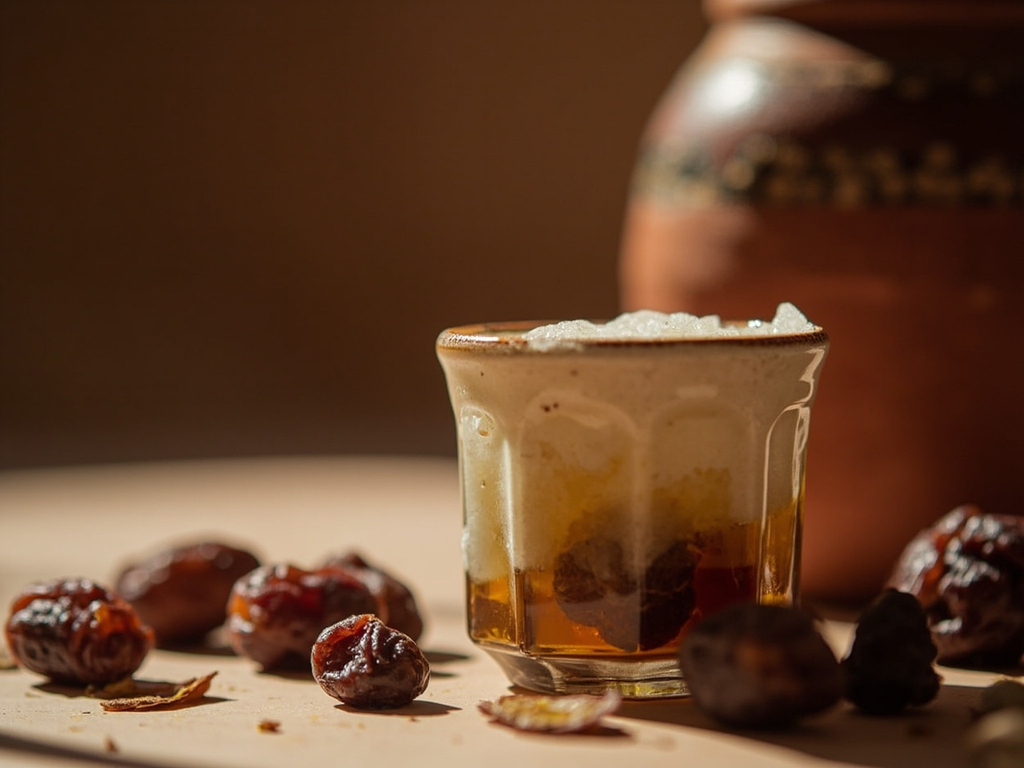
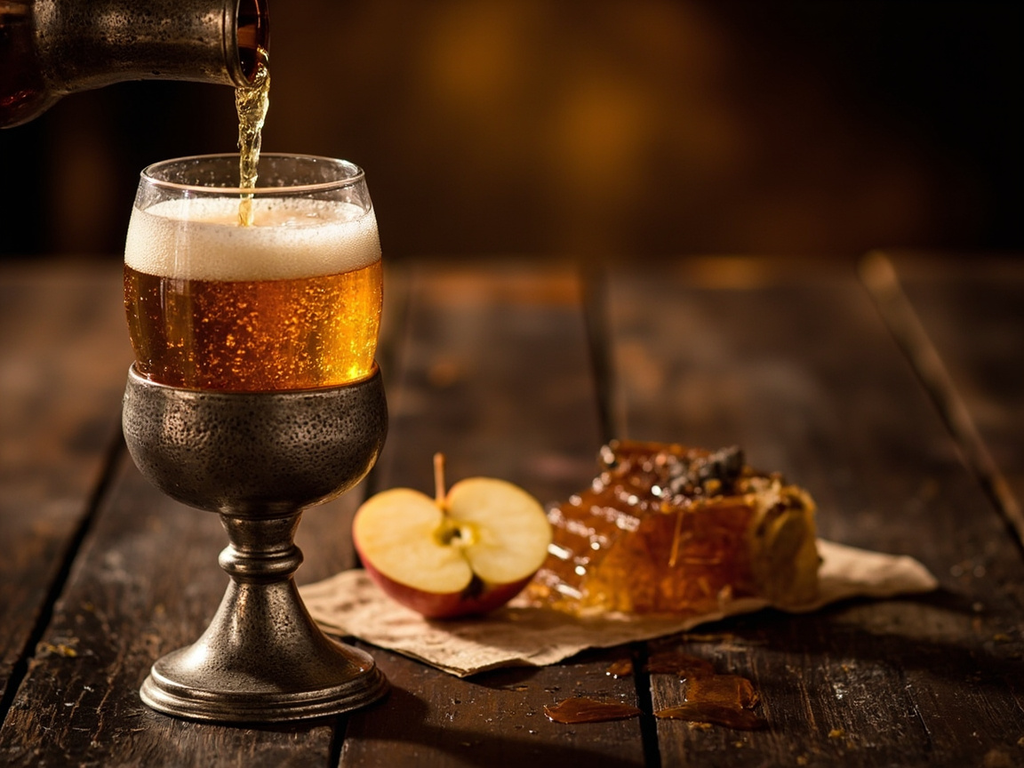
An ancestral beer without hops, flavored with a blend of herbs (the gruit) and sweetened with honey. Cloudy, living, slightly bitter and fermented: the convivial drink that warms the long evenings of Austrasia.
Hold out your horn, and let it not remain empty in my home. This ale we brew from the barley of my estates, we perfume it with the herbs of the marsh and sweeten it with a dash of honey. Wine I reserve for clerics and feast days; but ale is the blood of the evening gatherings, the one that loosens the tongues of my warriors and seals their oaths. Drink, and may your loyalty be as frank as this brew.
- •Malted barley — enough to fill the vat (fermentable sugar)
- •Spring water — in abundance (base)
- •Gruit (bog myrtle, yarrow, wild rosemary) — a handful (bitterness and fragrance, in place of hops)
- •Honey — a pot (sweetness and alcohol)
- •Wild yeasts — naturally present (fermentation)
Herbed Ale with Honey (Frankish Gruit)
An ancestral beer without hops, flavored with a blend of herbs (the gruit) and sweetened with honey. Cloudy, living, slightly bitter and fermented: the convivial drink that warms the long evenings of Austrasia.
Why this dish? At Charles Martel's table, ale flowed freely: it is the drink of the Frankish North, brewed from the barley of the estates, where wine from the South remains rarer. Offering a horn of ale to one's followers seals loyalty around the hearth.
Hold out your horn, and let it not remain empty in my home. This ale we brew from the barley of my estates, we perfume it with the herbs of the marsh and sweeten it with a dash of honey. Wine I reserve for clerics and feast days; but ale is the blood of the evening gatherings, the one that loosens the tongues of my warriors and seals their oaths. Drink, and may your loyalty be as frank as this brew.
Ingredients (period version)
- Malted barley — enough to fill the vat (fermentable sugar)
- Spring water — in abundance (base)
- Gruit (bog myrtle, yarrow, wild rosemary) — a handful (bitterness and fragrance, in place of hops)
- Honey — a pot (sweetness and alcohol)
- Wild yeasts — naturally present (fermentation)
Ingredients
- Crushed barley malt — 1 kg (sugar base)
- Water — 5 L (mashing and boiling)
- Herb blend (yarrow, rosemary, a pinch of bog myrtle if available) — 15 g (aromatic bitterness (gruit))
- Honey — 150 g (sweetness and fermentation)
- Beer yeast (or wild starter) — 1 packet (fermentation)
Method
- Mashing: heat 3 L of water to 65 °C, pour in the crushed malt and hold at ~65 °C for 1 hour (sugars are released).
- Filter the wort, rinse the grains with 2 L of hot water to recover remaining sugars.
- Bring the wort to a boil for 45 minutes, adding the gruit (herbs) halfway through.
- Off the heat, dissolve the honey in the still-hot wort, then cool rapidly to 20-25 °C.
- Transfer to a fermentation vessel, add yeast, seal with an airlock.
- Let ferment for 7 to 10 days away from light, then bottle and wait another 1 to 2 weeks before tasting, chilled and cloudy.
How it was made : Before the widespread use of hops (which only became common from the Carolingian centuries onward), ale was brewed with 'gruit', a blend of bitter and aromatic herbs. Honey was used to boost alcohol content and sweeten. Beer, cheaper and more local than wine in the Frankish North, was a daily as well as festive drink, consumed by all, men, women and children (in a weaker form).
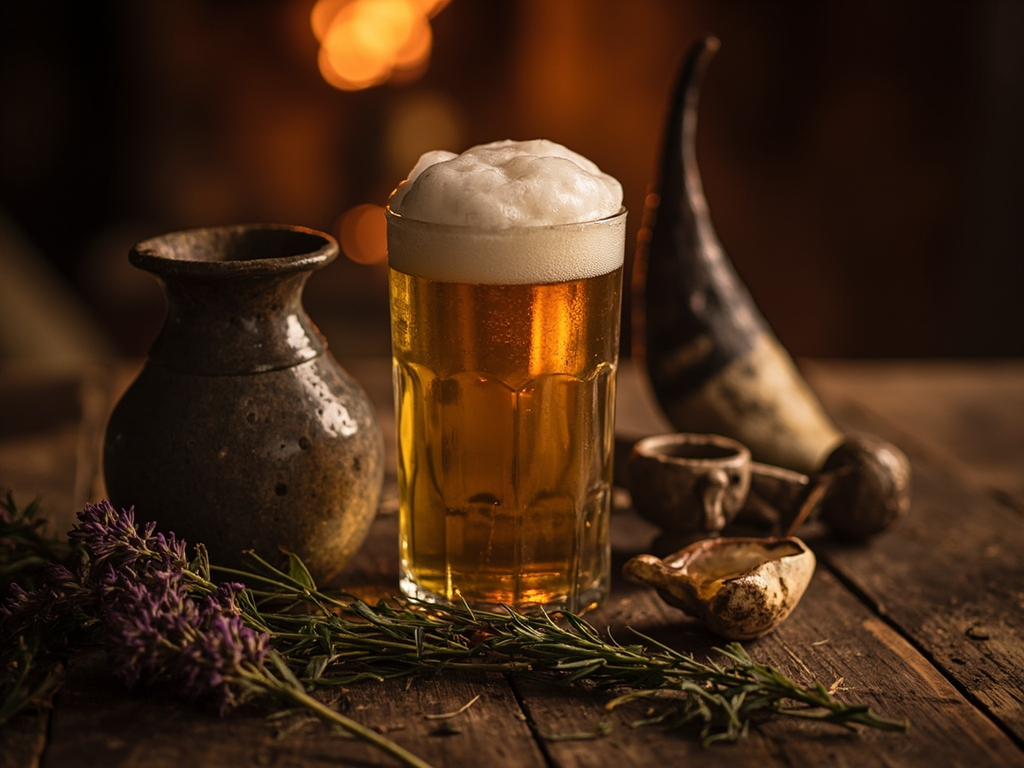
The contemporary twist : Served in a horn or a stoneware mug, fine foam and cloudy robe — a medieval 'farmhouse ale' to taste (in moderation, adult version).
Charles Martel · Charactorium