 flip
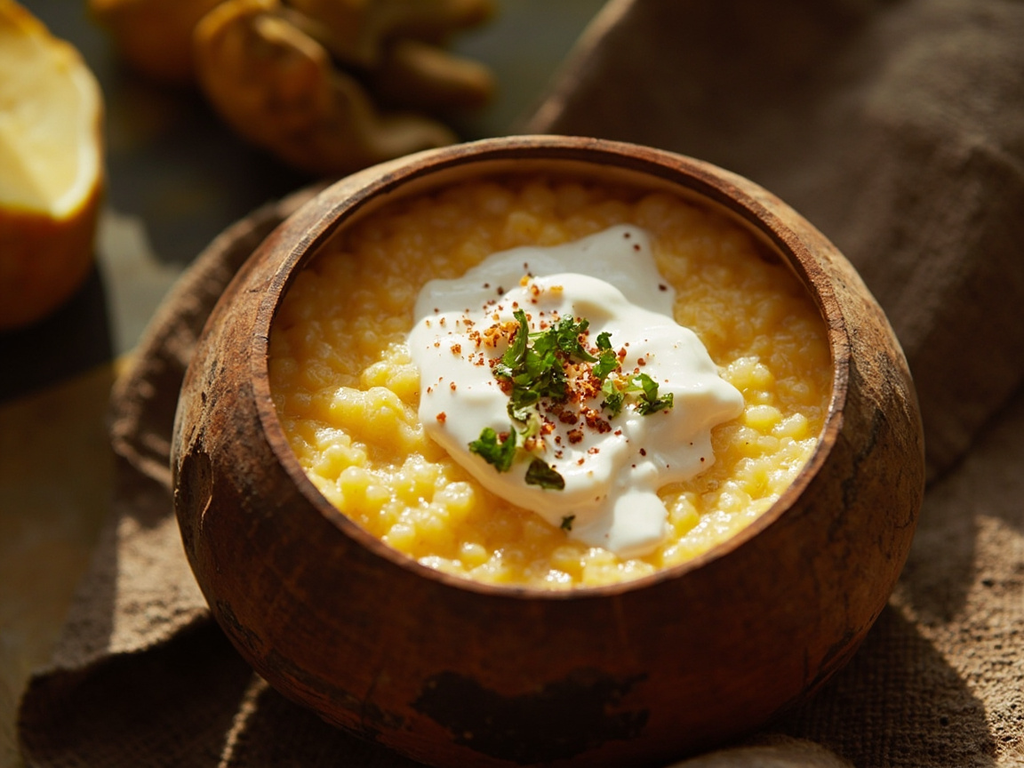
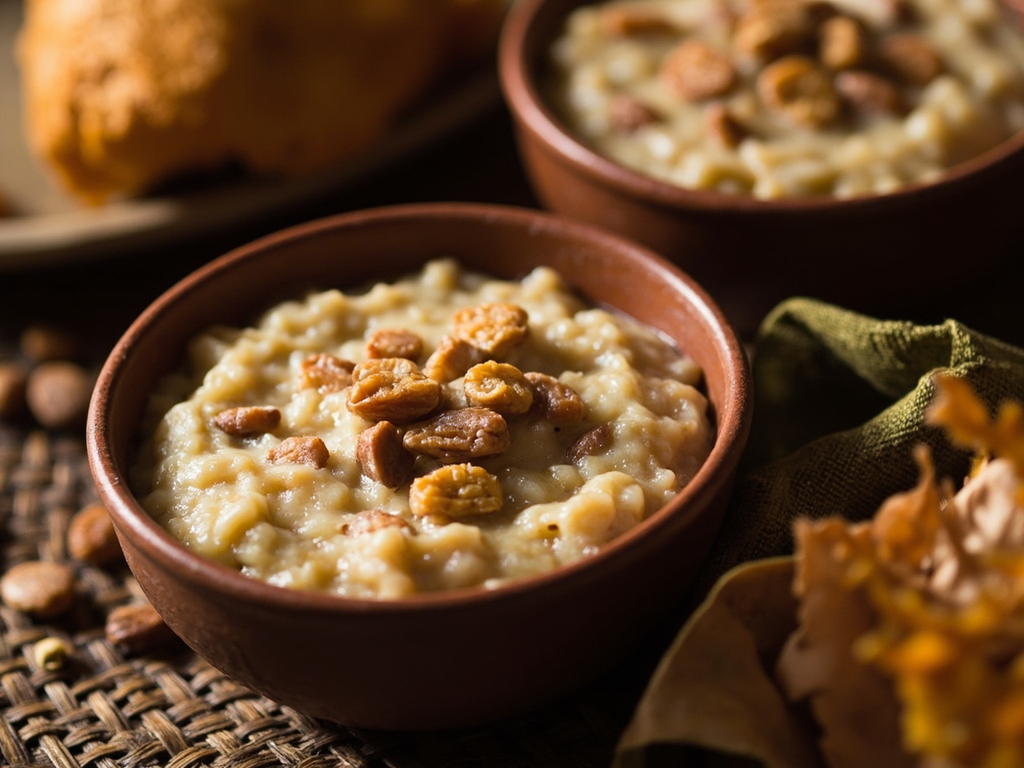
flipNgalakh (Millet Cream with Baobab and Peanut)
Ngalakh (Millet Cream with Baobab and Peanut)
Why this dish? Inspired by ngalakh, this millet sweetness with baobab and peanut is, in Senegal, the dish prepared in large quantities for SHARING with neighbors during festivals—a gesture that transcends faiths. For Diop, a thinker of pan-Africanism and cultural unity, this dish of giving and connection between families resonates with his ideal of a supportive community beyond differences.
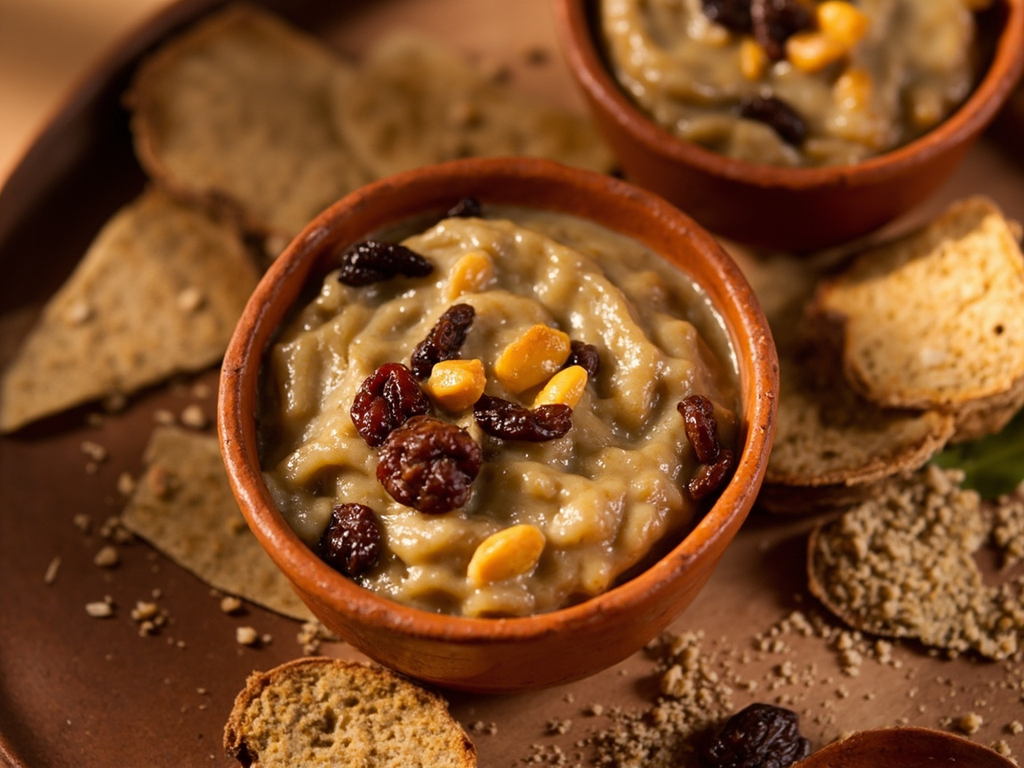
A creamy millet porridge mixed with the tangy pulp of the baobab fruit (monkey bread) and peanut paste, sweetened and perfumed. Sweet, slightly tangy, deep: the quintessential gift dessert.
This dish, you do not eat alone: you prepare it in abundance to offer to the neighborhood, because sharing is the cement of the community. We mix the millet cream with the pulp of the baobab—that tangy fruit called monkey bread—and with peanut paste, and we sweeten it generously. When each family sends its bowl to the other, the whole neighborhood becomes connected. Therein lies, modestly, a lesson of African unity that I have never ceased to defend.
- •Cooked millet semolina (araw) — a bowl (base)
- •Baobab fruit pulp (bouye) — generous (tanginess and flavor)
- •Peanut paste — a ladleful (creaminess)
- •Sugar — to taste (sweetness)
- •Orange blossom water, raisins — to taste (flavor and garnish)
Ngalakh (Millet Cream with Baobab and Peanut)
A creamy millet porridge mixed with the tangy pulp of the baobab fruit (monkey bread) and peanut paste, sweetened and perfumed. Sweet, slightly tangy, deep: the quintessential gift dessert.
Why this dish? Inspired by ngalakh, this millet sweetness with baobab and peanut is, in Senegal, the dish prepared in large quantities for SHARING with neighbors during festivals—a gesture that transcends faiths. For Diop, a thinker of pan-Africanism and cultural unity, this dish of giving and connection between families resonates with his ideal of a supportive community beyond differences.
This dish, you do not eat alone: you prepare it in abundance to offer to the neighborhood, because sharing is the cement of the community. We mix the millet cream with the pulp of the baobab—that tangy fruit called monkey bread—and with peanut paste, and we sweeten it generously. When each family sends its bowl to the other, the whole neighborhood becomes connected. Therein lies, modestly, a lesson of African unity that I have never ceased to defend.
Ingredients (period version)
- Cooked millet semolina (araw) — a bowl (base)
- Baobab fruit pulp (bouye) — generous (tanginess and flavor)
- Peanut paste — a ladleful (creaminess)
- Sugar — to taste (sweetness)
- Orange blossom water, raisins — to taste (flavor and garnish)
Ingredients
- Fine millet couscous, steamed — 250 g (base)
- Baobab pulp powder — 4 tbsp diluted in 30 cl water (signature tanginess)
- 100% peanut paste — 3 tbsp (creaminess)
- Sugar — 4 to 5 tbsp (sweetness)
- Orange blossom water — 1 tsp (flavor)
- Raisins — a handful (garnish)
Method
- Dilute the baobab powder in water, let it rest, then strain to obtain a creamy, tangy juice.
- Dilute the peanut paste in a little of this juice to avoid lumps.
- Mix the baobab juice, peanut paste, sugar, and orange blossom water until smooth.
- Fold in the cooked and fluffed millet couscous, add raisins.
- Adjust sweetness, chill, and serve in bowls—some of which are meant to be offered to neighbors.
How it was made : Ngalakh is traditionally prepared in Senegal for Good Friday and shared between Christian and Muslim families, a living symbol of coexistence (teranga). The baobab fruit, an emblematic tree of the Sahel, provides a dry pulp very rich in vitamin C, naturally dried in its shell.
The contemporary twist : Pour into individual jars with a crushed roasted peanut on top, ready to give—'teranga' in a jar.
Sources : Pierre Thiam, Senegal: Modern Senegalese Recipes (2015) · Ethnographic documentation on ngalakh and Senegalese teranga
Cheikh Anta Diop · Charactorium