 flip
flipMinestra di ceci e bietole — The Pittance for Feast Days
Minestra di ceci e bietole — The Pittance for Feast Days
Why this dish? On major liturgical feasts (Christmas, Easter, the Feast of St. Francis), the rule relaxed the fast slightly: a more nourishing pittance was allowed. A thick soup of chickpeas and chard, enriched with oil, was a sober luxury worthy of the Clarisse calendar.
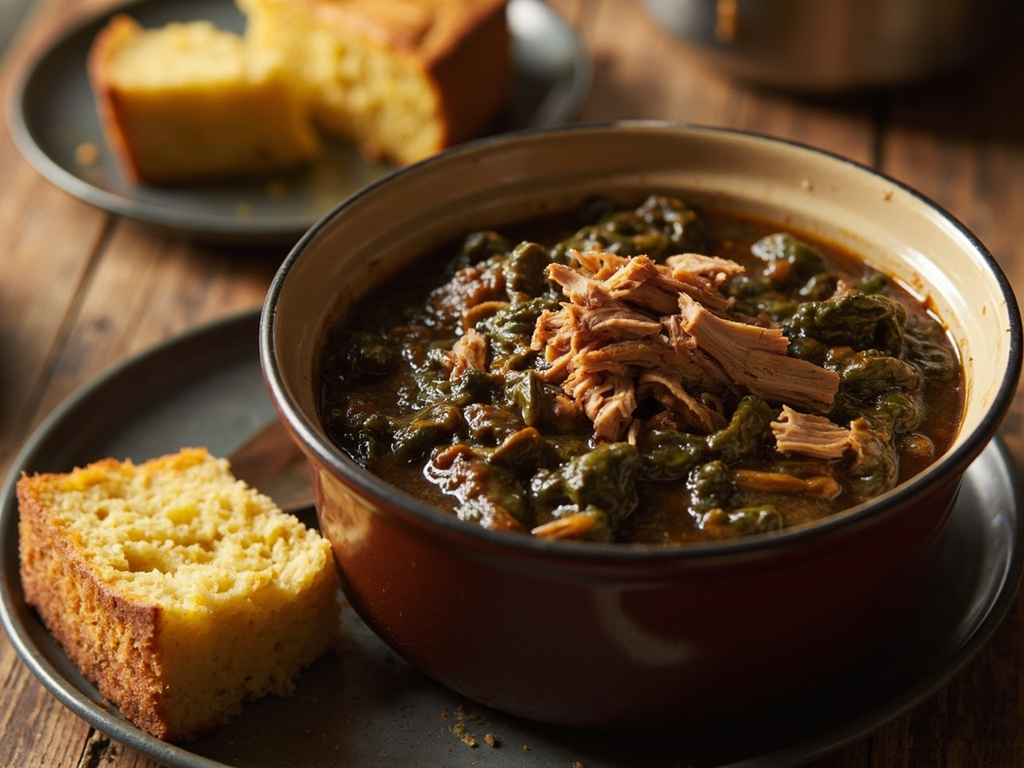
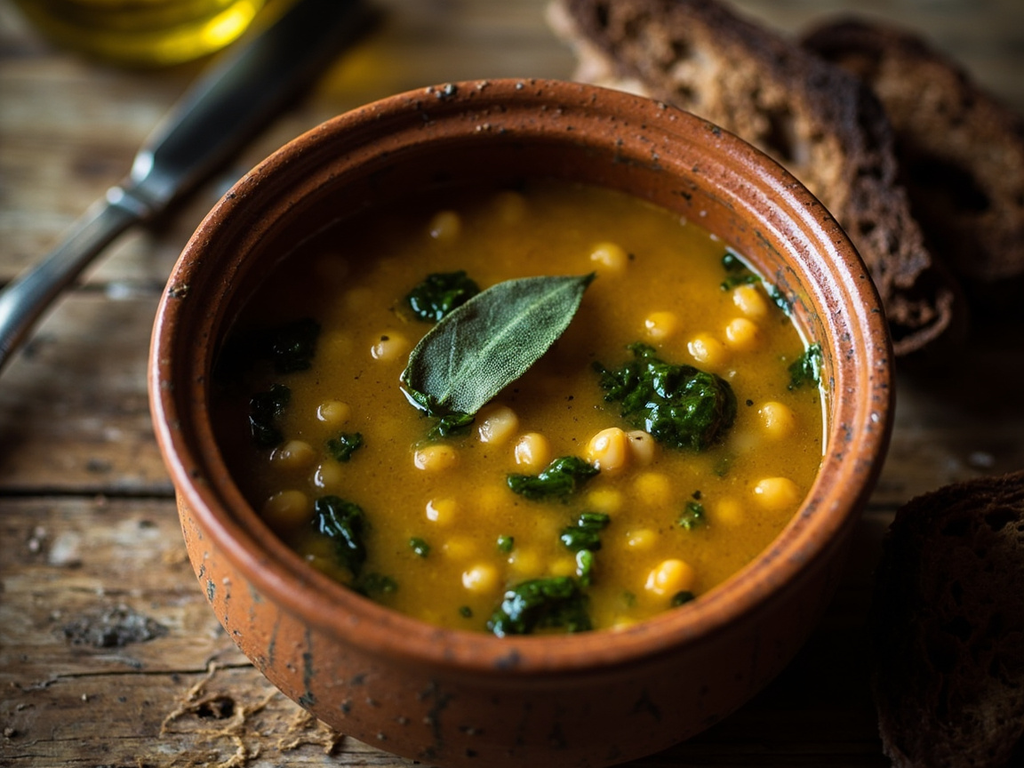
A thick, golden potage of chickpeas long-simmered with chard and a little olive oil, scented with sage and rosemary from the convent garden. Comforting without being rich, this is "feast" as a Poor Lady conceived it.
On this day of the Nativity, my sister, the rule allows a little more to our bowls, and I give thanks. I put the chickpeas to soak from the eve of Vespers, then let them cook all day near the embers with the chard from the garden and a sprig of rosemary. A drizzle of olive oil is poured over, like a gift: soberly, but with a good heart. Eat, and remember that even joy among us keeps the scent of beloved poverty.
- •Dried chickpeas — a good handful per sister (protein for Lent and feasts)
- •Chard (bietole) — one bunch from the garden (seasonal leafy vegetable)
- •Umbrian olive oil — a drizzle (the luxury allowed on feast days)
- •Garlic — two cloves (aromatic)
- •Sage and rosemary — a few sprigs (scent of the cloister garden)
- •Salt — to taste (seasoning)
Minestra di ceci e bietole — The Pittance for Feast Days
A thick, golden potage of chickpeas long-simmered with chard and a little olive oil, scented with sage and rosemary from the convent garden. Comforting without being rich, this is "feast" as a Poor Lady conceived it.
Why this dish? On major liturgical feasts (Christmas, Easter, the Feast of St. Francis), the rule relaxed the fast slightly: a more nourishing pittance was allowed. A thick soup of chickpeas and chard, enriched with oil, was a sober luxury worthy of the Clarisse calendar.
On this day of the Nativity, my sister, the rule allows a little more to our bowls, and I give thanks. I put the chickpeas to soak from the eve of Vespers, then let them cook all day near the embers with the chard from the garden and a sprig of rosemary. A drizzle of olive oil is poured over, like a gift: soberly, but with a good heart. Eat, and remember that even joy among us keeps the scent of beloved poverty.
Ingredients (period version)
- Dried chickpeas — a good handful per sister (protein for Lent and feasts)
- Chard (bietole) — one bunch from the garden (seasonal leafy vegetable)
- Umbrian olive oil — a drizzle (the luxury allowed on feast days)
- Garlic — two cloves (aromatic)
- Sage and rosemary — a few sprigs (scent of the cloister garden)
- Salt — to taste (seasoning)
Ingredients
- Dried chickpeas — 250 g (soaked overnight) (soup base)
- Chard — 400 g (leaves and stems) (green vegetable)
- Extra virgin olive oil — 4 tbsp (binder and flavor)
- Garlic — 2 cloves (aromatic)
- Onion — 1 small (base)
- Sage — 4 leaves (scent)
- Rosemary — 1 sprig (scent)
- Salt — to taste (seasoning)
Method
- Drain the soaked chickpeas, cover with cold water, and cook at a gentle boil for 1.5 to 2 hours (without salt initially, to soften).
- In another pot, sauté the chopped onion and garlic in olive oil with sage and rosemary until golden.
- Wash the chard, separate stems (add first) from leaves, and add to the aromatic base.
- Add the chickpeas with a ladleful of their cooking water, salt, and simmer for 20 minutes.
- Roughly mash some of the chickpeas with a fork to thicken the soup.
- Serve hot in an earthenware bowl, with a final drizzle of raw olive oil and pieces of pane d'orzo.
How it was made : Chickpeas, fava beans, and lentils formed the "meat of the poor" in medieval times, allowed during fasts when flesh was forbidden. In convents, legumes from the storehouse and herbs from the walled garden (hortus) made up the daily fare; olive oil, costly, marked the days when the fast was relaxed. No tomatoes, no New World beans: 13th-century Italy was still unaware of them.
The contemporary twist : A long turn of the pepper mill and a few quickly seared chard stems for color transform this humble minestra into a bistronomic "cucina povera" plate.
Sources : Massimo Montanari, La faim et l'abondance. Histoire de l'alimentation en Europe · Bruno Laurioux, Manger au Moyen Âge
Clare of Assisi · Charactorium