 flip
flipPane d'orzo — Barley Bread of San Damiano
Pane d'orzo — Barley Bread of San Damiano
Why this dish? Clare's diet was one of the strictest poverty: barley or bran bread, day after day. This dense, dark bread, refused at lordly tables, was the concrete basis of her life of fasting at the convent of San Damiano.
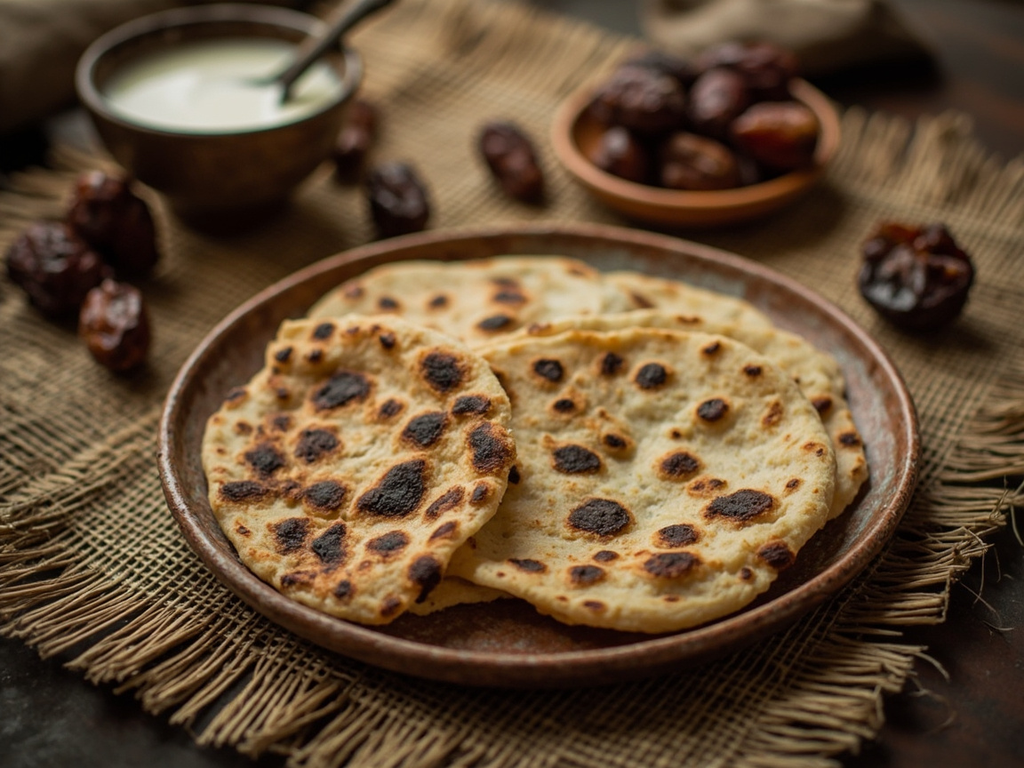
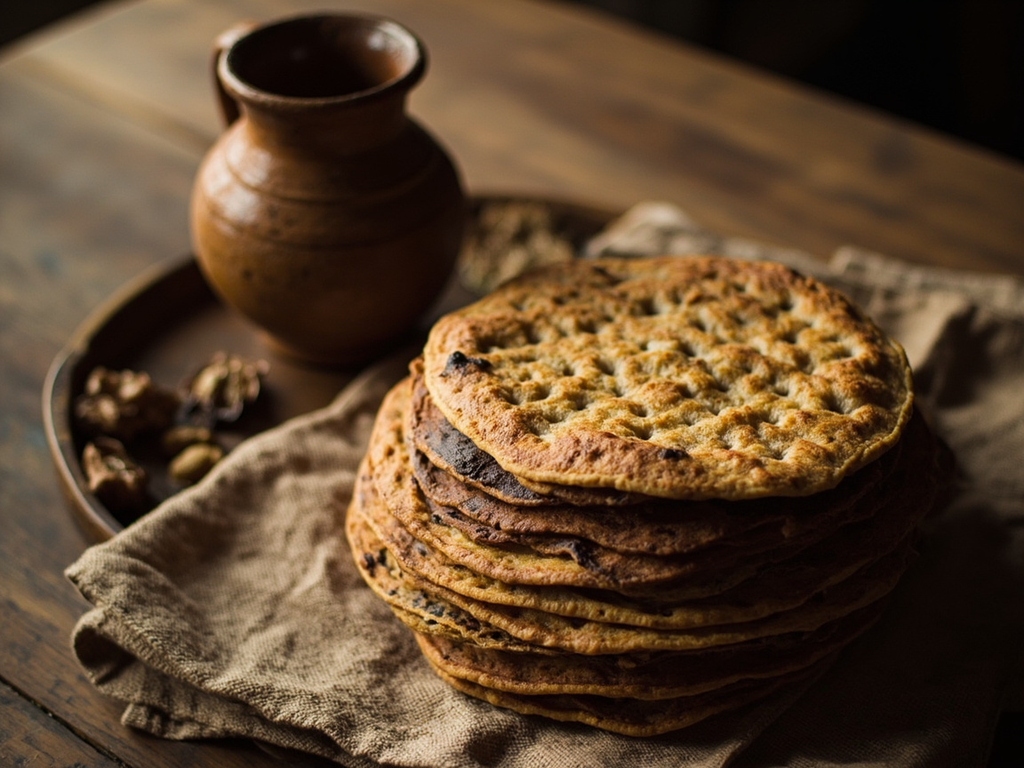
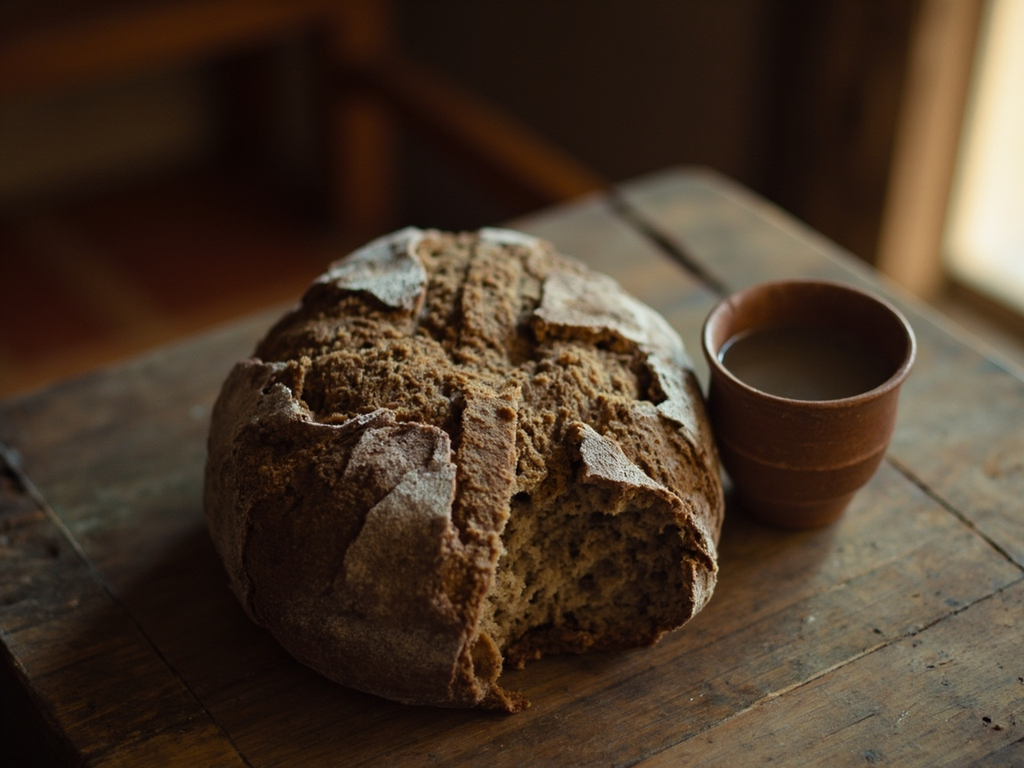
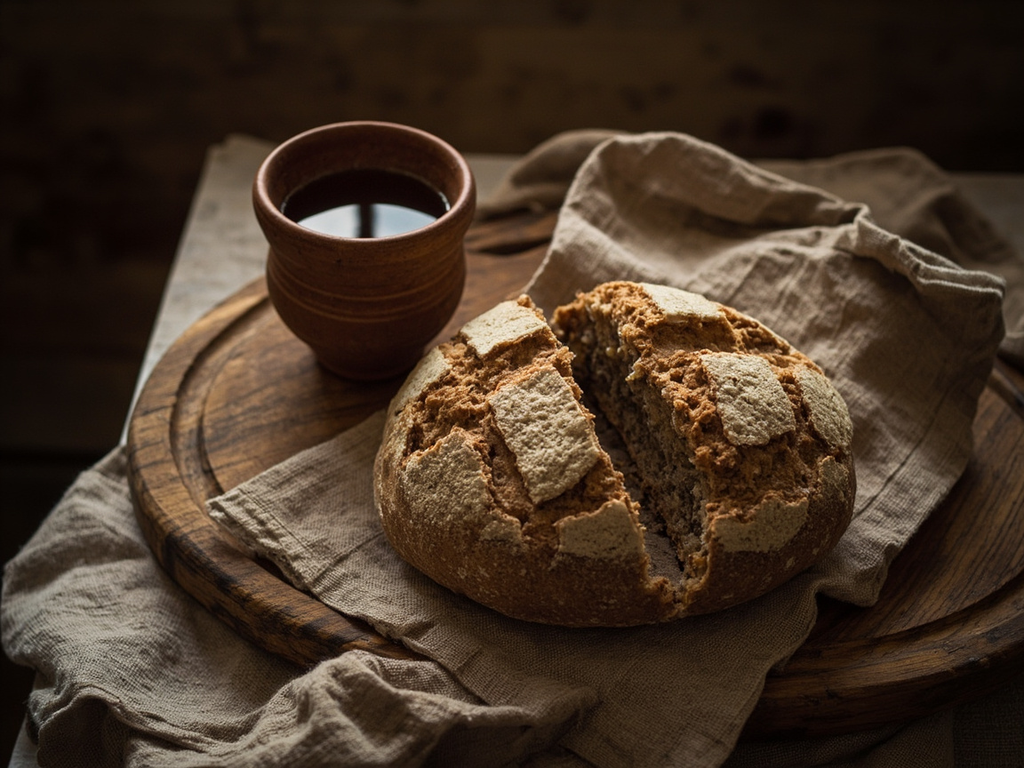
A rustic, flat, dense loaf made from barley and bran rather than fine wheat. Lightly leavened, slightly bitter, it is broken in silence and dipped in water or herb broth. This is the bread you eat to live, not for pleasure.
Approach, and do not turn away from this black bread. I kneaded it with my own hands at San Damiano, from barley and bran, as Lady Poverty, whom I have wed, requires. Brother Francis chided me, saying I fasted too much and that this bread alone was not enough to keep a body upright; so I ate a little, out of obedience rather than hunger. Break off a piece and dip it in water: you will taste the sweetness hidden beneath the bitterness, just as grace is hidden under destitution.
- •Barley flour — two parts (basic grain of the poor)
- •Wheat bran — one part (adds density and rusticity)
- •Sourdough starter from the day before — a piece (slow fermentation)
- •Spring water — as needed (binder)
- •Salt — a pinch (minimal seasoning)
Pane d'orzo — Barley Bread of San Damiano
A rustic, flat, dense loaf made from barley and bran rather than fine wheat. Lightly leavened, slightly bitter, it is broken in silence and dipped in water or herb broth. This is the bread you eat to live, not for pleasure.
Why this dish? Clare's diet was one of the strictest poverty: barley or bran bread, day after day. This dense, dark bread, refused at lordly tables, was the concrete basis of her life of fasting at the convent of San Damiano.
Approach, and do not turn away from this black bread. I kneaded it with my own hands at San Damiano, from barley and bran, as Lady Poverty, whom I have wed, requires. Brother Francis chided me, saying I fasted too much and that this bread alone was not enough to keep a body upright; so I ate a little, out of obedience rather than hunger. Break off a piece and dip it in water: you will taste the sweetness hidden beneath the bitterness, just as grace is hidden under destitution.
Ingredients (period version)
- Barley flour — two parts (basic grain of the poor)
- Wheat bran — one part (adds density and rusticity)
- Sourdough starter from the day before — a piece (slow fermentation)
- Spring water — as needed (binder)
- Salt — a pinch (minimal seasoning)
Ingredients
- Barley flour — 300 g (main grain)
- Whole wheat flour (T150) — 150 g (structure and binder (barley rises poorly alone))
- Wheat bran — 50 g (rusticity)
- Active sourdough — 100 g (or 5 g dry yeast) (fermentation)
- Warm water — 300 ml approx. (hydration)
- Salt — 8 g (flavor)
Method
- Mix the flours, bran, and salt in a large bowl.
- Dissolve the sourdough in the warm water, pour over the flours, and knead for 10 minutes: the dough remains dense and slightly sticky, which is normal with barley.
- Cover with a cloth and let rise for 3 to 4 hours in a warm place (barley rises slowly).
- Shape a flat, round loaf, place it on a floured baking sheet, and let rest for another hour.
- Score a cross on top and bake at 220°C for 35 to 40 minutes, until a dark brown crust forms.
- Cool on a wire rack: the bread is eaten broken by hand, never cut with a knife in the refectory.
How it was made : In the 13th century, bread ranked tables: white wheat for lords, barley, rye, and bran for the poor and penitents. Mendicant communities voluntarily adopted the humblest bread. Barley rises poorly (low gluten), hence these flat, compact loaves, often softened in liquid before eating.
The contemporary twist : Served warm with a drizzle of new Umbrian olive oil and a sage leaf, this "penitence" bread becomes a monastic bruschetta of disarming elegance.
Sources : Massimo Montanari, La faim et l'abondance. Histoire de l'alimentation en Europe · Légende de sainte Claire (Legenda Sanctae Clarae Virginis), procès de canonisation, 1255
Clare of Assisi · Charactorium