 flip
flipRisi e Bisi for the Feast of St. Mark
Risi e Bisi for the Feast of St. Mark
Why this dish? As chapel master of St. Mark's Basilica, Monteverdi lived in the rhythm of the great Venetian festivals. On April 25, the feast of St. Mark, patron of the city, the doge traditionally received this rice with spring peas — a dish the maestro undoubtedly saw appear at the solemn tables of the Serenissima.
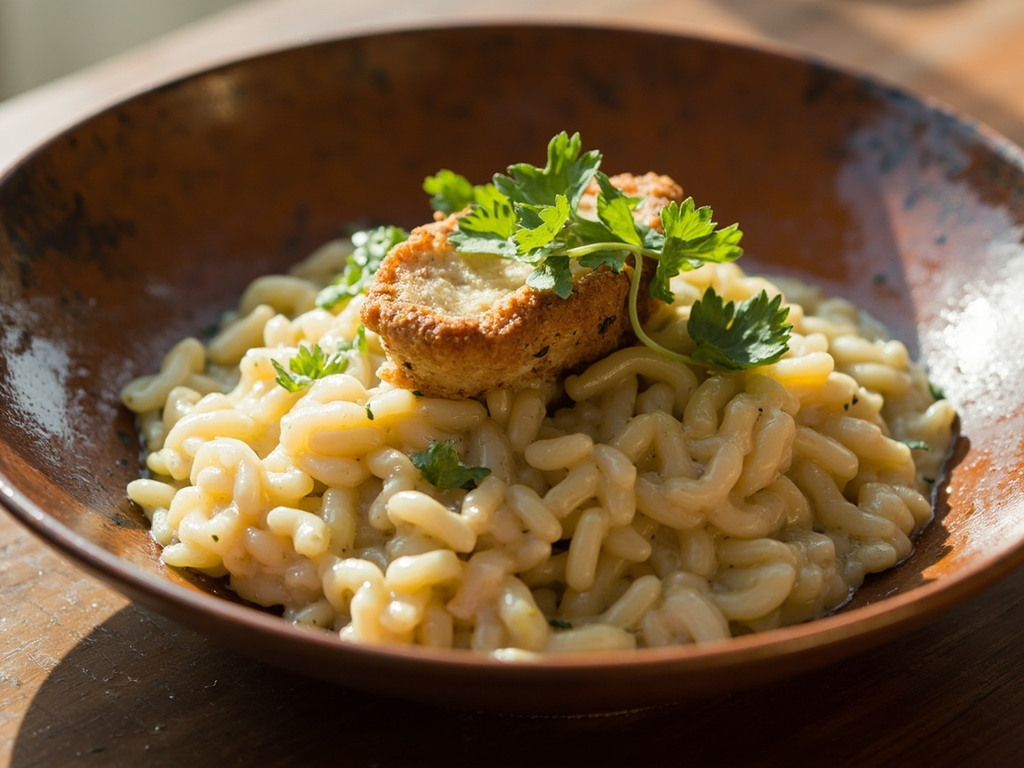
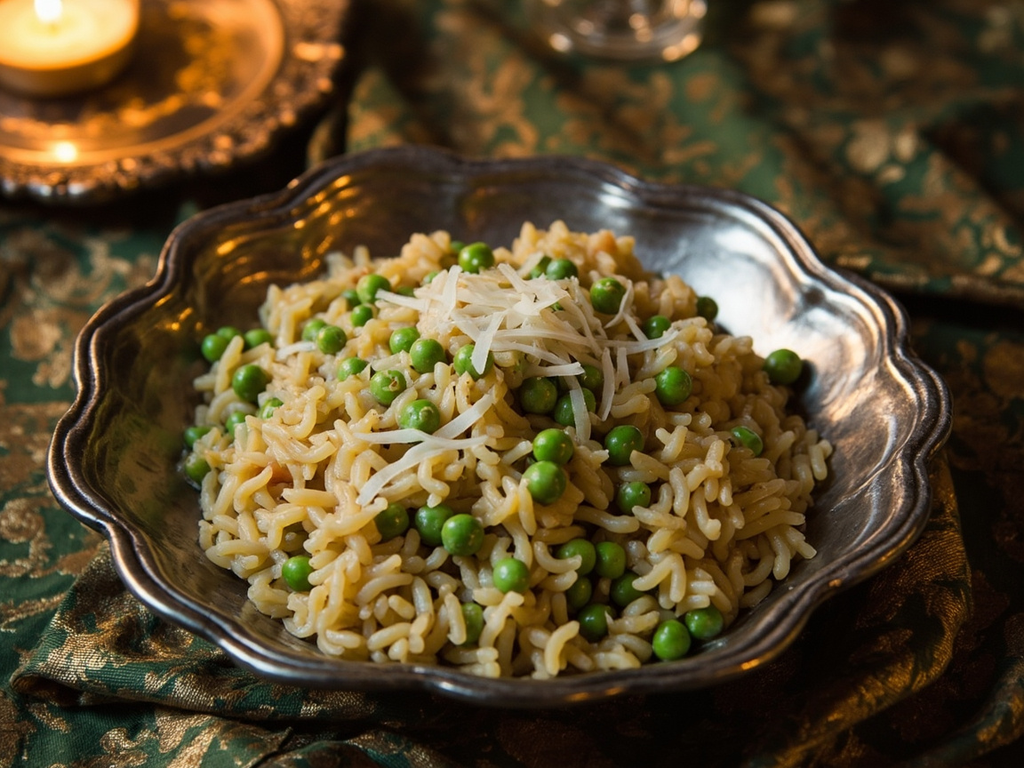
Halfway between soup and risotto, a creamy and flowing rice with young spring peas, bound with butter and cheese, lifted by a hint of bacon. The emblematic dish of the doge's banquets.
In Venice, when St. Mark's rang out, they brought the Doge this rice with new peas, and I, from my choir loft, directed the choirs while the kitchens bustled. Take the tenderest peas of spring, and make a broth from their pods, for nothing is wasted. The rice must remain flowing, *all'onda* as we say, undulating like a voice that spins. A little butter, a handful of cheese, and let it sing in the mouth.
- •Po Valley rice — a generous measure (base)
- •Fresh peas — in abundance (star ingredient)
- •Bacon — a piece (savory base)
- •Onion — one (aromatic)
- •Butter — a good knob (binder)
- •Grated cheese (Grana) — a handful (umami)
- •Parsley — a bunch (freshness)
Risi e Bisi for the Feast of St. Mark
Halfway between soup and risotto, a creamy and flowing rice with young spring peas, bound with butter and cheese, lifted by a hint of bacon. The emblematic dish of the doge's banquets.
Why this dish? As chapel master of St. Mark's Basilica, Monteverdi lived in the rhythm of the great Venetian festivals. On April 25, the feast of St. Mark, patron of the city, the doge traditionally received this rice with spring peas — a dish the maestro undoubtedly saw appear at the solemn tables of the Serenissima.
In Venice, when St. Mark's rang out, they brought the Doge this rice with new peas, and I, from my choir loft, directed the choirs while the kitchens bustled. Take the tenderest peas of spring, and make a broth from their pods, for nothing is wasted. The rice must remain flowing, *all'onda* as we say, undulating like a voice that spins. A little butter, a handful of cheese, and let it sing in the mouth.
Ingredients (period version)
- Po Valley rice — a generous measure (base)
- Fresh peas — in abundance (star ingredient)
- Bacon — a piece (savory base)
- Onion — one (aromatic)
- Butter — a good knob (binder)
- Grated cheese (Grana) — a handful (umami)
- Parsley — a bunch (freshness)
Ingredients
- Risotto rice (vialone nano or arborio) — 300 g (base)
- Fresh peas (or frozen) — 500 g in pods (star)
- Pancetta or bacon — 80 g (base)
- Onion — 1 small (aromatic)
- Butter — 50 g (binder)
- Grated Parmesan / Grana Padano — 60 g (umami)
- Flat-leaf parsley — 1 handful (freshness)
- Vegetable broth — 1.2 L (cooking)
Method
- Shell the peas and boil the pods for 20 min in the broth, then strain: this green broth will perfume the whole dish.
- Melt the chopped onion and pancetta in half the butter.
- Add the rice, toast it for 1 minute, then gradually add the hot broth, stirring constantly.
- Halfway through cooking, stir in the peas.
- After about 16-18 minutes, the rice should remain very soft and flowing (*all'onda*): remove from heat.
- Off the heat, bind with the remaining butter and grated cheese, add chopped parsley, and serve immediately.
How it was made : Risi e bisi is attested as an official dish offered to the doge on St. Mark's Day during the Venetian Renaissance. Rice, cultivated in the Po Valley since the 15th century, was a prestigious product; its flowing texture was carefully achieved as a sign of refinement.
The contemporary twist : A grating of lemon zest at serving to brighten the green of the peas, like a cadence that illuminates the end of a madrigal.
Sources : Cristoforo di Messisbugo, Banchetti, composizioni di vivande, 1549 · Bartolomeo Scappi, Opera dell'arte del cucinare, 1570
Claudio Monteverdi · Charactorium