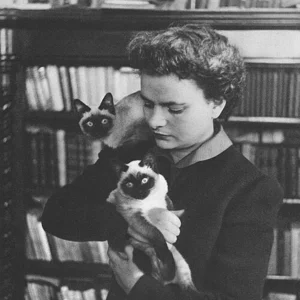
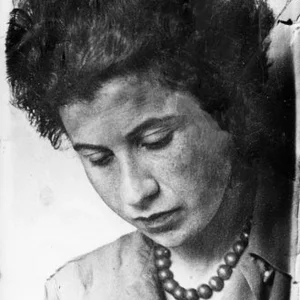
A Salvadoran writer and sculptor, Consuelo Suncín is best known as the wife of Antoine de Saint-Exupéry. A woman of letters and an artist, she inspired the character of the Rose in *The Little Prince*.
Consuelo Suncín
Consuelo Suncín de Sandoval
6 min read
Frequently asked questions
Key Facts
- Born in 1901 in Armenia, El Salvador
- Wife of Antoine de Saint-Exupéry from 1931
- Said to have inspired the character of the Rose in *The Little Prince* (1943)
- Published her memoirs *The Tale of the Rose* in 2000 (posthumously)
- Died in 1979 in Paris
Works & Achievements
Consuelo's autobiographical account of her life with Saint-Exupéry, published thirty years after her death. This unique testimony sheds light on the intimate side of the couple and the genesis of The Little Prince.
Consuelo practiced sculpture throughout her life, notably busts and expressive forms. Her work remains poorly documented but attests to a genuine artistic commitment.
The English translation of her memoirs, published simultaneously in Europe and the United States, which introduced English-speaking audiences to the personality of the woman who inspired the Rose.
Anecdotes
Consuelo Suncín meets Antoine de Saint-Exupéry in Buenos Aires in 1930, at the salon of writer Benjamin Crémieux. She is at that time a widow, her first husband having been the Guatemalan writer Enrique Gómez Carrillo. Saint-Exupéry, captivated by her volcanic personality and Salvadoran charm, proposes to her just a few weeks after they first meet.
Their wedding in Agay in April 1931 is as passionate as it is turbulent. Consuelo is known for her unpredictable temperament, her sudden outbursts, and her equally dramatic reconciliations. It is precisely this capricious, demanding, yet endearing nature that inspires Saint-Exupéry's character of the Rose in *The Little Prince*, with her vanity, her thorns, and her sincere love.
During the couple's New York exile in the Second World War (1941–1943), Consuelo moves in the city's artistic and intellectual circles. She takes up sculpture and hosts an informal salon, welcoming painters, writers, and European exiles. It is in this apartment on Beekman Place that Saint-Exupéry writes and illustrates *The Little Prince*.
After Saint-Exupéry's disappearance on July 31, 1944, Consuelo devotes much of her life to preserving his memory and bearing witness to their shared story. She writes her memoirs, published posthumously in 2000 under the title *The Tale of the Rose*, in which she honestly recounts the joys and heartbreaks of a love that defies easy summary.
Primary Sources
He had told me: 'You are my Rose. Without you I am nothing, I can write nothing, live nothing.' And yet he always left — toward the sky, toward the war, toward other women perhaps.
You are my own little planet. I have been orbiting around you since the first time I saw you in that drawing room in Buenos Aires. I do not know how to live without knowing you are somewhere on this earth.
I dedicate this book to Léon Werth when he was a little boy. But I have an excuse: this grown-up is the best friend I have in the world.
The woman he loved carried within her a kind of luminous disorder, a way of entering a room like a tropical storm.
Key Places
Consuelo Suncín's hometown, in the west of El Salvador. This Central American land deeply shaped her sunny, volcanic personality.
The site of the fateful meeting between Consuelo and Saint-Exupéry in 1930, at the literary salon of Benjamin Crémieux. The city was at that time a major intellectual and artistic crossroads.
The city where the couple settled after their marriage, and where Consuelo became part of the interwar artistic circles, mixing with painters, writers, and sculptors.
The couple's place of exile during World War II (1941–1944). It was here that Saint-Exupéry wrote *The Little Prince* and that Consuelo continued her artistic pursuits.
The site of Consuelo and Saint-Exupéry's wedding in April 1931. This small village on the French Riviera marks the official beginning of their turbulent union.
Typical Objects

Consuelo practiced sculpture throughout her life; her chisels, modeling tools, and clay spatulas were her creative companions, especially during her New York exile.

Like many writers of her era, Consuelo recorded her thoughts, impressions, and fragments of her relationship with Saint-Exupéry in notebooks she carefully preserved.

The rose is the intimate symbol of the couple; Saint-Exupéry immortalizes it in The Little Prince as a metaphor for Consuelo, with her thorns and fragile beauty.

Airmail was the vital link between Consuelo and Saint-Exupéry during their frequent separations; their letters crossed the Atlantic by plane, a symbol of modernity at the time.

Consuelo moved in Parisian and New York artistic circles and painted; a painter's easel was a common fixture in her successive studios.

Buenos Aires, where they met, was the tango capital in the 1930s; Latin American music accompanied the lively evenings that Consuelo organized.
School Curriculum
Vocabulary & Tags
Key Vocabulary
Tags
Daily Life
Morning
Consuelo rises late, true to the tradition of artists and intellectuals of her era. She begins her morning with a strong coffee, sometimes accompanied by fruit, and goes through the correspondence that arrived overnight — especially letters from Saint-Exupéry when he is traveling or on a mission.
Afternoon
Her afternoons are devoted to creation: sculpting in her studio, a few hours of writing in her notebooks, or receiving artist and writer friends. In Paris as in New York, she hosts informal circles where ideas, projects, and news from the front are exchanged during the war.
Evening
Consuelo's evenings are often lively and festive; she entertains readily, loves music — tangos, jazz, Latin American melodies — and late conversations over a drink. When Saint-Exupéry is present, their dinners swing between tenderness and passionate quarrels, never ordinary.
Food
Her cooking blends the Salvadoran influences of her childhood (beans, corn, tropical fruits) with the French gastronomy she embraces after settling in Paris. She enjoys convivial, generous meals, accompanied by wine for Parisian evenings.
Clothing
Consuelo dresses with an artistic, slightly whimsical elegance typical of women in Parisian intellectual circles in the 1930s: silk or crepe dresses, colorful shawls echoing her Latin roots, handcrafted jewelry. She is never strictly fashionable, but always remarkable.
Housing
In Paris, the couple occupies various apartments and private townhouses in artistic neighborhoods (Montparnasse, Saint-Germain). In New York, they live in an apartment on Beekman Place, elegant but cluttered with manuscripts, blocks of modeling clay, and drawings. Consuelo's living space is always a blend of creative disorder and Latin charm.
Historical Timeline
Period Vocabulary
Visual Style
Un style Art déco teinté de surréalisme, mêlant la chaleur tropicale de l'Amérique centrale aux teintes argentées de Paris et de New York des années 1930-1940.
Sound Ambience
Une atmosphère mêlant les salons littéraires parisiens de l'entre-deux-guerres, l'exil new-yorkais des années 1940 et les souvenirs de l'Amérique latine tropicale.
Liens externes & ressources
Références
Œuvres
Mémoires de la Rose
rédigé dans les années 1940-1970, publié posthume en 2000
Sculptures (œuvres non titrées)
années 1930-1970
The Tale of the Rose (version anglaise des Mémoires)
2000