 flip
flipRoasted Kid Goat Legs with Bay and Honey, Palace Feast
Roasted Kid Goat Legs with Bay and Honey, Palace Feast
Why this dish? When Creon dons the diadem of Thebes after the death of Oedipus' sons, power is celebrated at the royal table. Meat, rare and precious, comes from animals sacrificed to the gods: the divine portion is burned and the rest is shared among the guests. For a king who places the laws of the city above all, this feast seals the restored order.
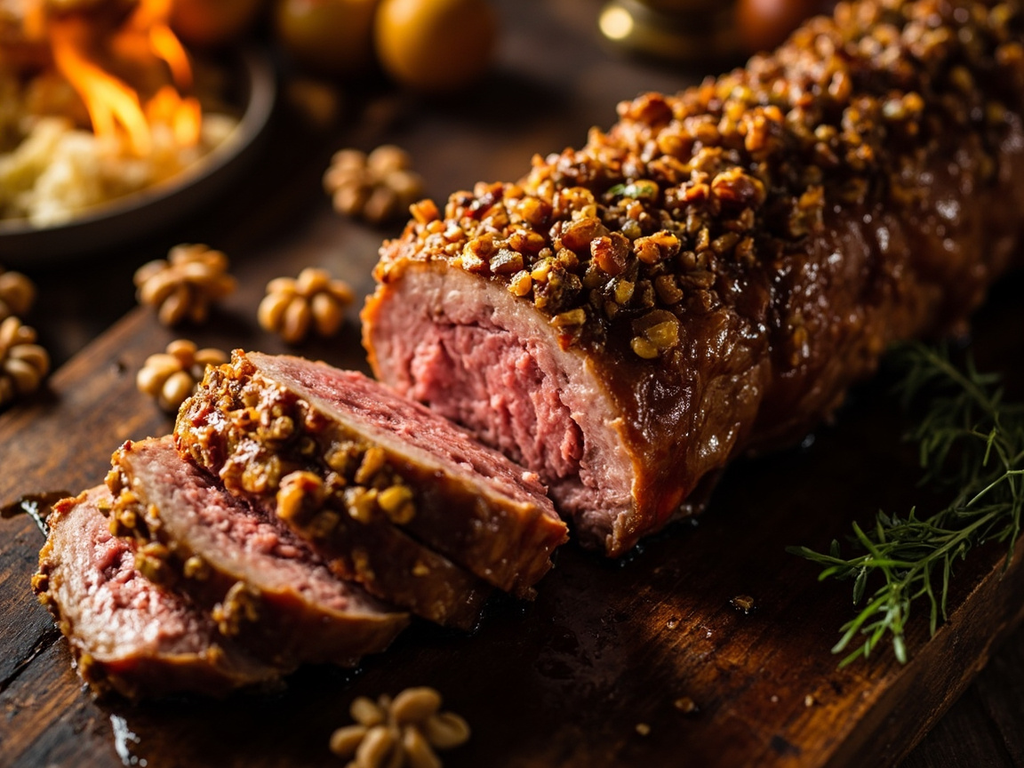
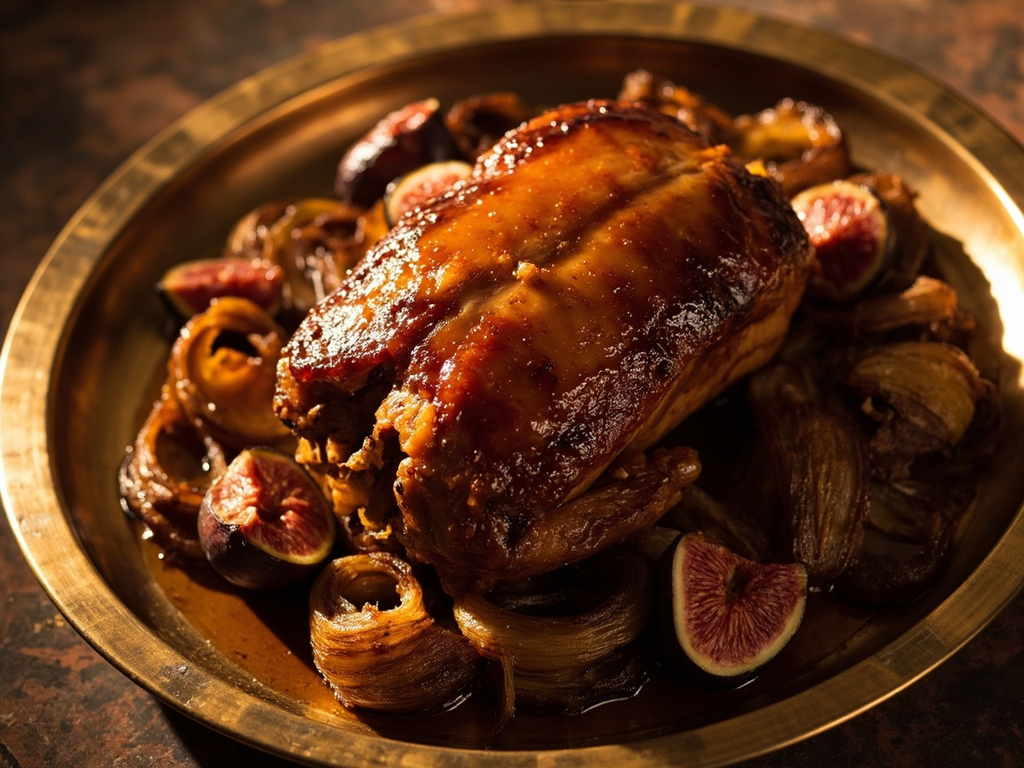
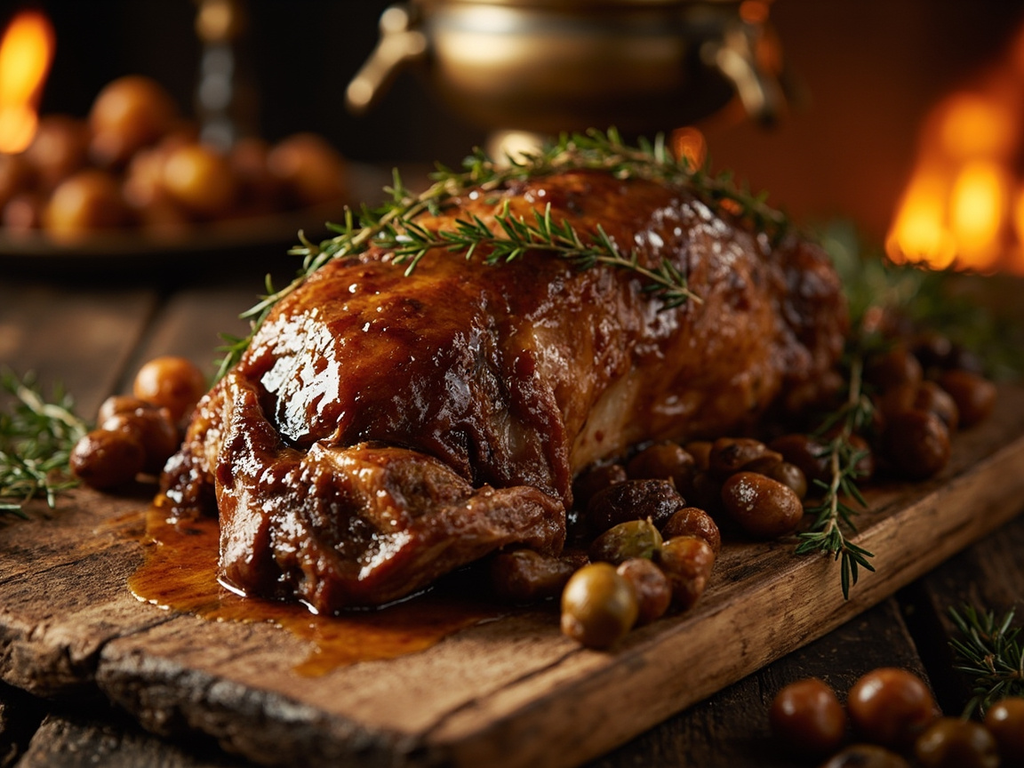
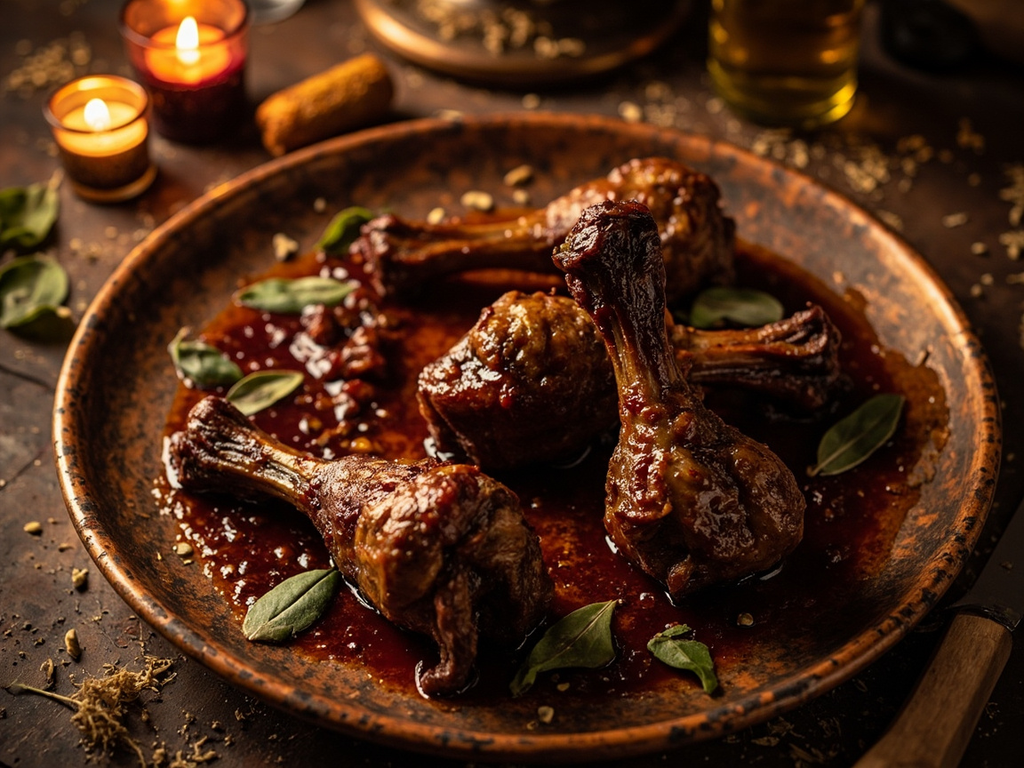
Slow-roasted kid goat, rubbed with oil, bay, and coriander, glazed with a little honey and reduced wine. The meat of sacrifices, transformed into a courtly feast, steaming and fragrant.
At a king's table, meat is not eaten every day: it comes from the altars, where the smoke rises to the gods. We keep for men the thighs of the young goat, rubbed with oil and bay leaves, gilded over the fire and glazed with a little honey. Stretch out your cup, guest, and let the wine mixed with water circulate in order — for even the joy of a feast requires measure, and it is the king's duty to uphold it.
- •Kid goat legs (or young goat) — for the company (meat)
- •Olive oil — generously (roasting)
- •Bay leaves — a handful (herb)
- •Coriander seeds — as desired (spice)
- •Honey — a few spoonfuls (glaze)
- •Red wine, reduced — a splash (sauce)
- •Sea salt — to taste (seasoning)
Roasted Kid Goat Legs with Bay and Honey, Palace Feast
Slow-roasted kid goat, rubbed with oil, bay, and coriander, glazed with a little honey and reduced wine. The meat of sacrifices, transformed into a courtly feast, steaming and fragrant.
Why this dish? When Creon dons the diadem of Thebes after the death of Oedipus' sons, power is celebrated at the royal table. Meat, rare and precious, comes from animals sacrificed to the gods: the divine portion is burned and the rest is shared among the guests. For a king who places the laws of the city above all, this feast seals the restored order.
At a king's table, meat is not eaten every day: it comes from the altars, where the smoke rises to the gods. We keep for men the thighs of the young goat, rubbed with oil and bay leaves, gilded over the fire and glazed with a little honey. Stretch out your cup, guest, and let the wine mixed with water circulate in order — for even the joy of a feast requires measure, and it is the king's duty to uphold it.
Ingredients (period version)
- Kid goat legs (or young goat) — for the company (meat)
- Olive oil — generously (roasting)
- Bay leaves — a handful (herb)
- Coriander seeds — as desired (spice)
- Honey — a few spoonfuls (glaze)
- Red wine, reduced — a splash (sauce)
- Sea salt — to taste (seasoning)
Ingredients
- Kid goat legs or shoulder (or lamb as substitute) — 1.2 kg (meat)
- Olive oil — 4 tbsp (roasting)
- Bay leaves — 4 to 5 (herb)
- Crushed coriander seeds — 1 tbsp (spice)
- Honey — 2 tbsp (glaze)
- Red wine — 150 ml (sauce)
- Salt — to taste (seasoning)
Method
- Rub the meat with olive oil, salt, and crushed coriander; tuck the bay leaves against the flesh.
- Let rest for one hour at room temperature to allow the flavors to penetrate.
- Roast in the oven at 180°C (or on a spit) for about 1 hour 15 minutes, basting regularly with the juices.
- Meanwhile, reduce the wine by half with the honey until you get a brown syrup.
- In the last 15 minutes, brush the meat with this honey-wine glaze to lacquer it.
- Let rest for 10 minutes, then serve in generous portions, drizzled with the juices.
How it was made : In ancient Greece, meat consumption was almost always linked to sacrifice: the bones wrapped in fat were offered to the gods, their smoke rising to heaven, while the men shared the flesh. Honey and reduced wine were commonly used to season and glaze roasts at banquets.
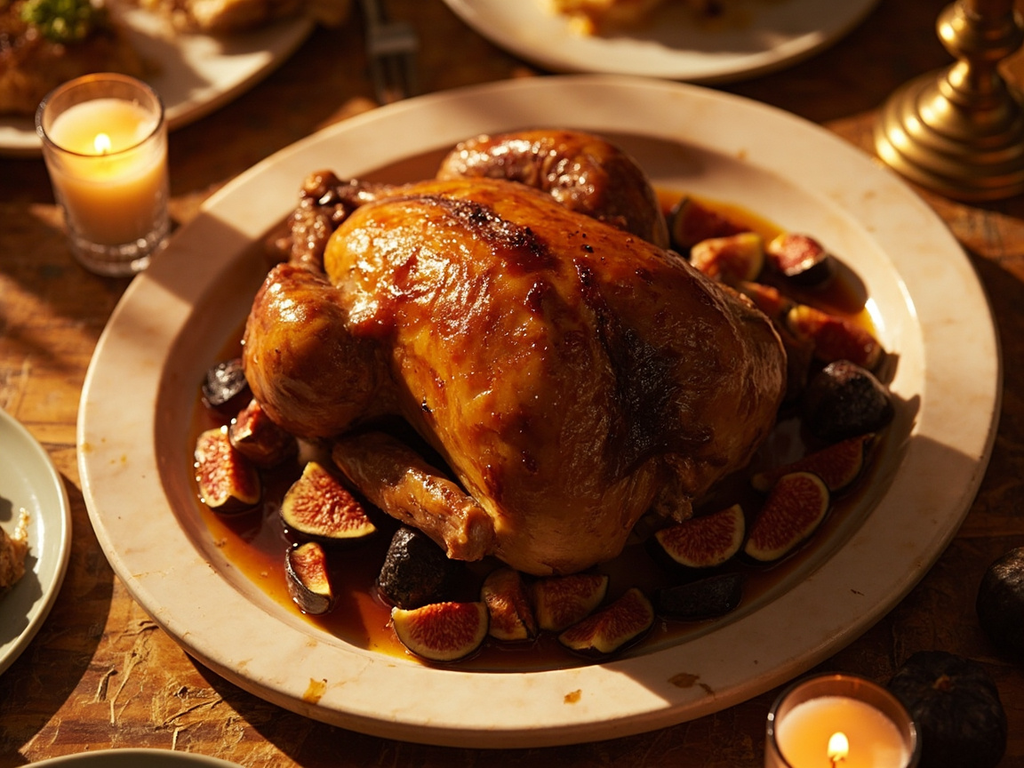
The contemporary twist : Arrange on a large board with roasted fig quarters and fresh bay sprigs: a Homeric 'sharing platter' at the center of the table.
Creon · Charactorium