 flip
flipTagella — barley flatbread baked under ashes
Tagella — barley flatbread baked under ashes
Why this dish? This is the daily bread of the Djerawa, baked in camp and in the villages of the Aurès. Dihya, who led a semi-nomadic people between mountains and plains, shared this rustic flatbread with her warriors around the fire, where there is neither oven nor time to waste.
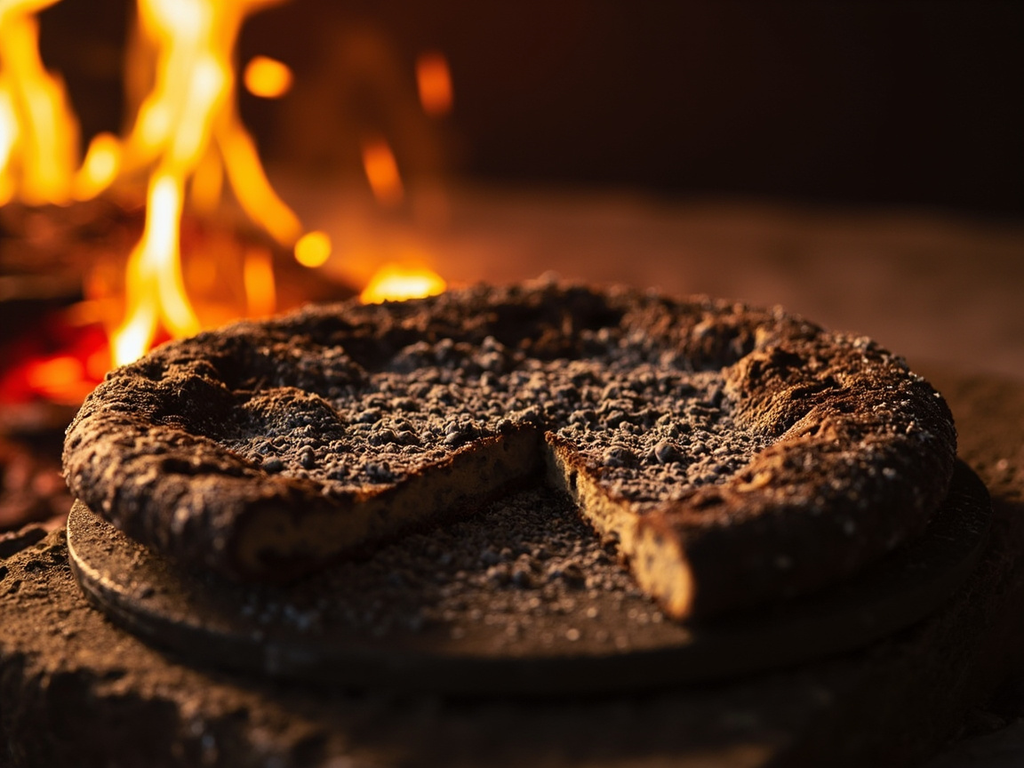
A thick flatbread made from barley flour, unleavened or barely leavened, buried under hot embers and ash until the crust hardens and the crumb remains dense and nourishing. The simplest and most ancient bread of the Berber highlands.
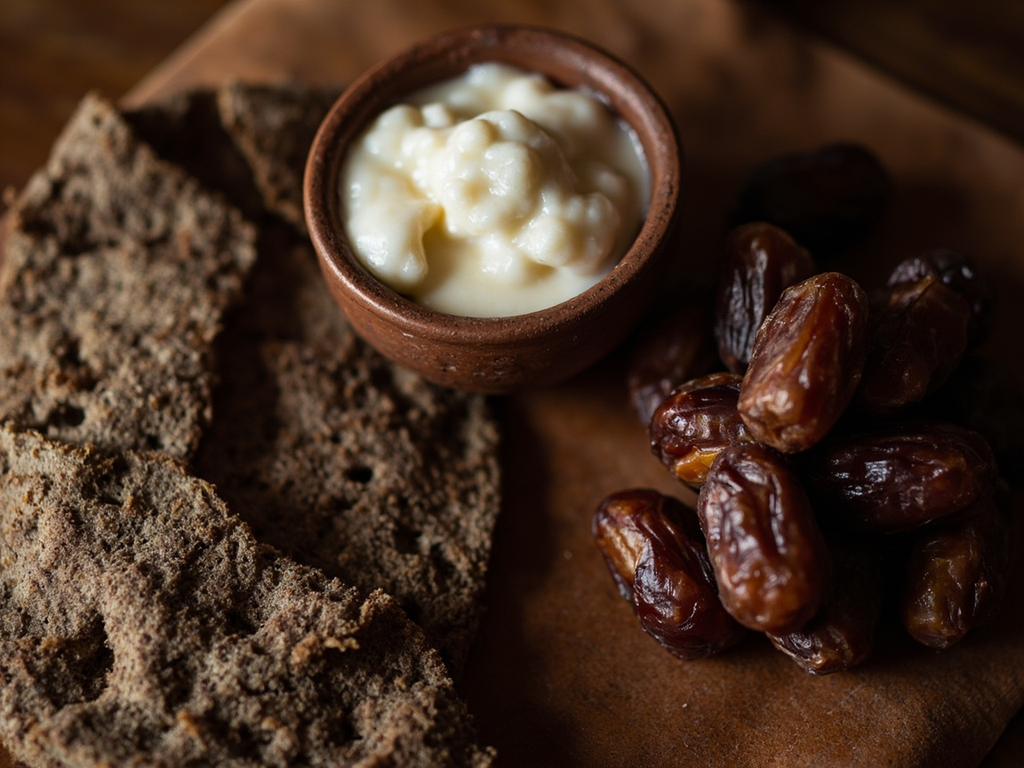
Approach, and do not fear the ash — it is what makes true bread. We, people of the Aurès, carry no oven on our horses: the burning earth and the fire suffice. I knead the barley with my hands, lay it under the embers, and when I pull it out I strike it to shake off the ash as one chases the enemy from our mountains. Break it warm, dip it in milk: this is what keeps a warrior standing from sunrise to sunset.
- •Barley flour ground on a millstone — two full handfuls per person (base of the flatbread)
- •Spring water — as needed (bind the dough)
- •Rock salt — a pinch (seasoning)
Tagella — barley flatbread baked under ashes
A thick flatbread made from barley flour, unleavened or barely leavened, buried under hot embers and ash until the crust hardens and the crumb remains dense and nourishing. The simplest and most ancient bread of the Berber highlands.
Why this dish? This is the daily bread of the Djerawa, baked in camp and in the villages of the Aurès. Dihya, who led a semi-nomadic people between mountains and plains, shared this rustic flatbread with her warriors around the fire, where there is neither oven nor time to waste.
Approach, and do not fear the ash — it is what makes true bread. We, people of the Aurès, carry no oven on our horses: the burning earth and the fire suffice. I knead the barley with my hands, lay it under the embers, and when I pull it out I strike it to shake off the ash as one chases the enemy from our mountains. Break it warm, dip it in milk: this is what keeps a warrior standing from sunrise to sunset.
Ingredients (period version)
- Barley flour ground on a millstone — two full handfuls per person (base of the flatbread)
- Spring water — as needed (bind the dough)
- Rock salt — a pinch (seasoning)
Ingredients
- Barley flour — 300 g (base)
- Wheat flour (for structure) — 100 g (gives binding to barley dough)
- Warm water — about 220 ml (hydration)
- Salt — 1 teaspoon (seasoning)
Method
- Mix the flours and salt, add water gradually until a firm but supple dough forms; knead 8 to 10 minutes.
- Let rest 20 minutes under a cloth, then shape into a thick disk 2 to 3 cm thick.
- Authentic method: bury the flatbread under a good layer of hot ashes and embers in the hollow of an extinguished wood fire; cook 25 to 30 minutes, turning halfway.
- Oven method: bake on a very hot stone or baking sheet at 230 °C for 20 to 25 minutes, until the crust sounds hollow.
- Remove, tap the flatbread to knock off the ash, let cool slightly and break by hand.
How it was made : Before the bread oven, Berbers baked their bread directly in the hearth: the barley flatbread (tagella or aghroum) was slipped under the glowing ashes, a technique still alive among the Tuareg and in the Aurès. Barley, more drought-tolerant than wheat, dominated the highlands.
The contemporary twist : Serve the tagella broken into pieces with a drizzle of olive oil and mountain honey, as a sharing board around a fire.
Dihya · Charactorium