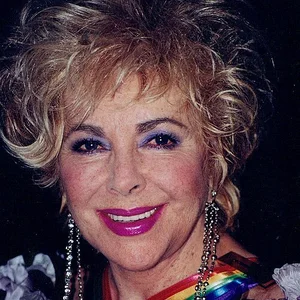

Elizabeth Taylor (1932–2011) was a British-American actress widely regarded as one of Hollywood's greatest stars. A child prodigy who rose to fame early, she excelled in major roles of classic cinema and became a global symbol of glamour and the Hollywood star system. She was also a pioneering activist in the fight against AIDS from the 1980s onward.
Elizabeth Taylor(1932 — 2011)
Elizabeth Taylor
États-Unis, Royaume-Uni
8 min read
Frequently asked questions
Famous Quotes
« I've always admitted that I'm ruled by my passions.»
« You find out who your real friends are when you're involved in a scandal.»
Key Facts
- 1932: born in London to American parents
- 1944: breakthrough role in Lassie Come Home, captivating young audiences worldwide
- 1960–1963: filming of Cleopatra, the most expensive Hollywood production of its time
- 1966: won her second Academy Award for Best Actress for Who's Afraid of Virginia Woolf?, following her first for Butterfield 8 (1960)
- 1985: co-founded the American Foundation for AIDS Research (amfAR), becoming a pioneering voice in the fight against AIDS
- 2011: died in Los Angeles
Works & Achievements
Elizabeth Taylor's first major role at age 11, revealing her natural screen presence. This family film marked the beginning of an exceptional career under contract with MGM.
An adaptation of Theodore Dreiser's novel directed by George Stevens. Taylor portrays Angela Vickers with a grace and intensity that confirmed her talent as a serious dramatic actress.
An adaptation of Tennessee Williams' play in which Taylor portrays Maggie with explosive sensuality. The film earned her her first Oscar nomination and cemented her status as an international star.
A role as a sophisticated call girl that earned her her first Academy Award for Best Actress. Taylor herself considered the film mediocre, making her win all the more remarkable.
Joseph L. Mankiewicz's epic production in which Taylor portrays the Queen of Egypt with unforgettable magnificence. The film remains one of the landmark moments in Hollywood cinema history.
An adaptation of Edward Albee's play, directed by Mike Nichols. Taylor portrays Martha with raw brutality and extraordinary depth, earning her a second Academy Award in a role radically at odds with her glamorous image.
Co-founded the American Foundation for AIDS Research with Dr. Mathilde Krim. This landmark humanitarian initiative made Taylor a pioneer in the fight against HIV/AIDS, long before the cause was recognized by mainstream institutions.
Anecdotes
Elizabeth Taylor was one of the first actresses to negotiate a one-million-dollar fee for a single film. In 1963, for the filming of Cleopatra in Rome, she secured this record-breaking sum, permanently shifting the balance of power between Hollywood studios and their stars.
On the set of Cleopatra, Taylor and Richard Burton fell desperately in love, even though both were married to other people. Their affair sparked a worldwide scandal and official condemnations, reaching as far as the Vatican, which described their behavior as a challenge to public morality.
After the death of her friend Rock Hudson from AIDS in 1985, Elizabeth Taylor co-founded amfAR (the American Foundation for AIDS Research) that same year alongside Dr. Mathilde Krim. She was one of the first celebrities to break the silence on a disease that was still deeply stigmatized at the time.
Taylor was married eight times to seven different men — she wed Richard Burton twice, in 1964 and again in 1975. This turbulent romantic life fueled the world's press for decades and helped define the myth of the Hollywood star.
Primary Sources
I've always admitted that I'm ruled by my passions. I think it's the secret of my staying power.
I call upon you — our community — to do all we can to fight this disease, to support those who suffer from it, and to find a cure.
Ignorance is the enemy. Silence is complicity. We must speak out about AIDS.
Some of my best leading men have been dogs and horses. The rest were just human beings.
Key Places
The heart of the studio system where Taylor was under contract with MGM from childhood. Hollywood was the stage for her glory, her scandals, and her long career spanning more than six decades.
It was in these legendary studios that Cleopatra (1962–1963) was filmed, and where the affair between Taylor and Richard Burton began, under the eyes of a captivated world press.
Elizabeth Taylor's birthplace, where she was born on February 27, 1932, into an upper-middle-class English family. Her British roots gave her an artistic upbringing and a European sensibility.
The favorite retreat of Elizabeth Taylor and Richard Burton at the height of their shared fame in the 1960s and 1970s. Their Swiss chalet came to symbolize their lavish life away from the spotlight.
The residential neighborhood of Los Angeles where Taylor spent the final decades of her life. It was here that she passed away on March 23, 2011, surrounded by her loved ones.
Typical Objects
Richard Burton gave Elizabeth Taylor this 33.19-carat diamond in 1968, purchased at auction for a record price. The jewel became one of the most iconic symbols of Hollywood glamour and their all-consuming passion for each other.
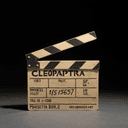
The filming of Cleopatra (1963) involved monumental sets at Cinecittà in Rome and remains one of the longest and most expensive productions in cinema history. The clapperboard stands for this extraordinary undertaking that nearly bankrupted 20th Century Fox.
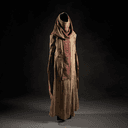
The costumes designed by Irene Sharaff for Taylor in Cleopatra have become works of textile art. Some incorporated real gold thread and weighed several kilos, embodying the spectacular opulence of the Hollywood epic.
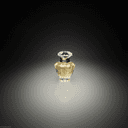
Launched in 1991, White Diamonds became the best-selling fragrance in U.S. history. It represents Taylor's successful reinvention as a businesswoman and the personal commercial empire she built beyond her acting career.

In the 1990s, Elizabeth Taylor helped popularize the red ribbon — the international symbol of the fight against HIV/AIDS — by wearing it at high-profile events such as the Academy Awards, contributing to its worldwide recognition.
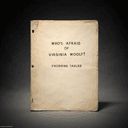
In this 1966 film, Taylor threw herself into the role of Martha with complete physical and psychological abandon, earning her second Academy Award. Her commitment to this demanding and subversive role marked a major artistic turning point.
School Curriculum
Vocabulary & Tags
Key Vocabulary
Tags
Daily Life
Morning
During film shoots, Taylor woke early despite being notorious for the lateness that infuriated producers. She spent long hours in the makeup chair, surrounded by her personal team, being transformed into character — sessions could run two to three hours for roles like Cleopatra.
Afternoon
Afternoons on set alternated between long stretches of waiting and intense scenes. Taylor worked with a focus and professionalism that stood in sharp contrast to her wild public image. Off set, her afternoons often included appointments with costume designers, jewelers, and fashion photographers.
Evening
Elizabeth Taylor's evenings were the stuff of legend — lavish dinners at her Roman villa or Swiss chalet, glamorous parties attended by the biggest celebrities of the era. With Richard Burton, their nights blended literary conversation (Burton was a passionate intellectual) with celebrations that lasted until dawn.
Food
Taylor had generous, unapologetic tastes in food: she loved rich cuisine, the British comfort dishes of her childhood, and the world cuisines she discovered on international shoots. She struggled her entire life with fluctuating weight, a subject the press scrutinized with a cruelty typical of the era.
Clothing
Taylor embodied Hollywood glamour in her on-screen costumes by Irene Sharaff and Edith Head, but in her personal life she wore haute couture from Dior, Chanel, and Valentino. Her extravagant jewelry — notably the 33-carat diamond given to her by Burton — was an essential part of her public identity.
Housing
Taylor lived in residences of international star-level opulence: villas in Rome during the filming of Cleopatra, a chalet in Gstaad, Switzerland with Burton, a manor in Puerto Vallarta, Mexico, and eventually her home in Bel Air, Los Angeles. Her residences were filled with works of art, jewels, and gifts from her many marriages.
Historical Timeline
Period Vocabulary
Visual Style
Le style visuel d'Elizabeth Taylor évoque le Technicolor somptueux et le glamour sculpté des grandes productions MGM et des péplums hollywoodiens des années 1950-1960, dominé par des rouges profonds, des ors et le noir dramatique de ses yeux légendaires.
Sound Ambience
L'univers sonore d'Elizabeth Taylor mêle le bourdonnement des plateaux de cinéma hollywoodiens, le crépitement des flashs de la presse et l'élégance feutrée des soirées de la haute société internationale des années 1950-1970.
Liens externes & ressources
Références
Œuvres
Une place au soleil (A Place in the Sun)
1951
Qui a peur de Virginia Woolf ? (Who's Afraid of Virginia Woolf?)
1966
Fondation de l'amfAR
1985