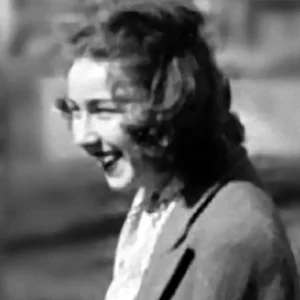

American novelist and short story writer (1925–1964), a major figure of Southern Gothic literature. Her work blends the grotesque, violence, and divine grace in the American Deep South.
Flannery O'Connor(1925 — 1964)
Flannery O'Connor
États-Unis
8 min read
Frequently asked questions
Famous Quotes
« Grace must strike where it can.»
« Every good story must have something shocking.»
Key Facts
- Born on March 25, 1925, in Savannah, Georgia
- Published her first novel Wise Blood in 1952
- Diagnosed with lupus erythematosus in 1950, a disease that shaped her entire life
- Published A Good Man Is Hard to Find (1955), a landmark short story collection
- Died on August 3, 1964, at age 39, leaving a brief but foundational body of work
Works & Achievements
O'Connor's debut novel, centered on Hazel Motes, a young Southern veteran who founds a 'Church Without Christ.' A landmark work of Southern Gothic literature, it explores the obsession with salvation and the blasphemous rejection of divine grace.
A collection of ten stories that established O'Connor as a major voice in American literature. The title story, in which a family is massacred by an escaped convict named The Misfit, is considered one of the undisputed masterpieces of the American short story.
Her second and final novel published during her lifetime, following a young boy raised by a prophetic great-uncle who imposes a divine mission upon him. The title, drawn from the Gospel of Matthew (11:12), intensifies the themes of vocation and spiritual violence.
A collection of nine stories completed shortly before her death, several dealing with desegregation in the South. The title, borrowed from Jesuit philosopher Teilhard de Chardin, provides a theological key to her work as a whole.
A collection of lectures and essays on fiction writing and Catholic faith, edited by Robert and Sally Fitzgerald. An indispensable reference for understanding the poetics and theology at work in her fiction.
A collection of her thirty-one stories, awarded the National Book Award in 1972. It is through this edition that her work definitively entered the canon of twentieth-century American literature.
Anecdotes
Flannery O'Connor kept around thirty peacocks at Andalusia farm, near Milledgeville, Georgia. These magnificent birds were no mere whim: she saw in them an image of mystery and divine grace, and their feathers with countless 'eyes' inspired several of her short stories. She even published an essay titled 'The King of the Birds' to celebrate their regal and absurd presence.
Diagnosed with systemic lupus erythematosus in 1950 — the same disease that had taken her father — Flannery O'Connor settled permanently at Andalusia with her mother. Despite the chronic pain that forced her to walk on aluminum crutches, she held herself to two or three hours of writing every morning without exception, refusing to let illness dictate her creative life.
A devout Catholic in the predominantly Baptist Deep South, O'Connor lived in constant tension between her faith and her surroundings. This singularity pervades her entire body of work: her characters, often violent or grotesque, are unwitting instruments of divine grace. She liked to explain that ‘for the hard of hearing you shout, and for the almost-blind you draw large and startling figures.’
Between 1948 and 1964, Flannery O'Connor maintained a prodigious correspondence — more than a thousand letters — with writers, critics, and unknown readers. These letters, at once spiritual, humorous, and analytical, reveal a woman of formidable lucidity about her era and her art. Collected after her death under the title ‘The Habit of Being’ (1979), they are now considered a literary work in their own right.
At the Iowa Writers' Workshop, the University of Iowa's fledgling creative writing program, O'Connor read her stories aloud with such a pronounced Southern accent that her classmates could barely understand a word. She had to distribute written copies of her texts for discussion to take place at all. This comical gap between her voice and her already exceptional talent immediately made her a legend in the program.
Primary Sources
The novelist with Christian concerns will find in modern life distortions which are repugnant to him, and his problem will be to make these appear as distortions to an audience which is used to seeing them as natural. [...] To the hard of hearing you shout, and for the almost-blind you draw large and startling figures.
The fiction writer presents mystery through manners, grace through nature, but when he finishes there always has to be left over that sense of Mystery which cannot be accounted for by any human formula.
I am a Catholic peculiarly possessed of the modern consciousness, that thing Jung describes as unhistorical, solitary, and guilty. To possess this within the Church is to bear a burden, the necessary burden for the conscious Catholic in America.
All my stories are about the action of grace on a character who is not very willing to support it, but most people think of these stories as hard, hopeless, and brutal.
Key Places
Flannery O'Connor's birthplace, shaped by its colonial architecture and Irish-American Catholic culture. She spent her childhood here until her father's death in 1941.
The family property where O'Connor settled permanently in 1950 following her diagnosis. She wrote nearly all of her published work here, surrounded by her peacocks and her mother Regina, and died here in 1964.
The creative writing program where O'Connor honed her style between 1945 and 1947. It was there that she refined her early short stories and built her American literary network.
An artists' residency where O'Connor stayed in 1948–1949. She met Robert Lowell and other major writers there, and worked intensively on her first novel *Wise Blood*.
The home of translators Robert and Sally Fitzgerald, with whom O'Connor lived in 1949–1950 before lupus forced her to return to Georgia. The Fitzgeralds became her close friends and posthumous literary executors.
Typical Objects

O'Connor typed her manuscripts every morning from her room at Andalusia. Despite the fatigue of lupus, the typewriter structured her day and symbolized her absolute creative discipline.

From 1950 onward, lupus attacked her bones and O'Connor had to use crutches to get around. Far from hiding them, she incorporated them into her public presence with irony and dignity.

The peacocks of Andalusia were ever-present in her daily life and correspondence. Their feathers with countless 'eyes' symbolized for her the mysterious beauty of the divine manifested in the ordinary world.

A fervent believer, O'Connor read the Gospels, Thomas Aquinas, and Teilhard de Chardin every evening. Her Catholic faith structured not only her life but the moral and symbolic architecture of her entire body of work.

O'Connor maintained an intense correspondence with dozens of people across the United States. These letters provided her with a space for literary and spiritual reflection as important as her published fiction.

She read Dostoevsky, Conrad, Faulkner, and the Church Fathers with a pencil, annotating the margins. These readings directly nourished her writing practice and her reflection on grace in literature.
School Curriculum
Vocabulary & Tags
Key Vocabulary
Tags
Daily Life
Morning
Each morning, from around nine until noon, Flannery O'Connor would sit down at her typewriter in her room at Andalusia. Two to three hours of daily writing made up her unwavering discipline, maintained even on days of great fatigue. She believed that inspiration only came to those who showed up for work regularly, illness or not.
Afternoon
The afternoon was devoted to rest, medical care — cortisone injections, doctor visits in Milledgeville — and correspondence. She methodically replied to her many readers and writer friends, with a wit and precision that make these letters a literary monument in their own right.
Evening
Evenings were spent in the company of her mother Regina, listening to the radio, reading theology and novels, or receiving the rare visitors who made the pilgrimage out to the farm. She went to bed early, chronic fatigue imposing its rules on the entire household.
Food
O'Connor ate the traditional cuisine of the Deep South: poultry, garden vegetables, butter biscuits, cornbread. Her mother Regina managed the household with the help of Black farm workers — a social reality of the South that O'Connor's stories reflect with sometimes unsettling acuity.
Clothing
O'Connor dressed simply, in practical dresses or skirts suited to her limited mobility. She sought not elegance but functional comfort, wearing her aluminum crutches as an unremarkable fact of daily life, without vanity or ostentation.
Housing
The Andalusia farm, about ten miles from Milledgeville, was a modest rural property with a large white house, farm outbuildings, and enclosures for the peacocks, turkeys, ducks, and guinea fowl that O'Connor raised with passion. She occupied a room arranged on the ground floor to avoid stairs that had become inaccessible.
Historical Timeline
Period Vocabulary
Liens externes & ressources
Références
Œuvres
Wise Blood (La Sagesse dans le sang)
1952
A Good Man Is Hard to Find
1955
The Violent Bear It Away (La Sagesse dans le sang)
1960
Everything That Rises Must Converge
1965 (posthume)
Mystery and Manners: Occasional Prose
1969 (posthume)
The Complete Stories
1971 (posthume)