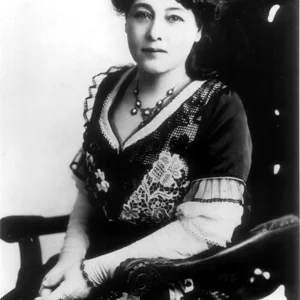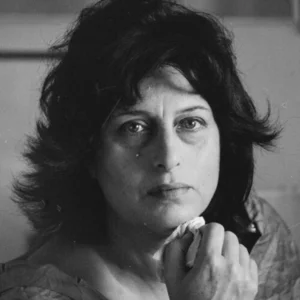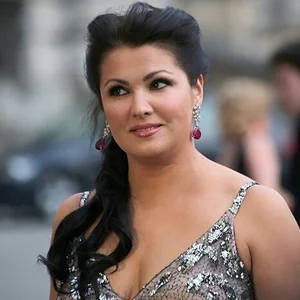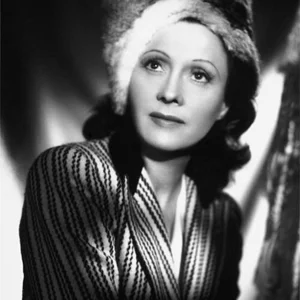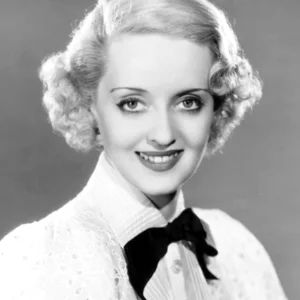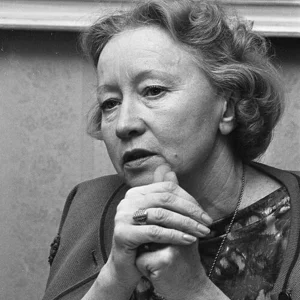

Soviet ballerina considered one of the greatest classical dancers of the 20th century. Prima ballerina of the Bolshoi, she embodied Giselle and Juliet with incomparable expressiveness. The first dancer to receive the title of Hero of Socialist Labor twice.
Galina Ulanova(1910 — 1998)
Galina Ulanova
Russie, Union soviétique, Empire russe
10 min read
Frequently asked questions
Famous Quotes
« Dance is the poetry of the foot.»
« I do not dance, I live on stage.»
Key Facts
- 1910: born in Saint Petersburg into a family connected to the Imperial Ballet
- 1928: debut at the Kirov Theatre (Mariinsky) in Leningrad
- 1944: joins the Bolshoi Ballet in Moscow
- 1956: triumphant tour in London, a revelation for the Western world
- 1962: retires from the stage, becomes a teacher at the Bolshoi until her death in 1998
Works & Achievements
Ulanova's signature role, this 19th-century Romantic ballet allowed her to express the tragic depth and psychological expressiveness that set her apart. Her Giselle in the second act — a ghostly figure of absolute purity — remains one of the most celebrated interpretations in ballet history.
Ulanova created the role of Juliet and became its definitive interpreter. Her artistic collaboration with Prokofiev gave rise to a vision of the Shakespearean heroine of unparalleled dramatic intensity, which established Soviet ballet as a worldwide benchmark.
In the dual roles of Odette and Odile, Ulanova demonstrated her technical mastery as much as her dramatic depth. She brought to Odette a vulnerability and melancholy that renewed the traditional interpretation of the role.
Prokofiev composed this ballet during the Second World War, and Ulanova danced the title role in the first performances at the Bolshoi. Her interpretation embodied the Soviet policy of promoting accessible, hope-filled works in the aftermath of the war years.
A ballet inspired by a poem by Pushkin, in which Ulanova plays Maria, a young Polish woman abducted by a Tatar khan. This role, blending lyricism and tragedy, was one of the first great successes of her career at the Kirov.
Anecdotes
In October 1956, the Bolshoi performed in London for the first time, at the Royal Opera House, Covent Garden. Ulanova, then 46 years old, danced the role of Juliet. At the end of the performance, the British audience gave her a standing ovation lasting more than twenty minutes. British prima ballerina Margot Fonteyn, who was in the audience, declared it was the greatest thing she had ever seen on a stage.
In 1944, in the midst of the Second World War, Stalin personally ordered Ulanova to leave Leningrad and join the Bolshoi in Moscow. She was devastated: she had spent her entire career at the Kirov, and Leningrad had only just emerged from a grueling 872-day siege. But no one refuses an order from Stalin — she complied, and would go on to become the undisputed glory of the Bolshoi.
In 1951, during the Bolshoi's first Western tour in Florence, Italy, the audience at the Teatro Comunale gave Ulanova a nearly half-hour standing ovation after *Romeo and Juliet*. Spectators climbed onto the stage to present her with flowers. Italian newspapers ran the headline the next day: “A goddess has come from Russia.” It was the first time the Western world discovered the full magnitude of her talent.
Ulanova received the Stalin Prize four times (1941, 1946, 1947, 1950), a testament to the importance of classical ballet as a tool of prestige in Soviet Russia. Yet she remained deeply private and shunned the social scene, preferring to spend her free evenings reading or painting — a lifelong secret passion.
After hanging up her pointe shoes in 1960 at the age of 50 — an exceptional career length for a prima ballerina — Ulanova became a rehearsal coach at the Bolshoi for nearly forty years. Among her most notable students were Ekaterina Maximova and Vladimir Vasiliev. At 88, the week before her death in March 1998, she was still attending Bolshoi rehearsals to correct her students' *port de bras*.
Primary Sources
"From childhood, dancing was not a pleasure for me, but work — work that one learns to love because it demands everything you have. My mother never let me cheat myself at the barre."
"Ulanova's Juliet is one of the supreme achievements of the human spirit in our time. There is nothing in Western ballet to compare with it."
"Ulanova has what few dancers possess: she does not dance the music, she lives it from within. When she walks onto the stage, the score becomes flesh."
"For exceptional services rendered to Soviet choreographic art and for her contribution to the cultural renown of the Soviet Union abroad, the title of Hero of Socialist Labor is awarded to citizen Galina Sergeyevna Ulanova."
Key Places
Ulanova's birthplace and the cradle of her training. She studied at the Leningrad Choreographic School (now the Vaganova Academy) and began her career at the Kirov Ballet (Mariinsky Theatre), the temple of classical Russian ballet.
Ulanova's principal stage from 1944 until her retirement in 1960, and then her workplace as a rehearsal coach until her death in 1998. The Bolshoi is the symbol of Soviet and world artistic prestige.
The venue for the Bolshoi's landmark tour in October 1956, where Ulanova's performances in Romeo and Juliet and Giselle stirred an unprecedented collective emotion and transformed the Western world's perception of Soviet ballet.
The stage of Ulanova's and the Bolshoi's first appearance in the West, in 1951. The enthusiastic reception from Florentine audiences launched the idea that Soviet ballet could conquer the Western world.
The burial place of Galina Ulanova since her death on 21 March 1998. This prestigious cemetery is the final resting place of major figures from Soviet and Russian culture, science, and politics.
Typical Objects

The ballerina's most essential tool, pointe shoes allow dancers to perform on the very tips of their toes. Ulanova went through several pairs per week during major productions and prepared her shoes herself — softening and reinforcing them according to her own personal technique.

The long, billowing white tulle skirt characteristic of 19th-century ballets such as *Giselle*. Ulanova preferred the romantic tutu over the short classical tutu, as it suited her lyrical, expressive style of dancing — rooted in line and fluidity rather than technical virtuosity.

A powdered plant resin that dancers rub onto the soles of their pointe shoes to prevent slipping on the stage floor. Found in every wing of the Bolshoi, it is one of the most humble yet indispensable everyday objects in the life of a professional ballerina.

In the training studios of the Bolshoi and the Kirov, entire walls covered in mirrors allow dancers to monitor their posture and movements in real time. Ulanova spent hours each day in front of these mirrors, perfecting every detail of expression and gesture.

The score of the ballet composed by Sergei Prokofiev in 1935–1936 is intimately tied to Ulanova's career: she created the role of Juliet in Leningrad in 1940. She immersed herself in the music to build her character from the inside out, working hand in hand with conductors.

The highest civilian decoration in the USSR, awarded to Ulanova in 1974 and again in 1980. Being the only artist to receive it twice reflects the exceptional status of ballet in Soviet cultural policy, where dancers were celebrated as national heroes on a par with cosmonauts and Olympic athletes.
School Curriculum
Vocabulary & Tags
Key Vocabulary
Daily Life
Morning
Ulanova's day invariably began with a barre class at 10 a.m. at the Bolshoi, even on performance days. This daily one-hour ritual — sequences of pliés, tendus, and battements at the barre — was for her not a warm-up but a form of physical meditation. Her mother had taught her that the barre is never mastered, not even for an international star.
Afternoon
Afternoons were devoted to rehearsals in the studio with the orchestra or at the piano. Ulanova worked each role with obsessive precision, sometimes repeating a single gesture for two hours to capture its inner intention. She also read the literary texts that inspired the ballets — Goethe, Shakespeare, folk tales — to feed her interpretation beyond mere technique.
Evening
On performance nights, Ulanova arrived at the theatre two hours before curtain to apply her makeup and find the character's inner state. She kept away from backstage chatter and stayed alone, in silence. After the show, exhausted but serene, she returned home, avoiding the official receptions she loathed — despite constant pressure from the Soviet regime.
Food
Like all classical dancers of her era, Ulanova followed a strictly controlled diet to maintain her lightness on stage. She ate little at midday — soup, vegetables, a small amount of white meat — and almost nothing before an evening performance. Hearty meals were reserved for rest days. She drank little alcohol but was fond of very strong black tea, a true Russian ritual.
Clothing
Offstage, Ulanova dressed simply, rejecting ostentation despite her status as a national star. She wore functional clothing: leotards and rehearsal skirts at the theatre, plain coats in the city. Abroad on tour, she was dressed by the Soviet delegation, which provided artists with presentable outfits — the Soviet sobriety stood in sharp contrast to the Western elegance of the 1950s.
Housing
As an honored State Artist, Ulanova was given a spacious apartment in Moscow — a rare privilege in the USSR, where housing was a scarce commodity allocated by the State. Her apartment was furnished with taste but without ostentatious luxury: a well-stocked bookcase, a piano, and canvases she had painted herself. She led a withdrawn life there, far from the official receptions that Soviet dignitaries expected of famous artists.
Historical Timeline
Period Vocabulary
Liens externes & ressources
Références
Œuvres
Giselle (A. Adam)
1932 (première interprétation par Ulanova)
Roméo et Juliette (S. Prokofiev)
1940 (création mondiale au Kirov, Leningrad)
Le Lac des cygnes (P. Tchaïkovski)
Années 1930-1950 (nombreuses reprises)
Cendrillon (S. Prokofiev)
1945 (création au Bolchoï)
La Fontaine de Bakhtchisaraï (B. Asafiev)
1934