 flip
flipClear Infusion of Osmanthus and Willow Leaf
Clear Infusion of Osmanthus and Willow Leaf
Why this dish? Guan Yin holds in her hand the vase of pure water and the willow branch, with which she sprinkles the world to soothe suffering. A clear, fragrant infusion of osmanthus, barely sweetened, evokes this water of compassion: one drinks it as one receives her blessing, cool and calming.
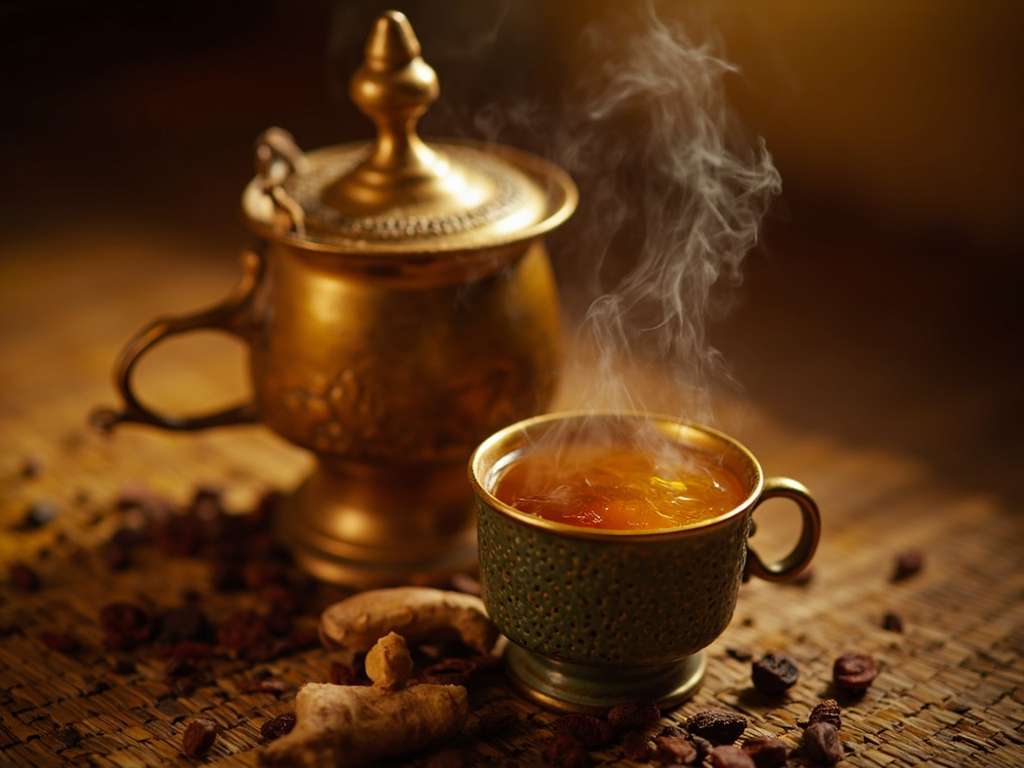
A limpid infusion of golden osmanthus flowers, sometimes lifted by a green, slightly bitter note, barely sweetened with malt sugar. Delicate, floral, refreshing — willow water made drinkable.
See what I hold: the vase of pure water and the willow twig with which I sprinkle the weary world. That water you cannot drink, but here is its earthly sister. Gather in the ninth month the osmanthus flowers, tiny and golden, that perfume temple courtyards; let them steep in water just trembling, not burning. A tear of sweet malt, nothing more. Drink slowly: let each sip wash away a sorrow, as my water washes away faults.
- •Dried osmanthus flowers (guìhuā) — a small handful (floral aroma)
- •Green tea leaves (or tender young leaves) — a little (base, slight bitterness)
- •Malt sugar (yítáng) — a drop (sweetness)
- •Trembling spring water — a pitcher (base)
Clear Infusion of Osmanthus and Willow Leaf
A limpid infusion of golden osmanthus flowers, sometimes lifted by a green, slightly bitter note, barely sweetened with malt sugar. Delicate, floral, refreshing — willow water made drinkable.
Why this dish? Guan Yin holds in her hand the vase of pure water and the willow branch, with which she sprinkles the world to soothe suffering. A clear, fragrant infusion of osmanthus, barely sweetened, evokes this water of compassion: one drinks it as one receives her blessing, cool and calming.
See what I hold: the vase of pure water and the willow twig with which I sprinkle the weary world. That water you cannot drink, but here is its earthly sister. Gather in the ninth month the osmanthus flowers, tiny and golden, that perfume temple courtyards; let them steep in water just trembling, not burning. A tear of sweet malt, nothing more. Drink slowly: let each sip wash away a sorrow, as my water washes away faults.
Ingredients (period version)
- Dried osmanthus flowers (guìhuā) — a small handful (floral aroma)
- Green tea leaves (or tender young leaves) — a little (base, slight bitterness)
- Malt sugar (yítáng) — a drop (sweetness)
- Trembling spring water — a pitcher (base)
Ingredients
- Dried osmanthus flowers (Asian grocery) — 1 tsp (aroma)
- Mild green tea (longjing) — 1 tsp (base)
- Flower honey or barley malt syrup — to taste (sweetness)
- Water — 500 ml at 80 °C (infusion)
Method
- Heat water until it barely trembles (around 80 °C, not boiling, to avoid burning the flowers).
- Place green tea and osmanthus flowers in a teapot or covered bowl.
- Pour water, cover, and steep for only 2 to 3 minutes (longer makes the tea bitter).
- Strain, sweeten with a drop of malt syrup or honey.
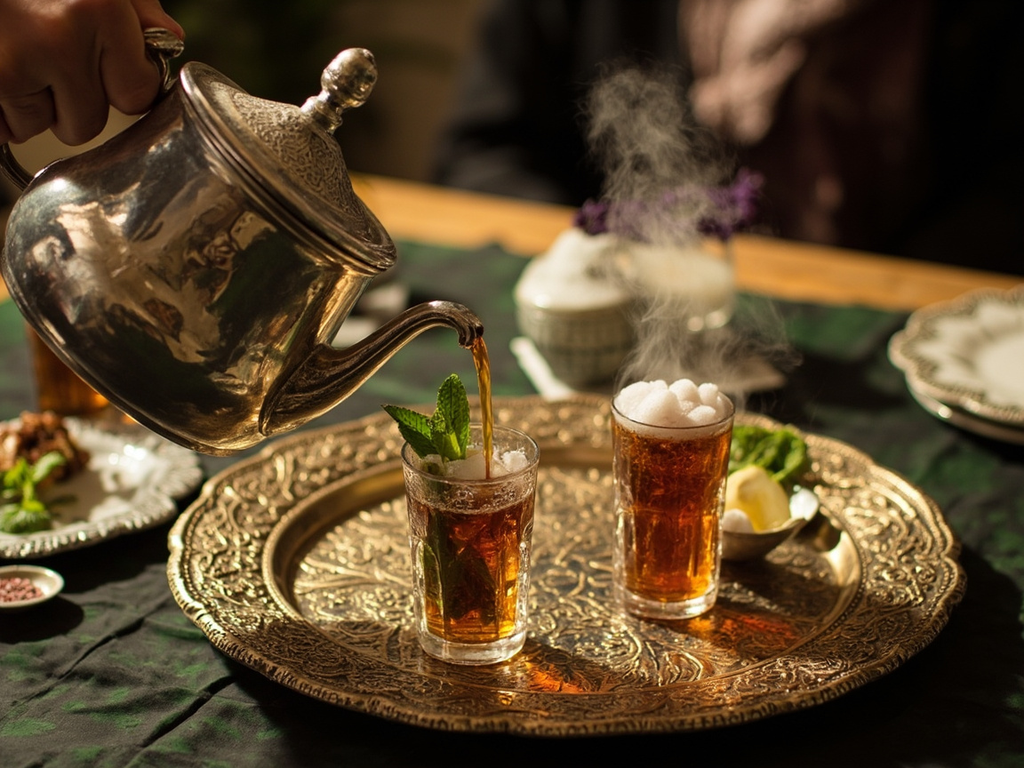
- Serve clear and hot in small cups; also drinkable chilled in summer.
How it was made : Tea has been a Chinese art since the Tang (Lu Yu's Classic of Tea, 8th century), and Buddhist monasteries were great consumers of tea, which helps keep vigil in meditation. Scenting tea with osmanthus flowers is a later attested practice, hence the level "evocation": here the infusion symbolizes the pure water of Guan Yin's vase more than it reproduces a dated recipe.
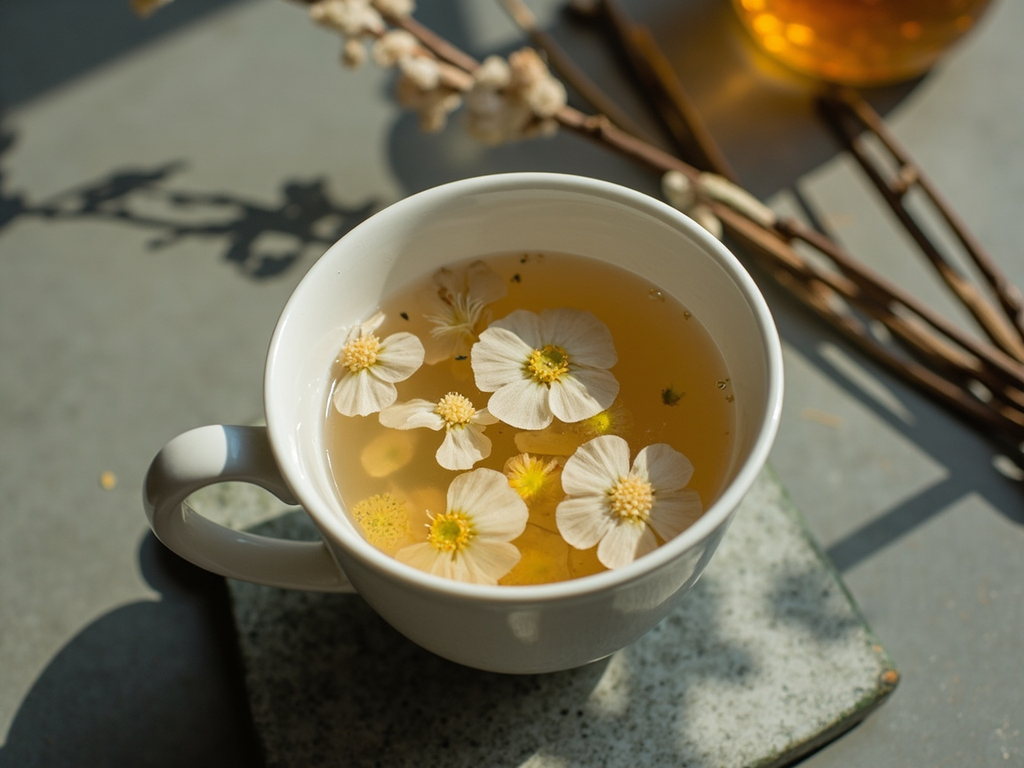
The contemporary twist : Serve in a white cup with a single osmanthus flower floating on the surface, like a drop of water fallen from the willow branch.
Guan Yin · Charactorium